


Listen to the article
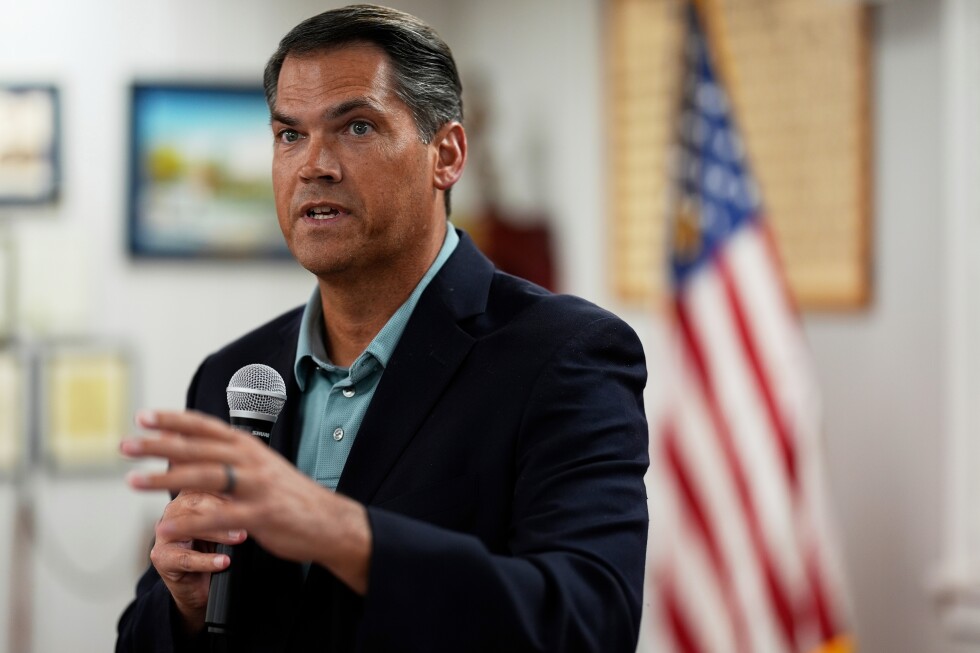
In a dimly lit American Legion hall outside Atlanta, Geoff Duncan stood before a group of Democratic activists and did something rarely seen in politics – he apologized. The former Republican lieutenant governor expressed regret for his past positions on gun control, Medicaid expansion, and particularly for supporting Georgia’s restrictive abortion legislation.
“Unlike most folks in politics, I’m willing to say I’m sorry for that,” Duncan told the gathering.
These apologies form the backbone of Duncan’s unconventional campaign for Georgia governor as a Democrat, a political pivot that has raised both interest and skepticism among his newly adopted party members. Duncan is positioning himself as the candidate best equipped to end Democrats’ 24-year drought in Georgia’s gubernatorial races.
“You’ve got to win more than your base,” Duncan argued. “And so I’m the only one that shows up in this Democratic primary that’s building a big enough coalition of Democrats, independents, and this growing batch of disgusted Republicans.”
Duncan’s political transformation began during the 2020 election when, as Georgia’s lieutenant governor, he rejected then-President Donald Trump’s false claims of election fraud. This stance earned him respect from Democrats and eventually led to his campaigning for Kamala Harris in the 2024 presidential election.
He’s not alone in this political realignment. Former Republican congressman David Jolly is pursuing Florida’s governorship as a Democrat, while former Republican lawyer George Conway is running for Congress in New York City under the Democratic banner. These candidacies represent a broader question for the Democratic Party’s future direction.
“The question for the Democratic Party is, which kind of church do you want to be?” noted Democratic consultant Paul Begala. “Do you want to be a church that hunts down heretics, or do you want to be a church that seeks out converts?”
Duncan faces significant competition in Georgia’s Democratic primary. His rivals include former Atlanta Mayor Keisha Lance Bottoms, former state Senator Jason Esteves, former Labor Commissioner Michael Thurmond, and state Representatives Ruwa Romman and Derrick Jackson.
Some Democratic voters appear receptive to Duncan’s pragmatic appeal. Tamara Stevens, a Democratic activist from Forsyth County, acknowledged that while state Senator Esteves represents her ideal candidate, she’s considering Duncan based on his perceived electability.
“I don’t have to agree with him on every issue. I don’t have to like him personally,” Stevens explained. “I want a candidate that can win. Because we’ve been on the losing end far too long, and it’s been devastating to our community.”
However, trust remains a significant hurdle for the former Republican. Mindy Seger, a prominent Cobb County Democrat who attended Duncan’s American Legion hall meeting, described him as “relatable” but admitted, “I think people have trust issues. I do.”
Democratic strategist Fred Hicks highlighted a key concern among party faithful, noting that Duncan continued identifying as a Republican, even while campaigning for Harris, until finally switching parties in August 2023. “It looks like he just wants to be in power and he couldn’t get there by being a Republican,” Hicks observed.
Duncan’s campaign faces particular challenges with Black voters, who typically constitute the majority of Georgia’s Democratic primary electorate. Hicks believes it’s a “bit of reach” to expect these voters to choose Duncan over Black candidates like Bottoms, Esteves, and Thurmond.
“I think he’s going to really struggle with that when you have different types of Democrats who have been Democrats for their entire life who are running,” Hicks said.
Despite these challenges, Duncan’s cross-partisan message appears to be resonating with some donors. He reported receiving nearly 9,000 contributions from all 50 states, though he didn’t disclose the total amount raised.
Georgia’s open primary system presents an additional strategic opportunity. The state doesn’t register voters by party, allowing independents and Republicans to participate in the Democratic primary. In 2022, more than 37,000 typically Democratic voters crossed over to the Republican primary to support Secretary of State Brad Raffensperger against Trump’s endorsed candidate.
Whit Ayres, a veteran Republican pollster, estimates that approximately 10% of Republicans remain deeply opposed to Trump. However, in Georgia, these voters might already be committed to the Republican primary, where Raffensperger is pursuing the governorship.
“Donald Trump has changed so many things about American politics that I think we need to keep an open mind about other things that might be changed,” Ayres said. “But we’re going to have to have the folks like the Liz Cheneys, the Geoff Duncans, the George Conways prove that they can be successful as Democrats before many of us will believe.”
As the primary approaches, Duncan continues emphasizing his ability to build a coalition capable of winning both the nomination and the general election, testing whether Georgia Democrats will prioritize ideological purity or pragmatic electability in their quest to reclaim the governor’s mansion.
Fact Checker
Verify the accuracy of this article using The Disinformation Commission analysis and real-time sources.

10 Comments
Duncan’s apologies for past positions suggest a willingness to evolve and grow. In a deeply polarized political climate, that kind of self-reflection and humility may be a refreshing change of pace for some voters.
It’s admirable that Duncan is trying to build a broad coalition beyond just his base. Georgia has been a battleground state, so having a candidate who can appeal to moderates and crossover voters could make a difference. However, he’ll need to walk a fine line to not alienate core Democratic supporters.
Courting both Democrats and disgruntled Republicans is a bold strategy. It remains to be seen whether Duncan can strike the right balance and build a winning coalition. His success or failure could offer important lessons for future cross-party candidates.
Duncan’s decision to switch parties is certainly unconventional, but it may be what Georgia voters are looking for. A pragmatic, problem-solving approach could resonate in a state that has become increasingly competitive in recent elections.
Apologies for past positions can go a long way in building trust with voters. Duncan’s willingness to admit mistakes shows a refreshing level of humility in politics. His centrist approach may give him a shot at winning over independents and disgruntled Republicans.
Interesting to see a former Republican running as a Democrat in Georgia. Seems like an unconventional move, but could appeal to voters tired of partisan gridlock. I’ll be curious to see how his message resonates with both parties.
It will be fascinating to see how Duncan’s campaign unfolds. His willingness to break from party orthodoxy and appeal to a diverse range of voters is a bold move that could pay off, or it could alienate core supporters on both sides.
Duncan’s transition from Republican to Democrat is an intriguing development. His ability to bridge the partisan divide and win over independents and crossover voters will be key to his success. It will be interesting to see how his campaign resonates with Georgia’s electorate.
Rejecting Trump’s false election claims was a bold move for a Republican. That kind of independence could resonate with Georgia voters. But Duncan will have to convince Democrats that he’s truly aligned with their values if he wants their support.
It’s fascinating to see a former Republican making a play for the Georgia governor’s seat as a Democrat. This kind of political shift is uncommon, but could work if Duncan can effectively position himself as a pragmatic, moderate alternative.