


Listen to the article
Intelligence Chief Gabbard Declines to Confirm “Imminent” Iranian Threat at Senate Hearing
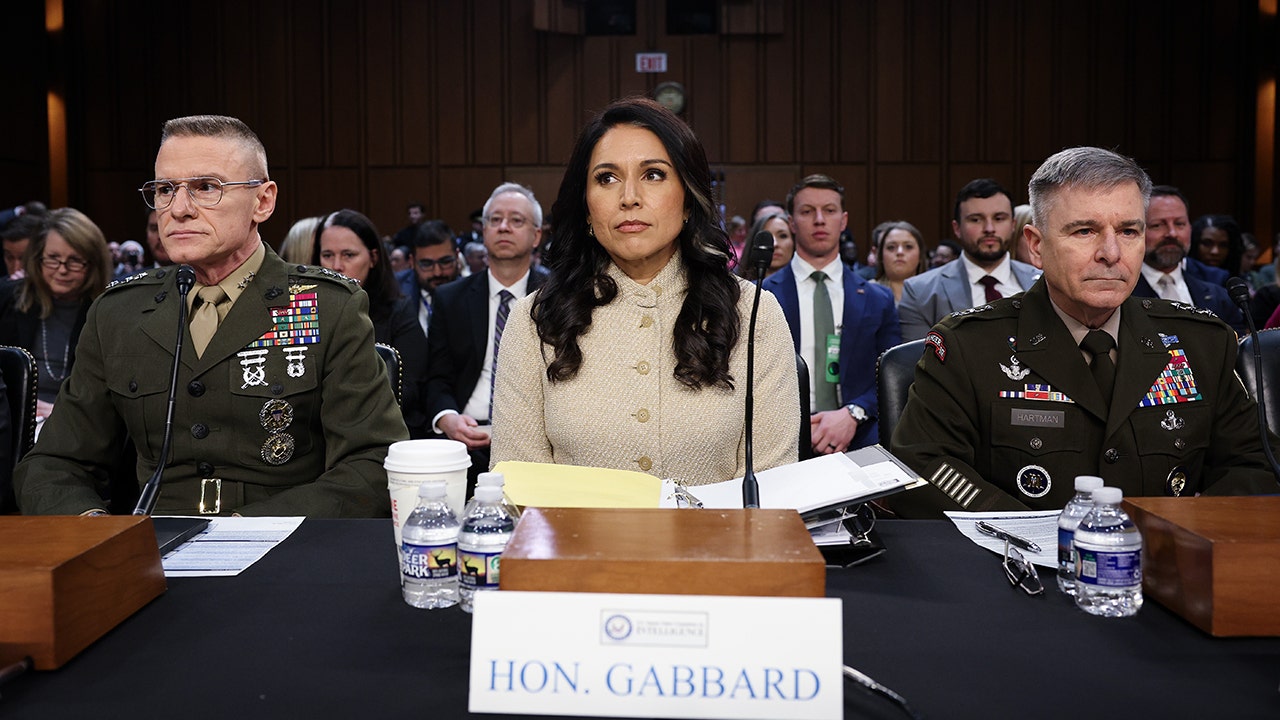
Director of National Intelligence Tulsi Gabbard refused to directly address whether U.S. intelligence indicated Iran posed an “imminent threat” prior to recent military operations, despite President Donald Trump’s repeated assertions to that effect.
During Wednesday’s Senate Intelligence Committee annual worldwide threats hearing, Sen. Jon Ossoff (D-Ga.) pressed Gabbard on whether the intelligence community had assessed an “imminent nuclear threat” from Iran, a justification frequently cited by the White House.
“The only person who can determine what is and is not an imminent threat is the president,” Gabbard responded, sidestepping the direct question. When Ossoff repeated his query, Gabbard maintained, “It is not the intelligence community’s responsibility to determine what is and is not an imminent threat.”
The exchange comes amid ongoing controversy over the justification for Operation Epic Fury, with Gabbard instead highlighting the operation’s impact: “The IC assesses that Operation Epic Fury is advancing fundamental change in the region. Iran’s conventional military power projection capabilities have largely been destroyed, leaving limited options. Iran’s strategic position has been significantly degraded.”
Gabbard’s careful avoidance of the “imminent threat” language appears particularly significant following the high-profile resignation of Joe Kent, Trump’s director at the National Counterterrorism Center, who publicly stated he did not believe Iran posed such a threat.
CIA Director John Ratcliffe, however, took a more assertive stance during the hearing. When asked by Sen. John Cornyn (R-Texas) if intelligence indicated Iran had abandoned its nuclear or ballistic missile ambitions, Ratcliffe replied, “No. In fact, the intelligence reflects the contrary.”
When specifically asked if he disagreed with Kent’s assessment, Ratcliffe stated, “I do,” adding, “I think Iran has been a constant threat to the United States for an extended period of time and posed an immediate threat at this time.”
The administration has consistently maintained that Iran was building its missile stockpiles to a point where foreign powers could no longer effectively intervene. While Iran is not currently believed to possess missiles capable of reaching the U.S. mainland, Trump has emphasized that the Islamic Republic is working toward that capability.
“They attempted to rebuild their nuclear program and to continue developing long range missiles that can now threaten our very good friends and allies in Europe, our troops stationed overseas and could soon reach the American homeland,” Trump stated.
According to a Defense Intelligence Agency assessment from May 2025, Iran could potentially develop a missile capable of reaching the United States by 2035. Meanwhile, Iran’s allies Russia, China, and North Korea already possess intercontinental ballistic missiles.
The International Atomic Energy Agency reported that as of mid-2025, Iran possessed approximately 441 kilograms of uranium enriched to 60% – enough, if further enriched to weapons-grade levels, to fuel multiple nuclear weapons. Experts estimate that final enrichment to 90% could take just weeks under ideal conditions, though producing functional nuclear weapons would require additional steps that could take months or longer.
Gabbard, a former Democratic congresswoman who rose to prominence partly through her opposition to U.S. military interventions abroad, has said little publicly about the Iran conflict. Following Kent’s resignation, she posted on social media platform X that “Donald Trump was overwhelmingly elected by the American people to be our President and Commander in Chief. As our Commander in Chief, he is responsible for determining what is and is not an imminent threat.”
The hearing highlighted a central tension in the administration’s approach: while officials have consistently framed military operations as a response to an imminent threat, intelligence officials stopped short of publicly confirming that specific assessment when directly questioned by lawmakers.
Fact Checker
Verify the accuracy of this article using The Disinformation Commission analysis and real-time sources.

8 Comments
This seems like a complex and politically charged issue. While I appreciate Gabbard’s perspective, I would have liked to see a more direct response from her on the intelligence assessment of an ‘imminent threat’.
The exchange underscores the importance of rigorous oversight and accountability when it comes to matters of national security and the use of military force. I hope the Senate continues to press for more transparency.
This highlights the ongoing debate around the justification for recent military operations. It’s concerning that the intelligence community is not taking a clear stance on whether there was an ‘imminent threat’.
I agree, the lack of clarity from Gabbard is troubling. The public deserves a more definitive assessment from the intelligence community on the threat level.
This exchange highlights the ongoing tensions between the executive branch and Congress over intelligence matters. I hope the Senate continues to push for more clarity and accountability from Gabbard and the intelligence community.
It’s concerning that the intelligence community appears to be sidestepping questions about the justification for recent military operations. The public deserves a clear and definitive assessment from Gabbard and her team.
I agree, this lack of transparency is troubling. The intelligence community needs to be more forthcoming, especially on such critical national security matters.
Interesting exchange between Gabbard and Ossoff. Gabbard seems to be sidestepping the question about the intelligence assessment of an ‘imminent threat’ from Iran. Transparency on these matters is crucial.