


Listen to the article
In the hushed corridors of power during the State of the Union, a peculiar tradition unfolds far from the Capitol’s spotlight. As President Trump prepares to deliver his address on Tuesday night, one Cabinet secretary will quietly slip away from Washington, assuming an extraordinary responsibility few Americans understand.
These officials begin their day with routine duties as Cabinet secretaries, but by evening, they transform into “designated survivors” – individuals deliberately kept away from the gathering of government leaders to ensure continuity of government should catastrophe strike.
The practice, dating back to Cold War fears of nuclear attacks, remains a sobering reminder of the vulnerabilities in America’s democratic system. Last March, Veterans Affairs Secretary Doug Collins served as the designated survivor during Trump’s joint session address to Congress, though the administration has not yet announced who will fill this role for the upcoming State of the Union.
“It focuses your mind. It also enhances your prayer that it doesn’t happen to you,” recalled James Nicholson, who served as President George W. Bush’s Veterans Affairs Secretary and designated survivor during the 2006 State of the Union address, describing the weight of potentially becoming president after a cataclysmic event.
The concept has long fascinated Americans and inspired popular culture, including novels and a television drama starring Kiefer Sutherland that aired from 2016 to 2019. Historian Garrett M. Graff, author of “Raven Rock,” suggests this fascination stems from the combination of danger and the romantic notion of an everyday official suddenly thrust into the presidency.
“The idea of, you’re just a random Cabinet official, and then something terrible happens and, all of a sudden, you’re president of the United States,” Graff explained.
Before the September 11 attacks, designated survivors had considerable flexibility in choosing their locations. Bill Richardson, President Clinton’s Energy Secretary and the 2000 designee, simply adjusted the timing of a planned weekend trip to Oxford, Maryland, about 80 miles from Washington.
Dan Glickman, Clinton’s Agriculture Secretary in 1997, chose New York where his daughter lived. “I thought it was kind of exciting. But I wasn’t hyped up from a dangerous perspective,” Glickman recalled. “I don’t even think anybody told me to be careful.”
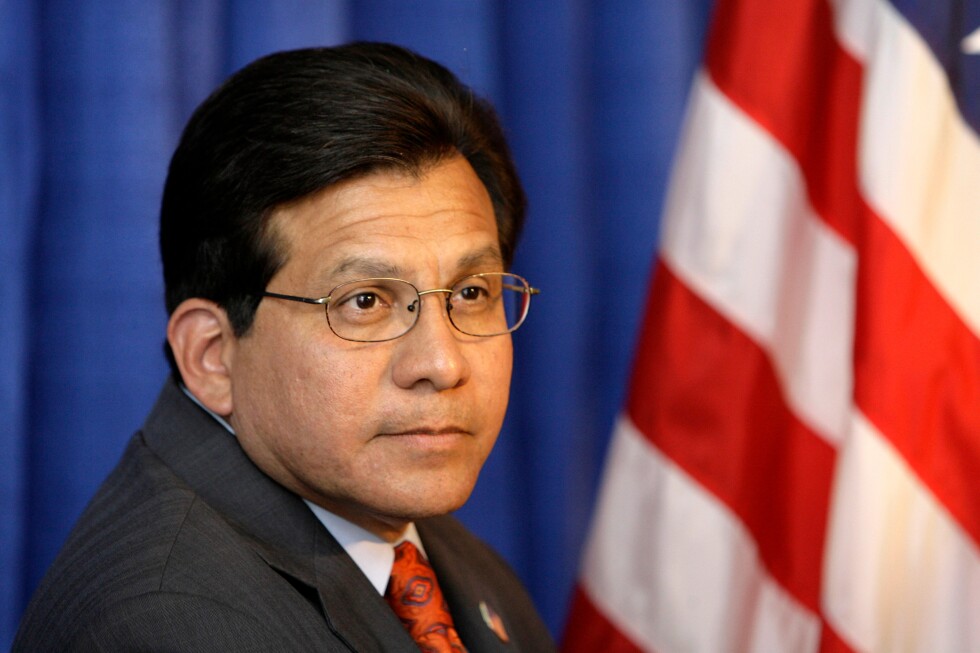
Security protocols intensified after 9/11. When Alberto Gonzales, Bush’s Attorney General, served as designated survivor in 2007, White House Chief of Staff Josh Bolten provided location options. Gonzales opted to remain airborne during the address, departing from Andrews Air Force Base accompanied by representatives from major government departments carrying thick binders of emergency protocols.
“It was during that time that it sort of suddenly hit me, if something happened in the Capitol and everyone’s killed, that I’d be president,” Gonzales said. “It’s sort of sobering. And you wonder, ‘Would I be up to governing a wounded nation?'”
According to Graff’s research, the practice was formalized during the Carter and Reagan administrations amid fears that Soviet submarines could launch nuclear missiles at Washington with only minutes of warning. By April 1980, the White House Military Office had tasked FEMA with ensuring succession planning.
The first publicly acknowledged designated survivor was Education Secretary Terrel Bell in 1981 during the Reagan administration, though his role wasn’t revealed until after the event. Today, political observers can quickly identify the missing Cabinet member as the president begins speaking.
The experience varies for each designee but typically includes security briefings, secure communications, and surprisingly, excellent dining. Nicholson recalls being served a “wonderful” dinner prepared by White House mess personnel, joking that “at least if this awful thing happened, you’d be well fed.”
For Nicholson, whose wife was attending the State of the Union, the gravity of potentially losing loved ones while assuming presidential duties only heightened the solemnity of his responsibility.
Glickman’s experience had lighter moments. Told he didn’t need formal attire, he skipped the suit. After watching from his daughter’s apartment, he declined the Secret Service’s offer to drive him to the airport, opting instead for dinner with his daughter. When the motorcade departed without him during a sleeting evening, taxis became scarce.
“I was the most powerful man on the face of the earth, theoretically,” Glickman remembered joking. “And then I can’t even get a cab.”
As government officials gather for Tuesday’s address, one Cabinet member will quietly assume this unique role, hoping their emergency powers remain theoretical, carrying the weight of constitutional succession while the nation focuses on the president’s words.
Fact Checker
Verify the accuracy of this article using The Disinformation Commission analysis and real-time sources.

12 Comments
Interesting to learn about the designated survivor tradition. It must be a heavy responsibility to carry, being tasked with ensuring continuity of government in a crisis. I wonder how the selected Cabinet secretary prepares mentally and logistically for this role.
Agreed, it’s a weighty responsibility. I imagine the designated survivor has extensive security and contingency planning to be ready at a moment’s notice, should the unthinkable occur.
The designated survivor tradition highlights the vulnerability of our political leadership and the fragility of our institutions, even in the most stable of times. It’s a sobering reminder of the challenges of safeguarding democracy.
Agreed. While unsettling, the designated survivor system is a crucial safeguard against catastrophic events that could decapitate the federal government. It’s a testament to the foresight of policymakers.
This article provides a sobering look at the designated survivor tradition and the immense responsibility it entails. It’s a stark reminder of the vulnerabilities inherent in even the most robust democratic systems.
Absolutely. The designated survivor role is a crucial safeguard, but one that underscores the fragility of political leadership and the need for robust continuity of government planning.
The designated survivor concept is a fascinating and critical part of American democracy, even if it’s not widely understood by the public. It speaks to the careful planning required to safeguard the institutions of government.
Absolutely. While we hope the designated survivor is never needed, it’s reassuring to know there are robust measures in place to ensure a smooth transition of power if disaster strikes.
As unnerving as the idea of a designated survivor may be, it’s a necessary precaution in our modern era of threats to national security. I’m curious to learn more about the selection process and training involved for this role.
Good point. The designated survivor must be thoroughly vetted and prepared to step into the presidency on short notice. It’s a heavy burden, but vital for preserving our democratic system.
The designated survivor role is a fascinating and little-known aspect of American governance. I wonder how the selected Cabinet secretary balances the weight of their responsibilities with the hope that they’ll never have to exercise their extraordinary powers.
That’s a great point. The designated survivor must maintain a delicate balance, being fully prepared to assume the presidency while hoping their services are never needed. It speaks to the gravity of the role.