


Listen to the article
Minneapolis officials and Minnesota lawmakers are calling for the immediate withdrawal of Immigration and Customs Enforcement (ICE) agents from the state following a deadly shooting Saturday morning, marking the latest escalation in tensions between local and federal authorities.
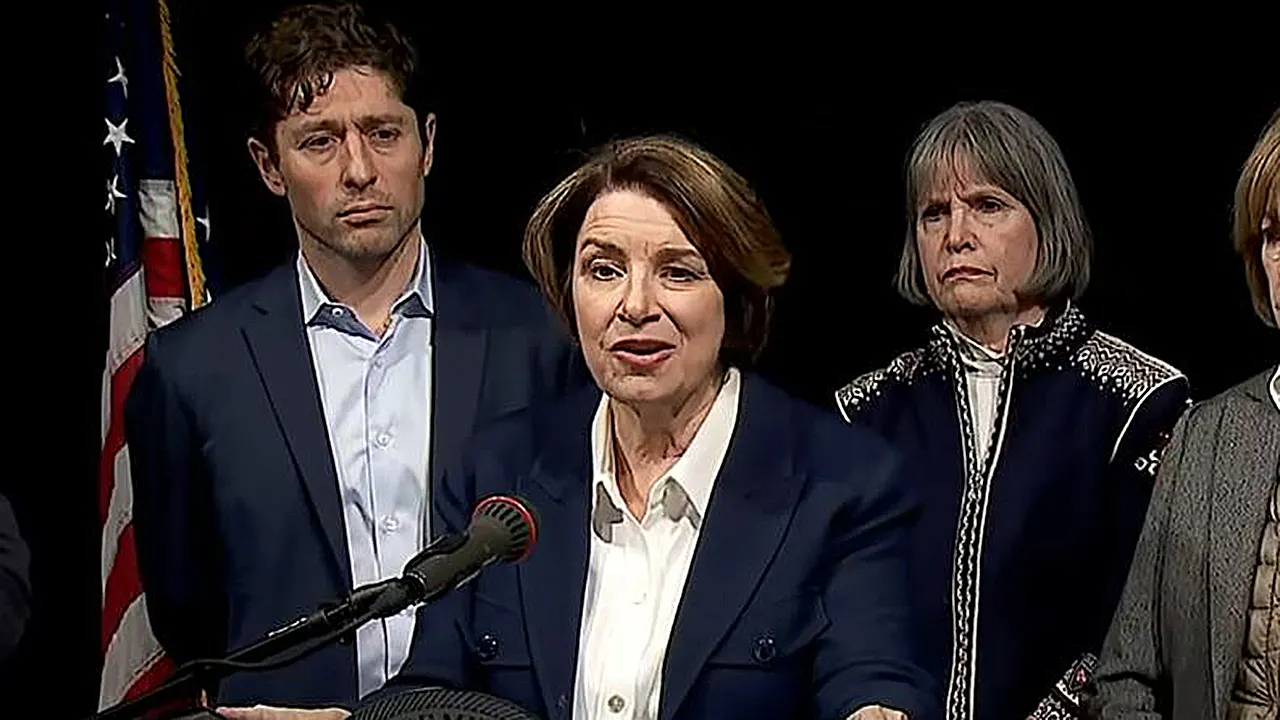
Minneapolis Mayor Jacob Frey announced the city is filing a declaration seeking a temporary restraining order against ICE operations, which he characterized as “harmful” to the city. “The city of Minneapolis is filing a declaration after today’s shooting to encourage the judge to rule on a temporary restraining order on Monday that would grant us immediate relief,” Frey said at a press conference.
The mayor directly linked recent violence to the federal immigration enforcement surge, stating that “the chaos that we are seeing” has been caused by ICE and the Trump administration.
The announcement follows the fatal shooting of 37-year-old Alex Pretti, a Minneapolis resident and nurse, by an ICE agent Saturday morning during an immigration enforcement operation. Department of Homeland Security officials claim Pretti approached Border Patrol agents while armed with a 9mm pistol and “violently resisted” when they attempted to disarm him. Despite immediate medical aid, Pretti was pronounced dead at the scene.
Senator Amy Klobuchar, who joined Frey at the podium, delivered a blunt message: “We need ICE out of Minnesota.” The senator claimed the federal presence is “not making us more safe,” pointing to recent violence as evidence. “Three people have been shot, two resulting in death,” she noted, referencing Pretti and Renee Good, a mother of three who was also killed during ICE operations.
Klobuchar described the city as “under siege” while emphasizing what she characterized as a disproportionate federal presence. “The around 3,000 ICE and Border Patrol agents in the area outnumber the sworn police officers in Minneapolis and St. Paul by three to one,” she said, calling the situation “completely out of whack, completely out of balance.”
The senator also raised concerns about agent training and funding, claiming that ICE training has been reduced from five months to just 47 days while the agency’s budget has grown to exceed that of the FBI. She criticized a Republican bill from last summer that she said would triple ICE’s budget.
Mayor Frey disclosed that he has requested National Guard assistance to support the approximately 600 officers in the Minneapolis Police Department who have been “put in the middle of these chaotic situations.” While acknowledging that most protests have remained peaceful, he urged residents to “keep it that way” and cautioned against countering “Donald Trump’s chaos with our own version of chaos.”
Both officials called for a comprehensive investigation into the recent deaths. “We are calling for a full and transparent investigation,” Klobuchar stated. “If they’re not going to do it, then they need to get out of the way and allow our very professional Bureau of Criminal Apprehension to conduct the investigation into these killings.”
The escalating conflict in Minneapolis comes amid broader national debates over immigration enforcement and federal-local coordination. Anti-ICE protests have intensified in the region, with demonstrators gathering following Pretti’s death and earlier protests at the Minneapolis airport.
In a post on social media platform X following the press conference, Frey reiterated the urgency of the situation: “After today’s shooting, Minneapolis is filing a declaration to push for an immediate ruling on our temporary restraining order. We need swift action to protect our city.”
Fact Checker
Verify the accuracy of this article using The Disinformation Commission analysis and real-time sources.

10 Comments
This is a complex and sensitive issue. While I understand the city’s desire to limit ICE’s presence, a complete withdrawal may not be the best solution. Improved coordination, training, and accountability measures could be more effective in addressing the community’s concerns.
Well said. A more nuanced approach focused on policy reforms and collaborative problem-solving could yield better long-term results than a confrontational withdrawal. Deescalating tensions and restoring trust should be the priority.
The calls for ICE to withdraw from Minneapolis are understandable given the heightened tensions. However, a complete withdrawal may not be the best solution. Perhaps there’s room for reforms to ICE’s operating procedures and increased coordination with local law enforcement.
That’s a fair point. A complete withdrawal could create a void and further erode trust. Productive dialogue and collaborative policy changes may be a better path forward to balance public safety and community relations.
As a supporter of strong border security, I’m concerned about the narrative that ICE is solely to blame for the recent violence. There are likely complex factors at play, and a thorough, impartial investigation is needed to understand what happened and how to prevent such tragedies in the future.
Tragic incident. While immigration enforcement is complex, lethal force should always be a last resort. I hope a full investigation can shed light on the details and lead to improved policies and training to prevent future loss of life.
Agreed. De-escalation and community policing should be prioritized, especially for non-violent situations. Tensions between federal and local authorities need to be resolved constructively.
I’m curious to learn more about the specific circumstances that led to this tragic outcome. Were there opportunities for de-escalation that were missed? What changes could be made to immigration enforcement procedures to prioritize public safety and community relations?
This is a very concerning development. The shooting of a Minneapolis resident by an ICE agent is sure to heighten tensions and distrust between the immigrant community and federal authorities. Clear and transparent investigations will be crucial.
Absolutely. Restoring trust and finding common ground between local officials and federal agencies like ICE will be a major challenge going forward. A measured, collaborative approach is needed.