


Listen to the article
The interim U.S. attorney for the Eastern District of Virginia has stepped down from her position after completing her 120-day appointment amid an unprecedented legal dispute over the legitimacy of her role, triggering concerns about separation of powers between the executive and judicial branches.
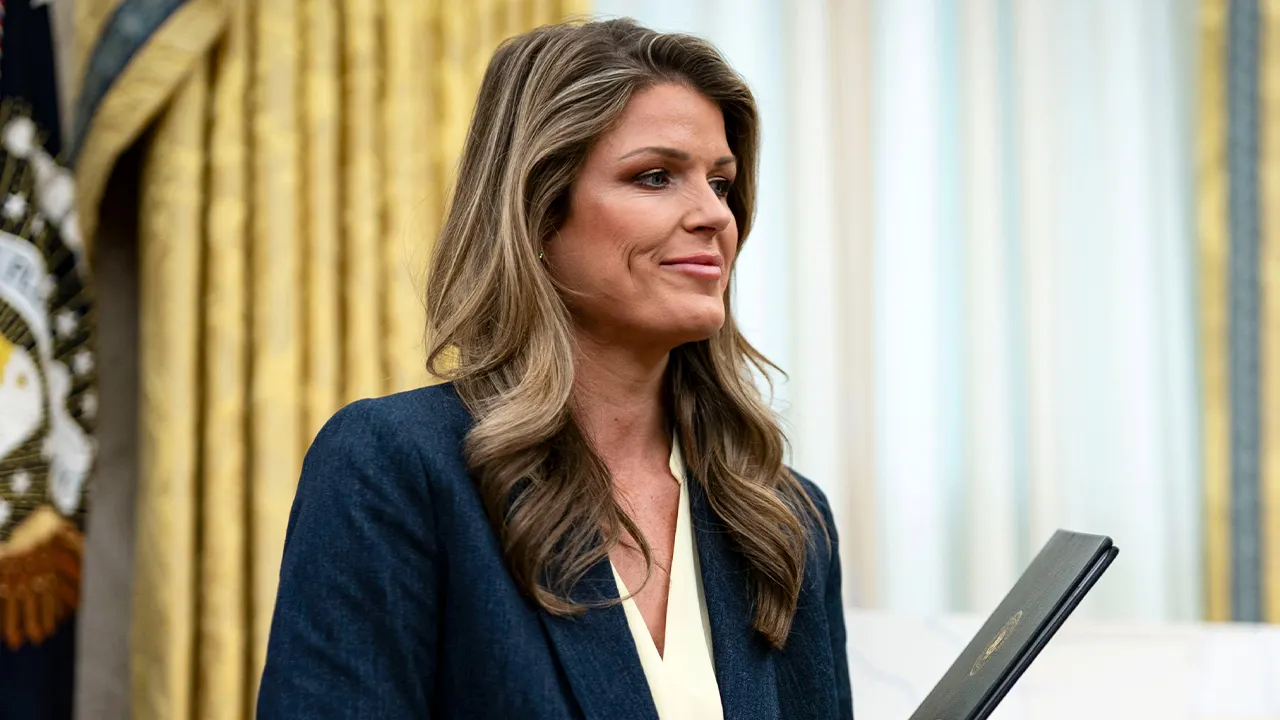
Lindsey Halligan, who previously served as a lawyer for former President Donald Trump, announced her departure on Tuesday. Her exit follows a November ruling by a federal judge that declared her appointment invalid, asserting that only the district court possessed the authority to name an interim successor following the departure of her predecessor, Erik Siebert.
The judicial challenge to Halligan’s authority created a complex legal standoff that now heads to an appeals court. According to Halligan, the ruling led the court to treat her appointment as disqualifying, including taking the extraordinary step of striking her name from official court filings.
“I was subjected to baseless accusations of lying to a tribunal and making false or misleading statements,” Halligan stated in her departure announcement. “Assistant U.S. Attorneys were told in open court that I should resign.”
Halligan described a contradictory situation that created a power vacuum in the Eastern District of Virginia, which serves over six million residents. While the court declared her appointment invalid, it simultaneously declined to exercise what it claimed was its exclusive authority to appoint a successor.
“The Executive Branch was told it lacked appointment authority, and the Judiciary declined to exercise the authority it claimed was exclusively its own,” Halligan explained. “That contradiction is now on appeal.”
The dispute has significant implications for federal prosecution in one of the nation’s most important judicial districts. The Eastern District of Virginia, often referred to as the “Rocket Docket” for its speed in handling cases, frequently deals with high-profile national security and terrorism cases due to its proximity to Washington, D.C. and various federal agencies.
Attorney General Pam Bondi defended Halligan’s service, praising her tenure and accusing Democratic senators of “weaponizing the blue slip process,” which effectively blocked Halligan’s continued service beyond her initial appointment period. The blue slip process is a Senate tradition that allows senators from a judicial nominee’s home state to express their approval or disapproval of the nomination.
“Despite multiple, unnecessary legal obstacles placed in her path, Lindsey stepped forward at a critical juncture for our Nation and fulfilled her responsibilities with courage and resolve,” Bondi wrote on social media platform X. “Her departure is a significant loss for the Department of Justice and the communities she served.”
Bondi characterized the circumstances surrounding Halligan’s departure as “deeply misguided” and pledged that the Justice Department would continue seeking review of decisions that she claimed “hinder our ability to keep the American people safe.”
The legal dispute arose during Halligan’s oversight of several controversial cases. In one notable instance, a federal judge questioned her authority while also raising concerns about a potential indictment against former FBI Director James Comey. This created additional tension between the court and the U.S. Attorney’s Office.
The situation highlights the broader tensions between the Trump administration’s Justice Department appointments and the federal judiciary. Legal experts note that such disputes over appointment authority between branches of government are relatively rare in the federal court system and could potentially set important precedents regarding separation of powers.
The case now moves to the appellate level, where courts will need to address fundamental questions about which branch of government has proper authority to appoint interim U.S. Attorneys when vacancies arise. The outcome could have significant implications for how federal prosecutors are appointed nationwide.
Meanwhile, the Eastern District of Virginia faces uncertainty over its leadership at a time when the office handles critical prosecutions related to national security, public corruption, and violent crime.
Fact Checker
Verify the accuracy of this article using The Disinformation Commission analysis and real-time sources.

9 Comments
The legal dispute over the appointment of the interim U.S. attorney highlights the complex dynamics between the different branches of government. I’m curious to learn more about the specific details and reasoning behind the federal judge’s ruling.
This is a complex and sensitive legal issue that touches on fundamental principles of government. I’m interested to see how the appeals court will approach the questions of executive authority and judicial oversight.
This is a complex and sensitive legal issue. While the accusations of lying and misleading statements are concerning, it’s important that the appeals process is fair and impartial. I hope the final outcome upholds the principles of separation of powers.
Allegations of lying and making false statements are very serious, especially for a government official. I hope the appeals process will provide a fair and thorough examination of the facts in this case.
Agreed. The separation of powers between the executive and judicial branches is a fundamental principle of our system of government. It will be interesting to see how this plays out.
This is an interesting legal dispute over the appointment of an interim U.S. attorney. It raises important questions about the separation of powers between the executive and judicial branches. I’m curious to see how the appeals court will rule on this matter.
Yes, the accusations of lying and misleading statements seem quite serious. It will be important for the appeals court to thoroughly review the evidence and ensure a fair and impartial outcome.
The legal battle over the interim U.S. attorney’s appointment raises important questions about the limits of executive power and the role of the judiciary. I’ll be following this case closely to see how it is resolved.
Agreed. The separation of powers is a critical foundation of our democracy, and it’s important that the appeals process carefully examines the evidence and reasoning behind the federal judge’s ruling.