


Listen to the article
A deadly security breach at former President Donald Trump’s Mar-a-Lago resort has highlighted the evolving challenges facing presidential protection details, with security experts warning that low-tech, lone-wolf attackers now represent one of the most difficult threats to counter.
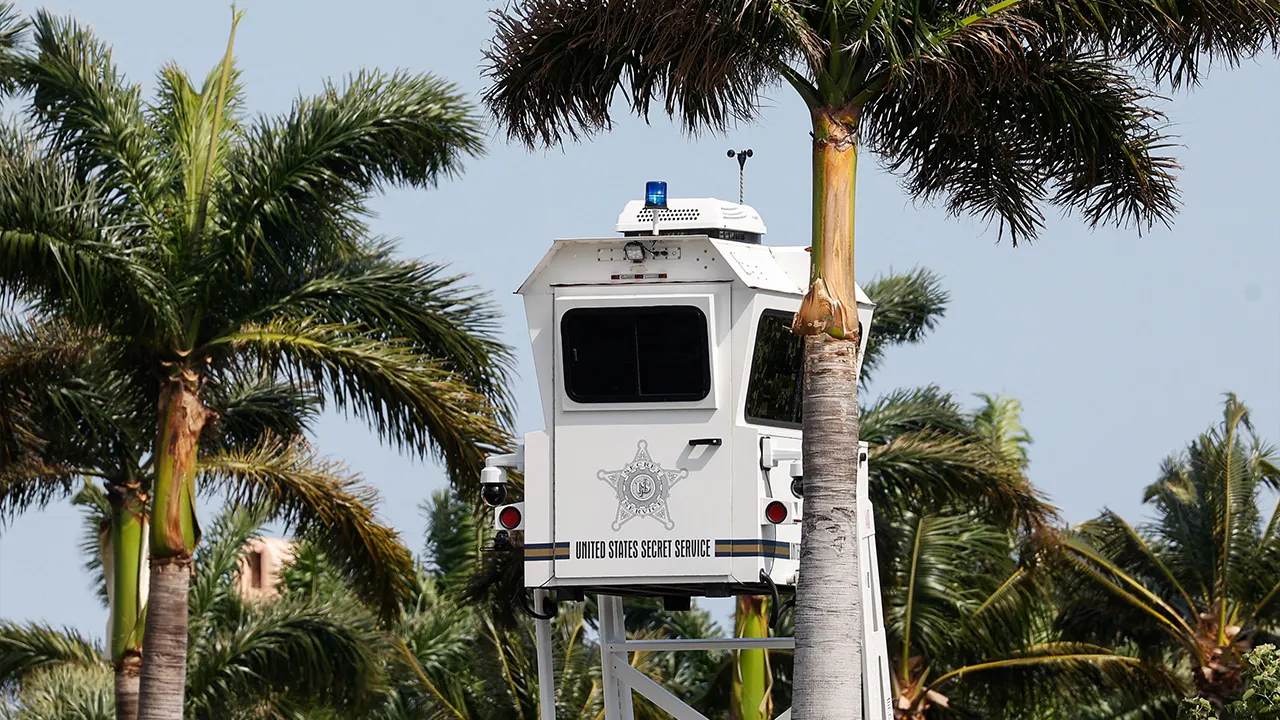
In the early hours of Sunday, Secret Service agents and a local sheriff’s deputy fatally shot 21-year-old Austin Tucker Martin of North Carolina after he breached the resort’s secure perimeter. Authorities report that Martin drove through the north gate carrying a shotgun and gasoline can. When ordered to drop both items, he abandoned the can but raised the weapon toward officers, prompting them to fire. Trump and the First Lady were in Washington at the time of the incident.
“It should be quite clear to all of us by now that Trump is the most threatened president in the history of the U.S.,” former Secret Service agent William “Bill” Gage told reporters Monday. Unlike past presidencies where threat levels often diminished over time, Gage noted a troubling pattern with Trump: “The longer he’s president, the more these attacks keep happening.”
This incident marks the third high-profile security encounter involving Trump in less than two years. In July 2024, a gunman opened fire at a campaign rally in Butler, Pennsylvania, grazing Trump’s ear and killing an attendee before being shot by a Secret Service sniper. Just two months later, in September 2024, agents confronted an armed suspect near Trump’s golf course while he was playing. That individual was later convicted on attempted assassination charges.
Security experts point to a significant shift in the threat landscape. When Gage joined the Secret Service in 2002, the agency was adapting to a post-9/11 world focused primarily on coordinated terrorist networks like al Qaeda and later ISIS, moving away from the traditional “lone gunman” model exemplified by figures like Lee Harvey Oswald.
“But if you look at Butler and the two incidents at Mar-a-Lago, those were super low-tech attacks by people with zero training,” Gage explained. “If you were standing behind them in line at Starbucks, you wouldn’t have given them a second look.” This simplicity, he argues, makes such threats particularly dangerous. “The low-tech actors are the ones that tend to slip through the cracks.”
Former Deputy Assistant Director Don Mihalek offered a more measured assessment, suggesting the latest Mar-a-Lago intrusion doesn’t necessarily signal a breakdown in protective systems. “He got through an exterior gate of an active club,” Mihalek said. “This wasn’t someone reaching the president’s residence.” The rapid response by agents, who confronted the suspect within seconds, demonstrated that overlapping security layers functioned as designed.
Mihalek explained that presidential protection relies on multiple security rings because outer perimeters at properties like Mar-a-Lago cannot be sealed as tightly as the White House. “If he ended up in the president’s house on Mar-a-Lago, that might be a different conversation,” he noted.
Both security experts expressed concern about the media coverage of such incidents potentially inspiring copycat attempts. “If it were up to the Secret Service, they would never report any of these incidents ever,” Gage said, arguing that widespread coverage allows others to “study what happened” and refine their approach.
Mihalek cautioned against viewing recent incidents in isolation, noting that presidents routinely face approximately 2,000 threats annually, most of which are mitigated before becoming public knowledge. “These just happen to be very public instances,” he said, suggesting that social media amplifies perceptions of escalation.
As Trump prepares to address Congress at the upcoming State of the Union, both former officials indicated that the Capitol’s security posture is unlikely to change significantly in response to the weekend incident. The annual address is designated a National Special Security Event—the highest level of federal security planning—triggering coordination among the Secret Service, U.S. Capitol Police, FBI, War Department, and other agencies.
“There’s really no way to increase it anymore,” said Gage, who previously led advance planning for State of the Union addresses. The event operates under a well-established security “blueprint” built to account for worst-case scenarios.
The experts concluded that the defining challenge for presidential protection today is unpredictability: individuals with minimal training, rudimentary weapons, and the ability to find reinforcement online. Unlike organized extremist networks, such actors often leave few detectable signals before taking action.
Fact Checker
Verify the accuracy of this article using The Disinformation Commission analysis and real-time sources.

19 Comments
The cost guidance is better than expected. If they deliver, the stock could rerate.
Silver leverage is strong here; beta cuts both ways though.
Uranium names keep pushing higher—supply still tight into 2026.
Good point. Watching costs and grades closely.
Good point. Watching costs and grades closely.
Silver leverage is strong here; beta cuts both ways though.
Good point. Watching costs and grades closely.
Good point. Watching costs and grades closely.
Interesting update on Former Secret Service Officials Warn of Low-Tech Threats to Trump After Mar-a-Lago Breach. Curious how the grades will trend next quarter.
Exploration results look promising, but permitting will be the key risk.
Interesting update on Former Secret Service Officials Warn of Low-Tech Threats to Trump After Mar-a-Lago Breach. Curious how the grades will trend next quarter.
Silver leverage is strong here; beta cuts both ways though.
Good point. Watching costs and grades closely.
Nice to see insider buying—usually a good signal in this space.
Good point. Watching costs and grades closely.
Good point. Watching costs and grades closely.
The cost guidance is better than expected. If they deliver, the stock could rerate.
Good point. Watching costs and grades closely.
Good point. Watching costs and grades closely.