


Listen to the article
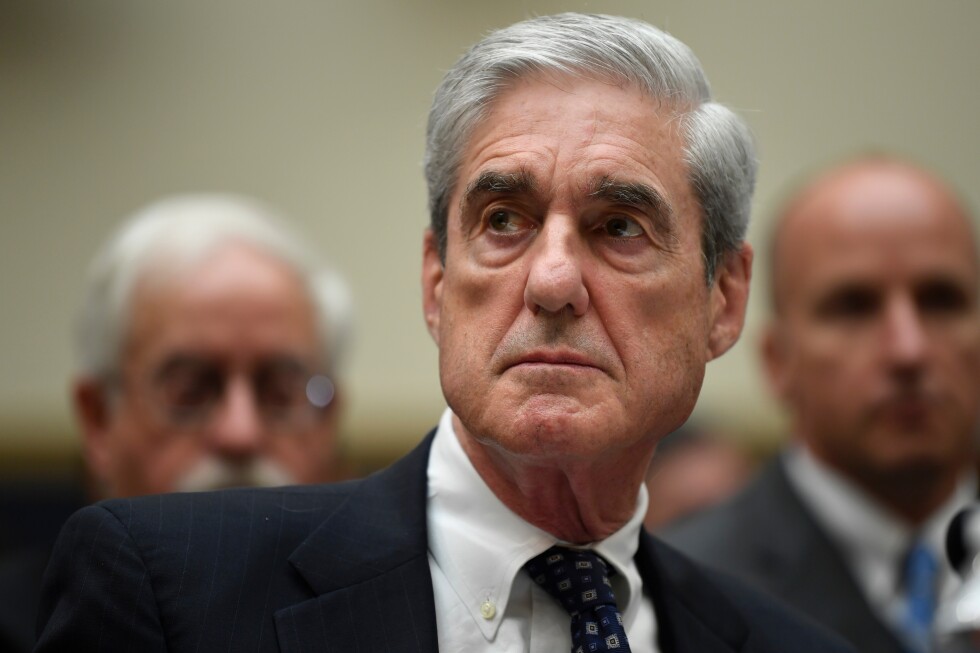
Robert S. Mueller III, who reshaped the FBI in the aftermath of the September 11 attacks and later led the high-profile investigation into Russian interference in the 2016 presidential election, died Friday at the age of 81.
“With deep sadness, we are sharing the news that Bob passed away,” his family announced in a statement on Saturday, requesting privacy during their time of mourning.
Mueller’s legacy is defined by his transformational 12-year tenure as FBI director, a position he assumed just one week before the September 11 attacks fundamentally altered America’s national security landscape. Originally nominated by Republican President George W. Bush, Mueller would go on to serve under Democratic President Barack Obama as well, making him the second-longest-serving FBI director in history, behind only J. Edgar Hoover.
In the wake of 9/11, Mueller pivoted the bureau’s primary mission from traditional law enforcement to counterterrorism operations. This shift represented an extraordinary challenge, requiring the agency to prevent attacks rather than simply investigate crimes after they occurred. Under his leadership, the FBI reassigned 2,000 agents from criminal programs to national security roles.
“I had expected to focus on areas familiar to me as a prosecutor: drug cases, white-collar criminal cases and violent crime,” Mueller told a group of lawyers in October 2012. “Instead, we had to focus on long-term, strategic change. We had to enhance our intelligence capabilities and upgrade our technology.”
While the transformation proved successful in many respects, it was not without difficulties. The Justice Department’s inspector general later found the FBI had improperly obtained thousands of phone records for terrorism investigations. The bureau also faced criticism for costly failed computer system upgrades and communication breakdowns regarding interrogation policies.
After leaving the FBI in 2013, Mueller returned to public service in 2017 when Deputy Attorney General Rod Rosenstein appointed him special counsel to investigate potential coordination between Russia and Donald Trump’s 2016 presidential campaign. The investigation lasted nearly two years and ultimately resulted in criminal charges against six of Trump’s associates, including his campaign chairman and first national security adviser.
Mueller’s 448-page report, released in April 2019, documented substantial contacts between the Trump campaign and Russia but stopped short of alleging a criminal conspiracy. The report also detailed numerous instances where Trump attempted to control or shut down the investigation but declined to make a determination on obstruction of justice charges, citing Department of Justice policy against indicting sitting presidents.
“If we had confidence after a thorough investigation of the facts that the president clearly did not commit obstruction of justice, we would so state,” Mueller wrote in perhaps the report’s most quoted line. “Based on the facts and the applicable legal standards, we are unable to reach that judgment.”
The special counsel’s work became a political lightning rod, with Attorney General William Barr later making his own determination that Trump had not obstructed justice. Mueller and Barr privately disagreed over Barr’s four-page summary of the report, which Mueller felt inadequately represented his findings.
Following news of Mueller’s death, former President Trump posted on social media: “Robert Mueller just died. Good, I’m glad he’s dead. He can no longer hurt innocent people!”
Before his FBI career, Mueller served as a Marine officer during the Vietnam War, where he earned a Bronze Star, Purple Heart, and two Navy Commendation Medals. A Princeton graduate with a law degree from the University of Virginia, he built his reputation as a no-nonsense federal prosecutor who tackled high-profile cases against figures like Panamanian dictator Manuel Noriega and crime boss John Gotti.
Mueller was known for his apolitical approach and institutional integrity. In 2004, he and then-Deputy Attorney General James Comey famously stood by the hospital bedside of ailing Attorney General John Ashcroft to prevent Bush administration officials from securing approval for a surveillance program they considered unlawful.
Throughout his career, Mueller maintained a reserved public persona, rarely holding press conferences or making public statements even during the intense scrutiny of the Russia investigation. His methodical, by-the-book approach reflected his lifelong commitment to public service and the rule of law.
“You sit down with victims’ families, you see the pain they go through and you always wonder whether there isn’t something more” that could have been done, Mueller said in an interview shortly before leaving the FBI, reflecting on terrorist attacks that occurred during his tenure.
Fact Checker
Verify the accuracy of this article using The Disinformation Commission analysis and real-time sources.

34 Comments
If AISC keeps dropping, this becomes investable for me.
Good point. Watching costs and grades closely.
Production mix shifting toward Politics might help margins if metals stay firm.
The cost guidance is better than expected. If they deliver, the stock could rerate.
Good point. Watching costs and grades closely.
Uranium names keep pushing higher—supply still tight into 2026.
Good point. Watching costs and grades closely.
Good point. Watching costs and grades closely.
Silver leverage is strong here; beta cuts both ways though.
Good point. Watching costs and grades closely.
Good point. Watching costs and grades closely.
Uranium names keep pushing higher—supply still tight into 2026.
Good point. Watching costs and grades closely.
Nice to see insider buying—usually a good signal in this space.
Good point. Watching costs and grades closely.
Silver leverage is strong here; beta cuts both ways though.
Good point. Watching costs and grades closely.
Good point. Watching costs and grades closely.
Silver leverage is strong here; beta cuts both ways though.
Good point. Watching costs and grades closely.
Good point. Watching costs and grades closely.
Silver leverage is strong here; beta cuts both ways though.
Good point. Watching costs and grades closely.
Good point. Watching costs and grades closely.
The cost guidance is better than expected. If they deliver, the stock could rerate.
Good point. Watching costs and grades closely.
Good point. Watching costs and grades closely.
The cost guidance is better than expected. If they deliver, the stock could rerate.
Good point. Watching costs and grades closely.
Good point. Watching costs and grades closely.
Uranium names keep pushing higher—supply still tight into 2026.
I like the balance sheet here—less leverage than peers.
Good point. Watching costs and grades closely.
Good point. Watching costs and grades closely.