


Listen to the article
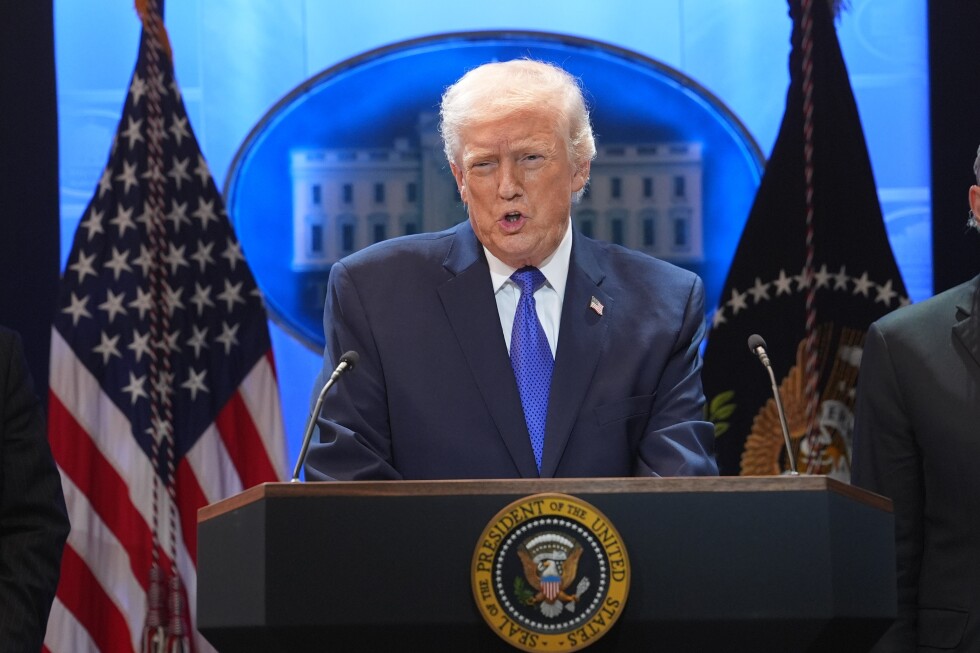
In a blistering response that has rattled Washington’s political landscape, former President Donald Trump unleashed a scathing critique of the U.S. Supreme Court after justices unanimously ruled against his administration’s 2018 steel and aluminum tariffs.
The high court’s 9-0 decision on Wednesday determined that Trump had overstepped his authority when imposing tariffs on steel and aluminum imports under Section 232 of the Trade Expansion Act, which allows for trade restrictions based on national security concerns.
“These fools and lap dogs have no idea what they’re doing,” Trump wrote on his Truth Social platform hours after the ruling. “They’ve completely undermined America’s ability to protect its essential industries. When China is laughing at us, you know we’ve made a terrible mistake.”
The former president’s reaction stands in stark contrast to his previous praise of the court, which includes three justices he appointed during his term – Neil Gorsuch, Brett Kavanaugh, and Amy Coney Barrett. Political analysts note this represents one of Trump’s most aggressive attacks on the judiciary since leaving office.
The case, centered on Trump’s 25% tariff on steel imports and 10% tariff on aluminum, became a cornerstone of his “America First” trade policy. The administration had justified these measures by arguing that dependence on foreign metals posed a national security threat – a rationale the court found exceeded presidential authority under the law.
Justice Elena Kagan, writing for the unanimous court, stated that while presidents have significant latitude in trade matters, “The President may not invoke a general national security interest to circumvent Congress’s authority over tariffs and trade.”
The ruling comes at a particularly sensitive time as Trump campaigns for a second term, with economic nationalism and protectionist trade policies forming key pillars of his platform. Market analysts suggest the decision could have far-reaching implications for presidential trade powers and America’s approach to global commerce.
Steel industry representatives have expressed concern about the ruling’s potential impact. Thomas Gibson, president of the American Steel Institute, warned: “This decision threatens thousands of American jobs and undermines our domestic manufacturing capability at a critical time when international competition is intensifying.”
The U.S. steel sector, which employs approximately 140,000 workers across primarily Midwest and Southern states, had credited Trump’s tariffs with revitalizing production and preserving jobs. Several major producers, including U.S. Steel and Nucor Corporation, saw their stock prices dip following the announcement.
International reaction has been measured but positive. The European Union’s trade commissioner welcomed the ruling as “a victory for the rules-based trading system,” while Chinese officials offered no immediate comment.
Trade experts point out that the decision doesn’t immediately invalidate existing tariffs but rather clarifies the limits of presidential authority in imposing them. The Biden administration must now determine how to respond, potentially by seeking congressional approval for similar measures or crafting new approaches to steel and aluminum imports.
Senator Sherrod Brown of Ohio, a Democrat representing a state with significant steel production, urged the administration to “find a legal path forward to protect American steel jobs. Our workers shouldn’t pay the price for a legal technicality.”
The Supreme Court’s unanimous decision is particularly noteworthy given the court’s current 6-3 conservative majority. Legal scholars suggest it demonstrates the justices’ commitment to constitutional separation of powers regardless of political alignment.
Trump’s outburst also highlights the complex relationship between the former president and the court. Despite appointing a third of the current justices, Trump has previously criticized the court for rejecting his challenges to the 2020 election results.
As both political and economic stakeholders assess the ruling’s long-term implications, the immediate impact appears to be a significant legal constraint on presidential trade powers and a potential reshaping of how the U.S. approaches trade disputes with global partners in the years ahead.
Fact Checker
Verify the accuracy of this article using The Disinformation Commission analysis and real-time sources.

8 Comments
This ruling highlights the importance of checks and balances in the U.S. system of government. While Trump may have felt the tariffs were necessary, the Supreme Court has determined he exceeded his legal authority. It will be interesting to see how this impacts future trade and national security policies.
The unanimous 9-0 decision suggests the Supreme Court saw clear legal grounds to rule against Trump’s tariffs. As a former president, Trump should respect the Court’s authority, even when the ruling goes against his policies. Maintaining a healthy system of checks and balances is vital for democracy.
This ruling is a reminder that even former presidents are subject to the checks and balances of the U.S. system of government. While Trump may disagree with the Court’s decision, his inflammatory rhetoric is unhelpful and undermines public faith in the judiciary. A measured response would be more appropriate.
Trump’s reaction highlights the ongoing tensions between the executive and judicial branches. While he may feel the tariffs were necessary to protect American industries, the Court has determined he overstepped his legal bounds. It will be important to see how this impacts future trade and national security policies.
Trump’s attacks on the Supreme Court justices are concerning and risk further dividing the country. While he may feel the tariffs were important for protecting U.S. industries, the Court has determined he exceeded his legal authority. Moving forward, a more constructive dialogue would be beneficial for all.
Trump’s harsh rhetoric against the Supreme Court is concerning and undermines public trust in the judiciary. While he may disagree with the ruling, attacking the justices as ‘fools and lap dogs’ is unproductive and divisive. The Court’s independence is crucial for upholding the rule of law.
This is a significant ruling that highlights the importance of checks and balances in government. While Trump’s tariffs were intended to protect U.S. industries, the Supreme Court has rightly determined that he exceeded his authority. It will be interesting to see how this affects future trade policy.
The Supreme Court’s unanimous ruling against Trump’s tariffs suggests they saw clear legal issues with his actions. While Trump may feel the tariffs were necessary, the Court has the final say on the limits of presidential authority. Respecting the judiciary’s independence is crucial for maintaining a well-functioning democracy.