


Listen to the article
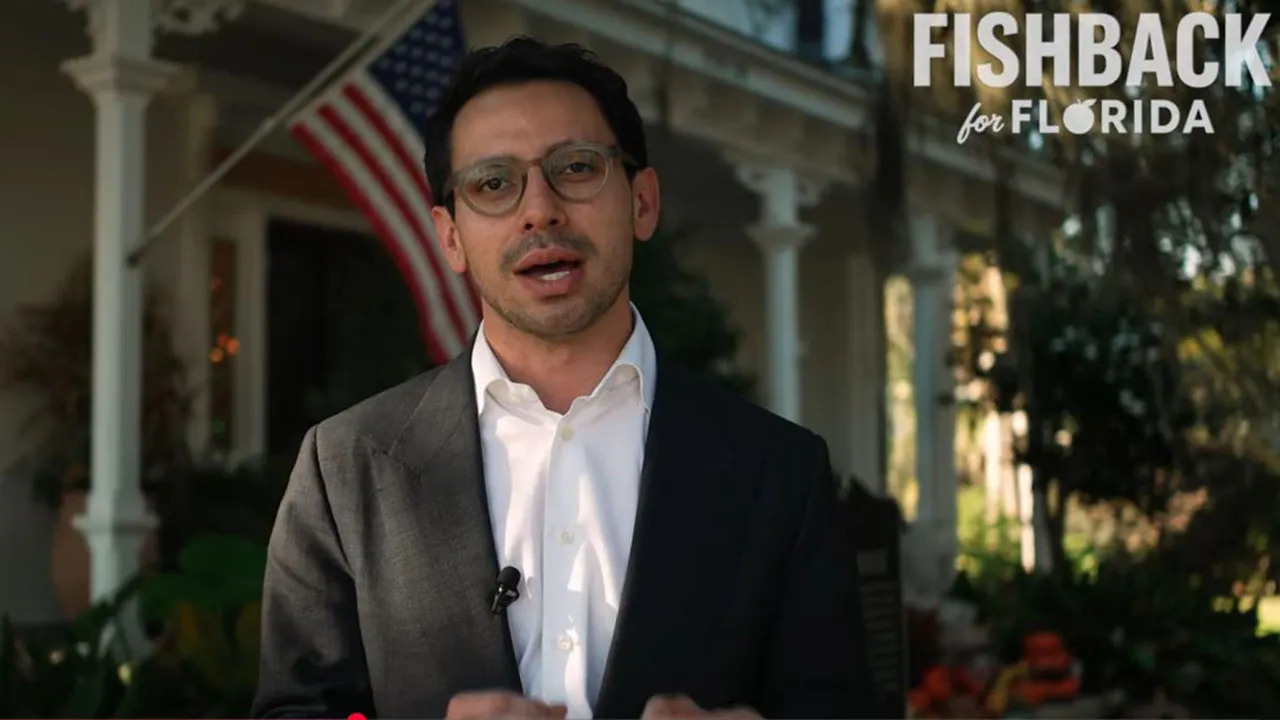
Florida gubernatorial candidate James Fishback has proposed a controversial 50% “sin tax” on OnlyFans content creators, sparking immediate backlash from platform users and raising questions about the intersection of taxation, morality, and personal freedom in the digital economy.
“Young women once aspired to be devoted mothers, doctors, lawyers, and nurses,” Fishback told Fox News Digital in a statement on Friday. “Today, young women are told by an online platform called OnlyFans that it’s morally right to sell nude photos of themselves to strangers on the internet. I will not tolerate this cultural degeneracy as Florida’s next Republican Governor.”
The Republican candidate estimates the proposed tax would generate approximately $200 million in revenue, which he plans to allocate toward Florida’s education system, crisis pregnancy centers, and funding a “first-of-its-kind mental health czar for men.” Fishback argues the latter is necessary because “men have been told for far too long that they are guilty of masculinity” and “guilty for all of society’s ills.”
OnlyFans, a subscription-based platform launched in 2016, has grown exponentially in recent years, particularly during the pandemic. The site allows content creators, many of whom produce adult content, to monetize their following directly. The platform has become increasingly popular among young adults seeking alternative income sources, including college students facing rising education costs.
The proposal comes amid ongoing national debates about the regulation of online content, the gig economy, and state-level taxation powers. Florida, which does not impose a state income tax, would enter novel territory by attempting to target specific online professions with what critics describe as a punitive tax rate.
Content creators on the platform have responded sharply to Fishback’s proposal. Sophie Rain, a prominent OnlyFans creator, told People magazine, “No one ever forced me to start an OnlyFans, it was MY decision, so I don’t need a 31-year-old man telling me I can’t sell my body online.” Rain, who identified herself as Christian, added, “God knows what I am doing, and I know he is happy with me, that’s the only validation I need.”
Another creator, Piper Fawn, criticized the religious undertones of Fishback’s proposal, telling FOX 35, “Sin is a biblical term, it’s not a legal term. If he’s really trying to make the state a safer spot or making changes for the better, I feel like there are other things that can be worked on and putting our attention towards versus taxing creators.”
Legal experts question whether such a targeted tax would withstand constitutional scrutiny, as it appears to single out specific forms of protected speech and expression. First Amendment challenges would likely arise if the proposal gained traction.
When questioned about implementation, Fishback indicated he would be open to extending the tax to OnlyFans customers as well, potentially complicating enforcement issues. The candidate presented the tax as offering content creators two choices: “You can either pay the state of Florida 50% so we can raise teacher pay, or you can quit doing that and do something morally rigorous.”
The proposal highlights growing tensions between traditional values and the evolving digital economy, where content creation platforms have created new economic opportunities outside conventional employment structures. Critics argue the tax represents governmental overreach into personal economic decisions, while supporters view it as a legitimate use of tax policy to discourage activities deemed socially harmful.
Fishback faces significant obstacles in his gubernatorial bid, where he would challenge incumbent Governor Ron DeSantis should DeSantis seek reelection. OnlyFans has not yet issued a formal response to the proposal.
Fact Checker
Verify the accuracy of this article using The Disinformation Commission analysis and real-time sources.

16 Comments
I’m curious to hear more about the candidate’s specific concerns and how they believe this tax would address the underlying cultural issues. Addressing societal trends through the tax code is a complex endeavor that requires nuance.
Agreed. More information is needed to fully evaluate the merits and potential drawbacks of this proposal.
Interesting proposal, though I’m not sure a 50% ‘sin tax’ is the right approach here. Taxation can be a blunt instrument for addressing complex cultural issues. Perhaps a more nuanced policy discussion is needed to balance personal freedoms, economic impacts, and societal concerns.
I agree that a 50% tax seems heavy-handed. There may be better ways to address the underlying issues without such a punitive measure.
This proposal raises a lot of questions about the role of government in regulating online content and platforms. While I understand the desire to address cultural concerns, a tax like this could have unintended consequences that deserve careful consideration.
Absolutely. The intersection of technology, morality, and public policy is a tricky area that requires thoughtful, balanced approaches.
The mental health aspect of this proposal is intriguing, but a ‘sin tax’ on OnlyFans creators doesn’t seem like the most direct way to address those concerns. I’d be curious to hear more about the candidate’s broader mental health strategy and how this tax fits into that.
Agreed. Tackling complex mental health issues requires a multifaceted approach, not a single tax policy.
This proposal touches on complex issues at the intersection of technology, morality, and public policy. While the candidate’s concerns may have merit, a balanced approach that respects individual freedoms and minimizes unintended consequences would be ideal.
Well said. Finding the right balance between social values and economic realities is a significant challenge in this domain.
From an economic perspective, a 50% tax on OnlyFans creators could have significant impacts on their livelihoods and the broader digital economy. The downstream effects would need to be carefully considered.
Excellent point. The potential economic disruption should be a key consideration in evaluating this proposal.
While I understand the desire to address cultural concerns, a 50% tax on OnlyFans creators seems like an overly punitive measure. A more nuanced policy discussion involving all stakeholders would be beneficial to find a balanced approach.
Well said. Any policy in this domain should be carefully crafted to avoid unintended consequences and respect individual freedoms.
From a revenue perspective, $200 million could be significant for Florida’s education and mental health initiatives. However, the rationale and implementation details of this tax warrant close scrutiny to ensure it is fair and effective.
Good point. The potential benefits need to be weighed against the potential legal and ethical challenges of such a targeted tax.