


Listen to the article
FEMA Has Sufficient Funds for Winter Storm Response Despite Potential Shutdown, Experts Say
Federal Emergency Management Agency operations would continue largely uninterrupted during a potential government shutdown, with approximately $7 billion to $8 billion remaining in its Disaster Relief Fund, according to experts and former officials familiar with the agency’s finances.
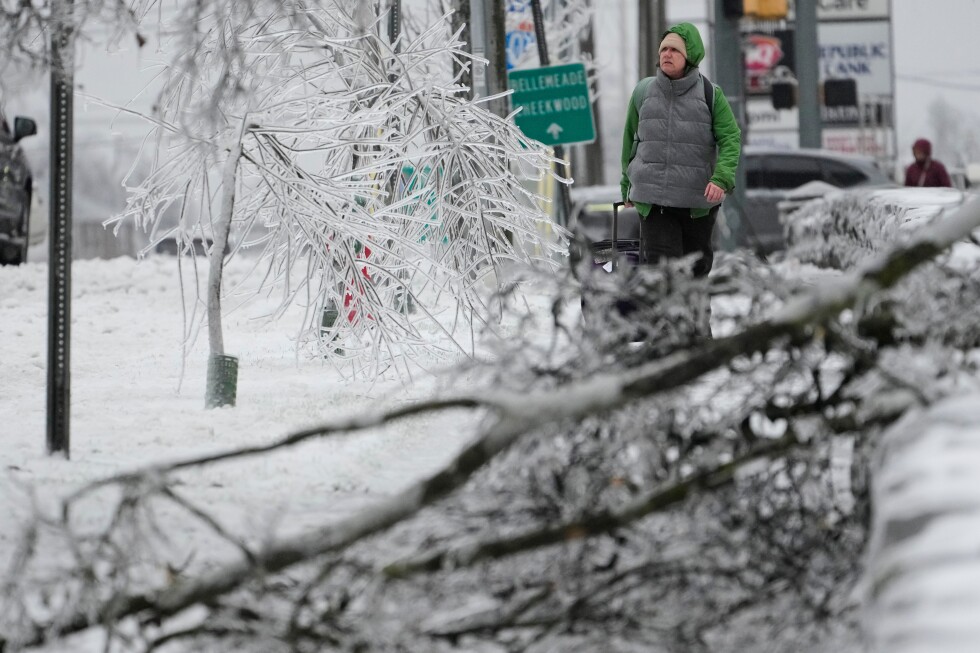
The massive winter storm that recently swept across the United States, affecting millions of Americans and leaving hundreds of thousands without power, has become a focal point in the ongoing budget negotiations in Washington. As the Friday midnight deadline approaches for Congress to pass funding legislation, Trump administration officials have cited FEMA’s storm response as a reason to avoid a partial government shutdown.
“We are in the midst of the winter storm that took place over the weekend, and many Americans are still being impacted by that, so we absolutely do not want to see that funding lapse,” White House press secretary Karoline Leavitt told reporters on Monday.
However, experts maintain that FEMA’s disaster response capabilities would remain intact, at least temporarily, even without new congressional appropriations.
“They have enough money for winter storm recovery and anything else likely to come up in the next few weeks,” said Sarah Labowitz, senior fellow at the Carnegie Endowment for International Peace and author of the Disaster Dollar Database.
The current funding impasse stems from disagreements over Department of Homeland Security operations, particularly immigration enforcement. After federal immigration officers killed a Minneapolis man on Saturday, some Senate Democrats are demanding restrictions on immigration enforcement activities in any DHS funding bill, potentially triggering a partial government shutdown affecting multiple agencies, including FEMA.
President Donald Trump has already approved emergency declarations for 12 states affected by the recent winter storm, unlocking federal support for emergency measures and debris removal. FEMA has positioned supplies across multiple states and is coordinating federal assistance from agencies like the U.S. Forest Service and Army Corps of Engineers to clear roads and provide generators to critical facilities.
The timing of the potential shutdown provides some cushion for disaster response. “We’re a bit of a ways off from wildfire season and hurricane season, so I don’t see a huge impact in the short run in terms of FEMA operations,” said Noah Patton, director of disaster recovery at the National Low Income Housing Coalition.
A shutdown would affect certain FEMA operations not funded through the Disaster Relief Fund, such as the ability to write or renew National Flood Insurance Program policies. Essential employees would continue working without pay until funding is restored.
The pending Senate spending bill would inject more than $26 billion into the Disaster Relief Fund, along with nearly $4 billion for various FEMA emergency preparedness and security grants. If passed, this would substantially bolster the agency’s financial position.
Critics point to contradictions in the Trump administration’s stance on FEMA. While officials now emphasize the agency’s importance to argue against a shutdown, President Trump has repeatedly suggested phasing out FEMA and shifting more disaster response responsibility to states.
“The administration has been dismantling FEMA over the last year,” said Michael Coen, former FEMA chief of staff during the Obama and Biden administrations. “Using the agency as a justification for congressional action is laughable.”
The administration’s policies have already impacted FEMA operations. Thousands of staffers have departed, and various grant programs have been interrupted. A long-anticipated report from Trump’s FEMA Review Council was abruptly canceled in December with no reschedule date announced.
The current spending bill contains provisions aimed at curtailing some of these actions, including limits on FEMA’s ability to pause grants and training programs, while requiring public reporting on reimbursement status to states for declared disasters.
Labowitz suggested that the Trump administration’s policies, including delays in approving major disaster declarations and slow-walking reimbursements, have contributed to FEMA’s current financial position by limiting expenditures throughout the past year.
As states continue assessing the impacts of the winter storm, it remains unclear how many will request major disaster declarations, which would provide additional financial assistance through the Disaster Relief Fund. For now, experts believe the response remains manageable.
“The winter storm at this time is well within the capability of local communities and states,” Coen said, suggesting that immediate federal intervention requirements may be limited.
Fact Checker
Verify the accuracy of this article using The Disinformation Commission analysis and real-time sources.

9 Comments
The administration’s warnings about FEMA’s funding lapsing seem overblown, given the agency’s large remaining disaster relief budget. Hopefully politics won’t get in the way of essential emergency management.
While a government shutdown would be disruptive, it’s good to know that FEMA can still support critical winter storm response efforts with the resources it has on hand. Disaster preparedness should be a nonpartisan priority.
The administration’s concerns about FEMA’s winter storm response being impacted by a shutdown seem unfounded, given the agency’s substantial remaining disaster relief funds. Hopefully this crisis can be averted.
Interesting that FEMA still has substantial funds to respond to winter storms, even if the government shuts down. This highlights the need for robust emergency management capabilities regardless of political gridlock.
Yes, FEMA’s Disaster Relief Fund seems well-stocked to handle immediate response needs. The bigger concern may be longer-term recovery efforts if the shutdown drags on.
Glad to see that FEMA can still support critical winter storm response efforts, even in the midst of a potential government shutdown. Protecting public safety should be the top priority.
Absolutely. FEMA’s disaster response capabilities must remain operational during times of political uncertainty. The American people deserve reliable emergency services.
It’s reassuring that FEMA has sufficient funds to maintain critical winter storm response, despite the threat of a government shutdown. Disaster relief should be insulated from political gridlock.
Agreed. FEMA’s primary mission is to protect lives and property during emergencies. Their capabilities must remain robust, regardless of the budget battles in Washington.