


Listen to the article
Federal Immigration Strategy Shifts in Minneapolis Following Public Backlash
The Trump administration is revamping its approach to immigration enforcement in Minneapolis after federal operations sparked intense protests and scrutiny. The city has become a focal point of tension between Immigration and Customs Enforcement (ICE) agents and local residents, particularly in the wake of the shooting deaths of Renee Good and Alex Pretti.
Minneapolis Mayor Jacob Frey openly challenged federal authorities, demanding that ICE “get the f— out” of his city after Good’s fatal shooting. The confrontation highlighted growing friction between federal immigration enforcement and local governance priorities.
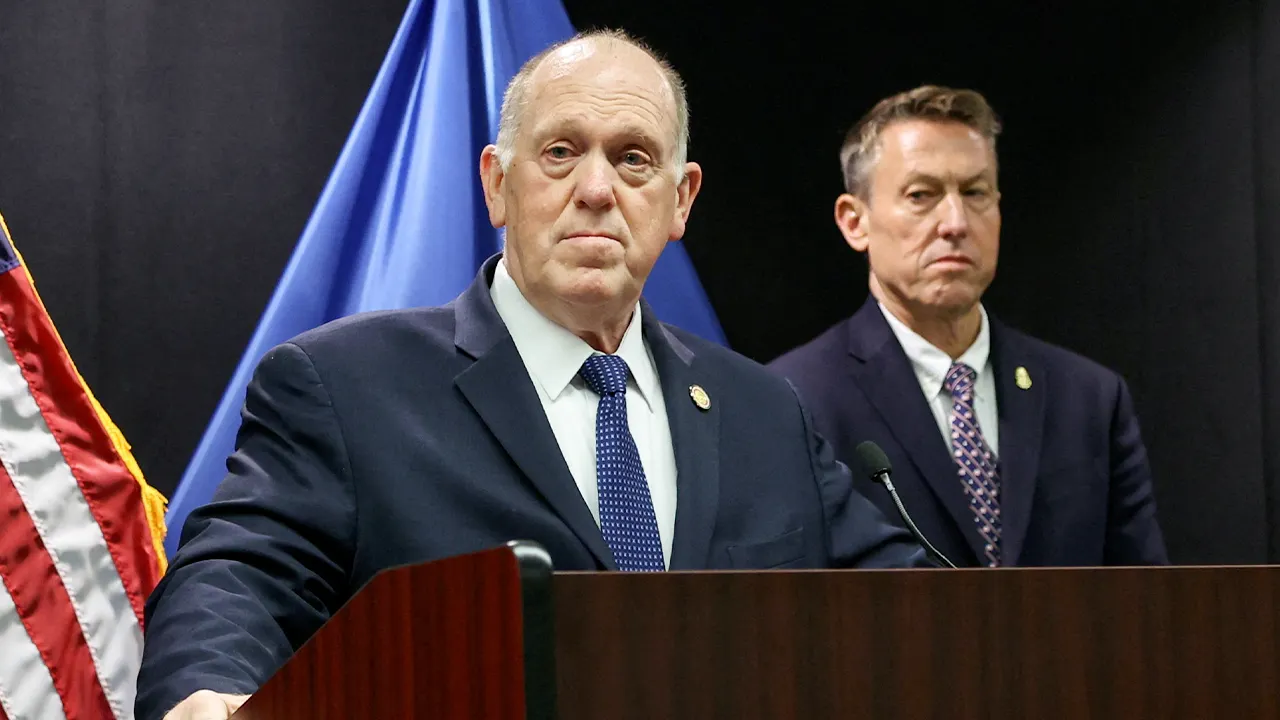
In response to the escalating situation, President Donald Trump dispatched border czar Tom Homan to Minnesota to manage operations and implement a revised strategy. White House officials have emphasized that Homan is working in coordination with Department of Homeland Security Secretary Kristi Noem to execute the president’s immigration agenda, dismissing rumors of internal friction.
Homan announced an immediate reduction of federal personnel in Minnesota, withdrawing 700 officers while maintaining a presence of 2,000 agents. This partial drawdown comes after securing what the White House described as “unprecedented” cooperation from Minnesota counties that have agreed to coordinate with ICE regarding the transfer of individuals in custody who are in the country illegally.
“These commitments have been made by local officials and will continue to be monitored for compliance,” White House press secretary Karoline Leavitt told reporters, indicating that a complete withdrawal of federal forces remains contingent on continued cooperation and an end to what she termed “illegal and threatening activities against ICE.”
Sources familiar with the situation report that Homan has implemented significant operational changes to how Customs and Border Protection (CBP) functions in Minneapolis. The new approach includes raising the threshold for making arrests and shifting away from rover patrols—previously conducted under Border Patrol commander Gregory Bovino—in favor of targeted operations.
Under the revised protocol, CBP agents have reportedly been instructed not to approach suspected undocumented immigrants unless they are specifically identified targets. These agents will now work alongside ICE officers to conduct precise enforcement actions rather than engaging in broader sweeps. Sources indicate that Homan has warned agents of consequences for deviating from these guidelines.
While the focus has shifted to targeted enforcement, a White House official confirmed that officers will still “enforce federal immigration law” if they encounter other undocumented individuals during planned operations.
The enforcement strategy relies heavily on data-driven targeting. Officials identify potential enforcement targets through public records cross-referenced with DHS databases that provide comprehensive profiles including criminal history, immigration status, document validity, and court appearance records.
Biometric identification plays a crucial role in the process. Sources indicate that fingerprint records collected during the previous administration are being utilized to identify targets. The system also alerts DHS when individuals who entered the country illegally are subsequently fingerprinted during local law enforcement interactions.
The situation in Minneapolis illustrates the complex dynamics between federal immigration enforcement and local governance. Mayor Frey has announced plans to visit Washington, DC, to advocate for the termination of what he describes as “unlawful ICE operations,” further highlighting the tension between municipal and federal authorities.
As federal operations continue under this revised approach, Minneapolis remains a testing ground for the Trump administration’s immigration enforcement policies and their interaction with local communities. The partial drawdown signals a tactical shift rather than a retreat from the administration’s broader immigration agenda.
Fact Checker
Verify the accuracy of this article using The Disinformation Commission analysis and real-time sources.

16 Comments
This is an interesting shift in immigration enforcement strategy. I’m curious to see how the new approach balances federal priorities with local concerns in Minneapolis.
It will be important to monitor how the revised strategy impacts community relations and public safety going forward.
It’s encouraging to see the administration take a more targeted approach in response to local concerns. However, the real test will be whether this strategy can effectively address the root issues.
Striking the right balance between federal priorities and community-level needs is no easy task, but this revised approach seems aimed in the right direction.
The confrontation between local officials and federal authorities highlights the complexities of immigration enforcement. A more targeted approach could help ease tensions, but details will be critical.
Coordinating enforcement with local leaders is a sensible step, but the outcome will depend on how it is implemented on the ground.
The confrontation between local and federal authorities underscores the need for a more nuanced approach to immigration enforcement. This revised strategy could be a step in the right direction.
Maintaining open communication and collaboration between all parties will be crucial to the success of this new enforcement approach in Minneapolis.
Reducing the federal presence in Minneapolis may help de-escalate the situation, but it remains to be seen if this strategy will be effective long-term. Careful monitoring will be essential.
The shift in tactics seems aimed at finding a middle ground, but the real test will be whether it can address the root issues driving the conflict.
This shift in enforcement tactics reflects the complex dynamics at play in Minneapolis. It will be important to closely follow how the new approach impacts public trust and safety.
The administration’s willingness to adjust its strategy is noteworthy, but the real challenge will be implementing a balanced solution that works for all stakeholders.
This shift in immigration enforcement tactics in Minneapolis reflects the complex and often contentious nature of the issue. It will be important to closely monitor the impact and outcomes.
Coordinating federal and local efforts is a sensible step, but the real challenge will be ensuring this new approach benefits all stakeholders in the long run.
It’s encouraging to see the administration respond to local concerns, but the proof will be in how this new approach unfolds. Transparent communication and collaboration will be key.
Balancing federal immigration priorities with community-level realities is no easy task. This revised strategy appears to be a step in the right direction.