


Listen to the article
Trump’s Attorneys Argue for Presidential Immunity in Capitol Riot Lawsuit
Attorneys representing former President Donald Trump appeared before a federal judge on Friday, arguing that he should be granted presidential immunity from civil claims related to the January 6, 2021, attack on the U.S. Capitol.
The case, heard by U.S. District Judge Amit Mehta in Washington, centers on a lawsuit filed by Democratic members of Congress who allege Trump instigated the mob that disrupted the certification of the 2020 presidential election results.
Trump’s legal team contended that his actions before and during the Capitol riot were protected by presidential immunity because he was acting in his official capacity as president. “The entire point of immunity is to give the president clarity to speak in the moment as the commander-in-chief,” Trump attorney Joshua Halpern told Judge Mehta.
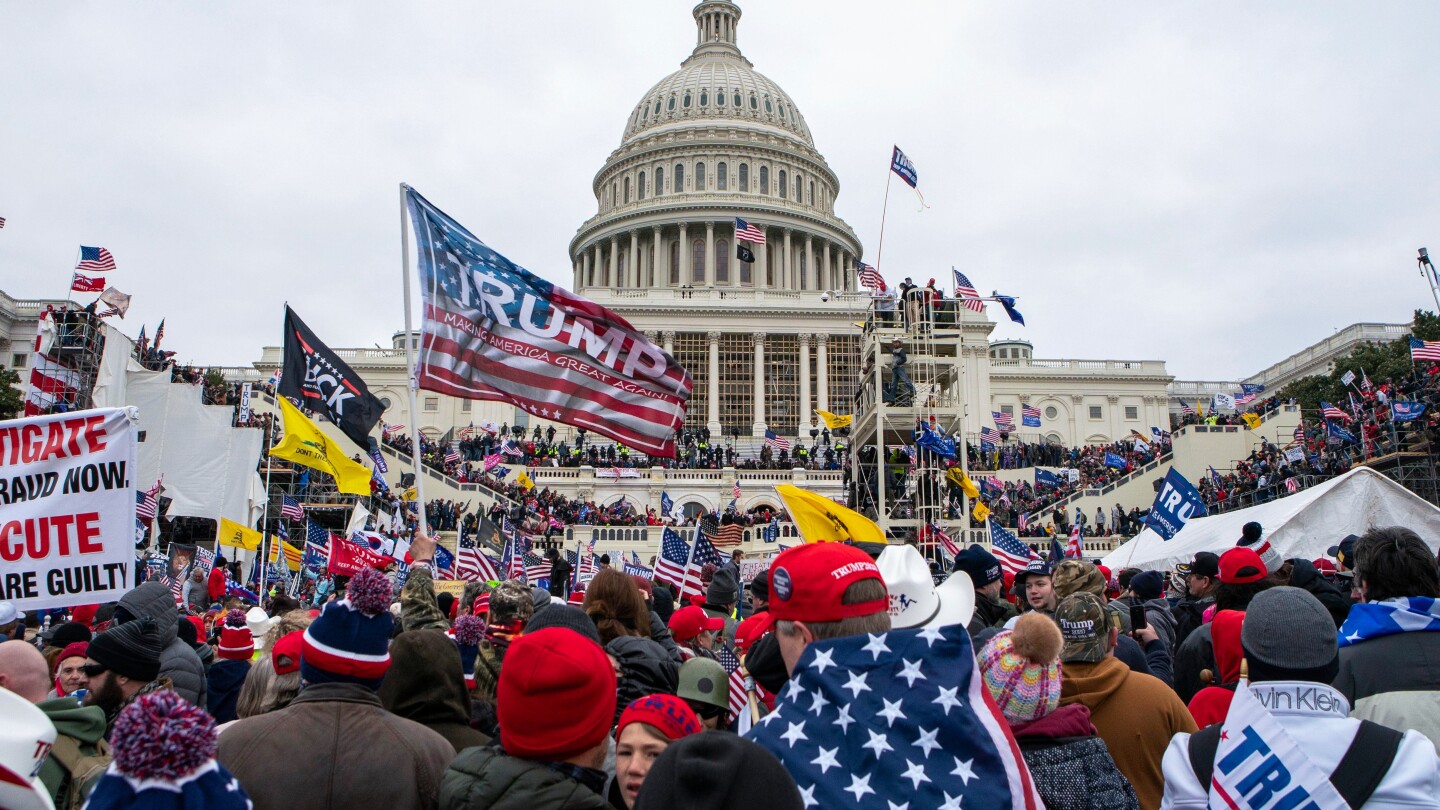
The legal battle comes against the backdrop of one of the most significant attacks on American democratic institutions in recent history. On January 6, 2021, thousands of Trump supporters stormed the Capitol following the “Stop the Steal” rally near the White House, where Trump addressed the crowd before the violence erupted.
Attorneys for the Democratic lawmakers, led by former House Homeland Security Committee Chair Rep. Bennie Thompson of Mississippi, argued that Trump cannot prove he was acting entirely in his official capacity rather than as a candidate seeking to retain office. They pointed to Supreme Court precedent establishing that office-seeking conduct falls outside the scope of presidential immunity.
“President Trump has the burden of proof here,” said plaintiffs’ attorney Joseph Sellers. “We submit that he hasn’t come anywhere close to satisfying that burden.”
The plaintiffs’ legal team emphasized that context matters in determining whether immunity applies. “You have to look at what happened leading up to January 6th,” Sellers argued, suggesting that the circumstances surrounding Trump’s remarks—not just the content—are crucial to establishing whether he should be immune from liability.
The civil lawsuit has persisted despite Trump’s sweeping clemency actions on the first day of his second term, when he pardoned individuals and ordered the dismissal of more than 1,500 criminal cases stemming from the Capitol siege. That attack resulted in injuries to over 100 police officers who were defending the Capitol.
Halpern defended the necessity of presidential immunity, arguing that it enables presidents to act “boldly and fearlessly” and exists “to protect the president’s prerogatives.”
Judge Mehta did not issue an immediate ruling after hearing arguments from both sides. “I have a lot to think about,” he told the courtroom, promising to issue a decision “as soon as we can.”
The case highlights ongoing tensions over accountability for the January 6 events and raises fundamental questions about the scope of presidential immunity. Legal experts note that this case could potentially establish important precedent regarding the limits of presidential power and immunity, particularly in situations where official duties and personal political interests may overlap.
The lawsuit originally named not only Trump but also his personal attorney Rudolph Giuliani and members of extremist groups including the Proud Boys and Oath Keepers, whose members played significant roles in the Capitol attack.
As the litigation continues, it represents one of the remaining legal challenges related to the Capitol riot, which many historians and constitutional scholars have characterized as one of the most serious threats to the peaceful transfer of power in American history.
Fact Checker
Verify the accuracy of this article using The Disinformation Commission analysis and real-time sources.

10 Comments
It’s a delicate balance the judge must strike – upholding the powers of the presidency while also ensuring accountability for abuses of that power. This case could have far-reaching implications for the limits of executive authority.
This is a complex legal issue without any easy answers. The judge will have to navigate the tension between the president’s authority and the need for accountability, especially given the severity of the Capitol attack. I’m interested to see how they rule.
This is a high-stakes case with major implications. Presidential immunity is important, but not if it shields leaders from responsibility for serious misconduct. I’ll be watching closely to see how the judge navigates this complex issue.
Interesting to see how the courts will handle this complex issue of presidential immunity. Trump’s lawyers will likely argue he was acting within his official capacity, while the plaintiffs will counter that he incited a violent attack.
Exactly, it’s a fine line the judge will have to walk. The outcome could set an important precedent for future cases involving the president’s actions.
The Capitol attack was a dark day for American democracy. While presidents should have some immunity, that shouldn’t extend to inciting violence against the government. I’m curious to see how the judge rules on this.
This will be a tricky legal case, as presidential immunity is meant to protect the office, not individual misconduct. The judge will have to weigh the gravity of the Capitol attack against the limits of executive privilege.
Agreed, the events of January 6th were a serious threat to democratic institutions. The court will need to carefully balance the president’s authority with the need for accountability.
Presidential immunity is meant to protect the office, not shield the person from all wrongdoing. The judge will have to carefully weigh the gravity of the Capitol attack against the president’s need for latitude in carrying out his duties.
The events of January 6th were a shocking assault on the peaceful transfer of power. While the president needs some latitude, that shouldn’t mean immunity for actions that undermine the democratic process. Curious to see the judge’s reasoning.