


Listen to the article
A federal judge has given the Trump administration two weeks to develop a plan ensuring due process for Venezuelan migrants who were deported to El Salvador in March, setting up another significant conflict between the White House and federal courts.
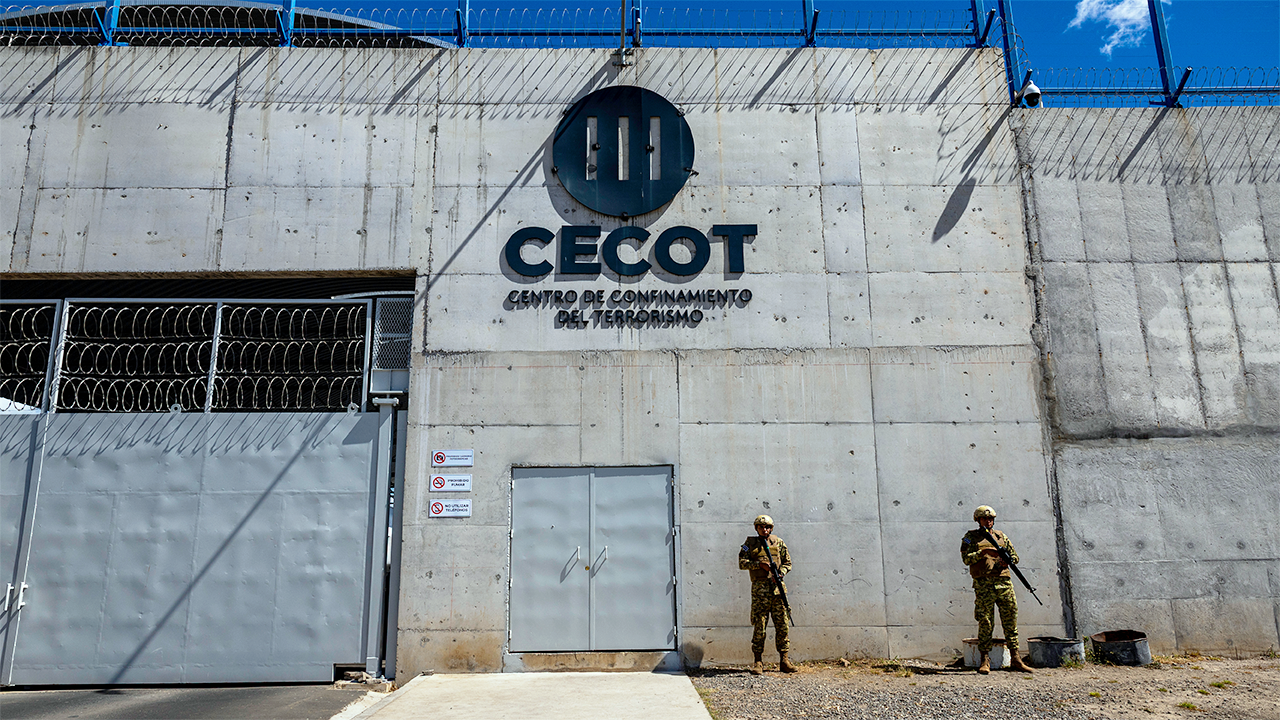
U.S. District Judge James Boasberg ruled Monday that the administration must submit by January 5 its strategy to provide due process protections to the migrants, who were sent to CECOT, a Salvadoran maximum-security prison. The judge determined the Trump administration’s actions were illegal and violated court orders, depriving the migrants of their constitutional rights.
“On the merits, the Court concludes that this class was denied their due-process rights and will thus require the Government to facilitate their ability to obtain such hearing,” Boasberg wrote. “Our law requires no less.”
The administration has two options to satisfy the court’s requirements: either return the migrants to the United States for in-person hearings or create a system to conduct hearings abroad that meet due process standards. The Justice Department is expected to appeal the ruling.
The case began 10 months ago when the Trump administration attempted to use the 1798 Alien Enemies Act, a wartime immigration law, to quickly deport hundreds of Venezuelan migrants. Judge Boasberg had initially ordered a halt to these deportations, but the flights landed in El Salvador hours after his emergency order was issued.
In his ruling, Boasberg cited evidence suggesting the U.S. maintained a level of control over the migrants at CECOT, pointing to an agreement between the U.S. and El Salvador to house the migrants for at least one year. He also referenced public statements from Homeland Security Secretary Kristi Noem and other DHS officials that characterized CECOT as an “extension” of U.S. detention facilities.
The judge rejected the government’s argument that it had no responsibility for the migrants once they were in El Salvador, writing that if “secretly spiriting individuals to another country were enough to neuter the Great Writ, then the Government could ‘snatch anyone off the street, turn him over to a foreign country, and then effectively foreclose any corrective course of action.'”
Complicating the case further, the CECOT migrants were moved again in July from El Salvador to Venezuela as part of a broader prisoner exchange that secured the return of at least 10 Americans detained in Venezuela. This transfer made it difficult to contact the migrants, many of whom had originally fled Venezuela and gone into hiding.
According to the American Civil Liberties Union, which represents the plaintiffs, 137 of the 252 Venezuelan migrants deported in March still wish to proceed with their due process cases.
The ruling adds to a growing list of judicial checks on Trump administration policies. Administration officials have criticized Boasberg and other judges who have blocked executive actions as “rogue, activist” judges overstepping their authority. They argue that lower court judges shouldn’t have the power to impede what they consider lawful presidential actions.
Boasberg, who serves as chief judge for the U.S. District Court, has remained steadfast in his approach. In November, he told the Justice Department he “certainly intends to determine what happened” on the day the government violated his emergency order to halt the deportations.
This case represents one of several high-profile legal battles between the Trump administration and federal courts over immigration policy. The administration has consistently pushed for expanded executive authority in immigration enforcement, while judges have insisted on constitutional protections for all persons within U.S. jurisdiction, regardless of immigration status.
The outcome of this case could have significant implications for the limits of executive power in immigration enforcement and the constitutional rights afforded to migrants facing deportation.
Fact Checker
Verify the accuracy of this article using The Disinformation Commission analysis and real-time sources.

18 Comments
While I understand the administration’s desire to enforce immigration laws, this decision reinforces that due process must be upheld. It will be important to monitor how this case progresses and whether a balanced solution can be found.
Agreed, this is a delicate balance that requires careful consideration of all stakeholder interests. I hope the administration can devise a system that satisfies the court’s requirements while also addressing border security concerns.
This ruling highlights the ongoing tension between immigration enforcement and individual rights. I hope the administration can find a solution that balances these important considerations.
It will be interesting to see if the administration appeals the decision or complies with the court order. Maintaining the integrity of the legal system is critical in these matters.
This ruling underscores the importance of protecting the constitutional rights of all individuals, including migrants. Striking the right balance between security and due process is critical.
I agree that the administration must find a way to satisfy the court’s requirements while also addressing legitimate border concerns. This will require careful consideration of all stakeholder interests.
This is a challenging situation that requires a nuanced approach. I’m glad the court is upholding due process, but the administration must also address border security concerns. Finding the right balance will be crucial.
Agreed, this is a complex issue with valid arguments on multiple sides. Curious to see how the administration responds and whether they can devise a solution that satisfies the court’s requirements.
This ruling highlights the ongoing tension between immigration policy and individual rights. I hope the administration can develop a solution that addresses both the court’s concerns and legitimate border security needs.
Curious to see if the administration appeals the decision or complies with the court order. Maintaining the integrity of the legal system is critical, even in complex immigration cases.
The court’s decision reinforces the importance of protecting the constitutional rights of all individuals, even in the context of immigration enforcement. It will be important to monitor how this case progresses.
Upholding due process is essential, but the administration must also grapple with the challenges of border security. Finding the right balance will be crucial in this case.
This is a complex issue with valid concerns on both sides. I’m curious to see how the administration responds and whether they can devise a workable system to uphold due process while also addressing border security challenges.
It will be interesting to see if the administration appeals the ruling or complies with the court order. Either way, this highlights the need for a balanced, humane approach to immigration policy.
While I understand the administration’s desire to enforce immigration laws, this decision reinforces that due process must be upheld. It will be important to monitor how this case progresses.
Curious to see if the administration can develop a system that meets the court’s standards for due process. Upholding the rule of law is essential, even in complex immigration cases.
This ruling underscores the need for a humane and lawful approach to immigration policy. I’m curious to see how the administration responds and whether they can develop a solution that upholds due process and addresses border security challenges.
Upholding the rule of law is essential, even in complex immigration cases. I hope the administration can find a way to comply with the court’s order while also maintaining the integrity of the legal system.