


Listen to the article
A federal judge has declined to block a new Trump administration policy requiring members of Congress to provide one week’s notice before visiting immigration detention facilities, despite opposition from Democratic lawmakers who were recently turned away from such a facility.
U.S. District Judge Jia Cobb in Washington, D.C. ruled Monday that the plaintiffs had used the wrong “procedural vehicle” to challenge the policy, though she emphasized her decision was not based on “any kind of finding that the policy is lawful.”
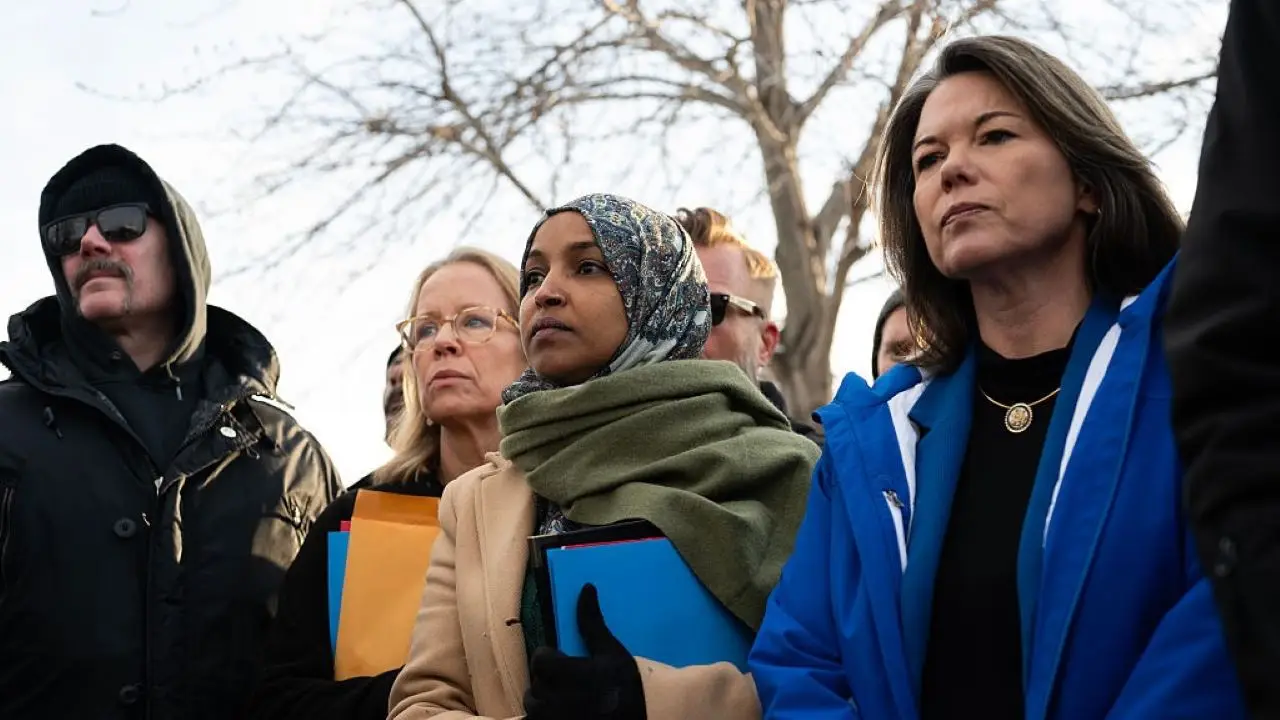
The ruling follows an incident on January 10 when Rep. Ilhan Omar, D-Minn., along with fellow Minnesota lawmakers Kelly Morrison and Angie Craig, were denied entry to an Immigration and Customs Enforcement (ICE) facility in Minneapolis. Officials cited the Trump administration’s new seven-day notice requirement as grounds for refusing them access.
“We will continue to use every legal tool available to stop the administration’s efforts to hide from congressional oversight,” said Melissa Schwartz, spokeswoman for Democracy Forward, the legal advocacy group representing the lawmakers.
This latest dispute stems from a January 8 memorandum signed by Department of Homeland Security Secretary Kristi Noem that reinstated the advance notice requirement. The memo was issued just one day after a death at the Minneapolis facility, according to reports by The Associated Press.
The timing has fueled criticism that the policy is designed to limit congressional oversight at a politically sensitive moment. House Democrats have argued the restrictions violate Section 527, a federal spending law provision that prohibits DHS from using appropriated funds to prevent congressional access to these facilities.
Last month, on December 17, Judge Cobb had temporarily blocked a similar administration oversight policy, ruling that it was likely illegal for ICE to demand a week’s notice from members of Congress seeking to visit and observe conditions in ICE facilities. The judge had stayed those restrictions from taking effect “unless and until Defendants show that no Section 527 funds are being used for these purposes.”
Democrats contend the administration has not demonstrated compliance with this requirement for the new policy. Justice Department attorney Amber Richer, however, argued that the January 8 policy signed by Noem is distinct from the policies that Cobb suspended in December.
The dispute highlights the ongoing tensions between congressional oversight and executive branch policies regarding immigration detention facilities. Immigration has become a central focus of the Trump administration’s agenda, with increased enforcement actions and policy changes affecting how detention facilities operate.
Congressional Democrats have consistently sought access to these facilities to assess conditions, particularly following reports of overcrowding, inadequate medical care, and other concerns raised by immigration advocates in recent years.
The notice requirement creates a significant procedural hurdle for lawmakers seeking to conduct unannounced visits, which some argue are necessary for genuine oversight. Unannounced inspections are considered by oversight experts to be more effective at revealing actual day-to-day conditions rather than potentially staged environments that might result from advance notice.
The legal battle reflects broader conflicts between the legislative and executive branches over immigration policy and the appropriate level of transparency in federal detention operations. As this case progresses through the courts, the fundamental questions about congressional oversight powers and executive branch authority remain unresolved.
For now, the administration’s policy requiring one week’s notice for congressional visits to ICE facilities remains in effect, though further legal challenges appear likely as lawmakers continue pressing for greater access and oversight.
Fact Checker
Verify the accuracy of this article using The Disinformation Commission analysis and real-time sources.

6 Comments
This is an interesting development in the ongoing tensions between Congress and the Trump administration over immigration detention facility access. It will be important to see how this plays out and whether the administration’s new policy can withstand further legal challenges.
This is an important issue that touches on fundamental questions of government accountability and the separation of powers. I’ll be following this story closely to see how the legal battles unfold and whether the administration’s policies are ultimately deemed lawful.
As a concerned citizen, I’m troubled by any efforts to restrict congressional access to detention facilities. Oversight and transparency are critical, regardless of political affiliation. I hope the courts continue to carefully review the administration’s policies in this area.
This is a complex issue with valid arguments on both sides. While I can understand the administration’s desire for orderly facility access, denying lawmakers immediate entry raises red flags. The legal process will be important in striking the right balance.
The administration’s restrictions on congressional visits to detention facilities are concerning and seem to undermine principles of transparency and accountability. I hope the courts continue to closely scrutinize the legality of these policies.
I agree, the administration’s actions appear to be an attempt to limit oversight and obscure what’s happening inside these facilities. Robust congressional oversight is essential.