


Listen to the article
Minneapolis Anti-ICE Protests Fall Short of Constitutional Crisis, Experts Say
Tensions have escalated in Minneapolis as protesters confront Immigration and Customs Enforcement (ICE) agents, but legal experts maintain these actions do not yet constitute a constitutional breakdown that would justify emergency federal intervention.
The unrest stems from Operation Metro Surge, a federal immigration enforcement effort launched in December that deployed approximately 3,000 ICE and Customs and Border Protection agents to Minneapolis and St. Paul. The operation has resulted in thousands of arrests but has also sparked significant local resistance.
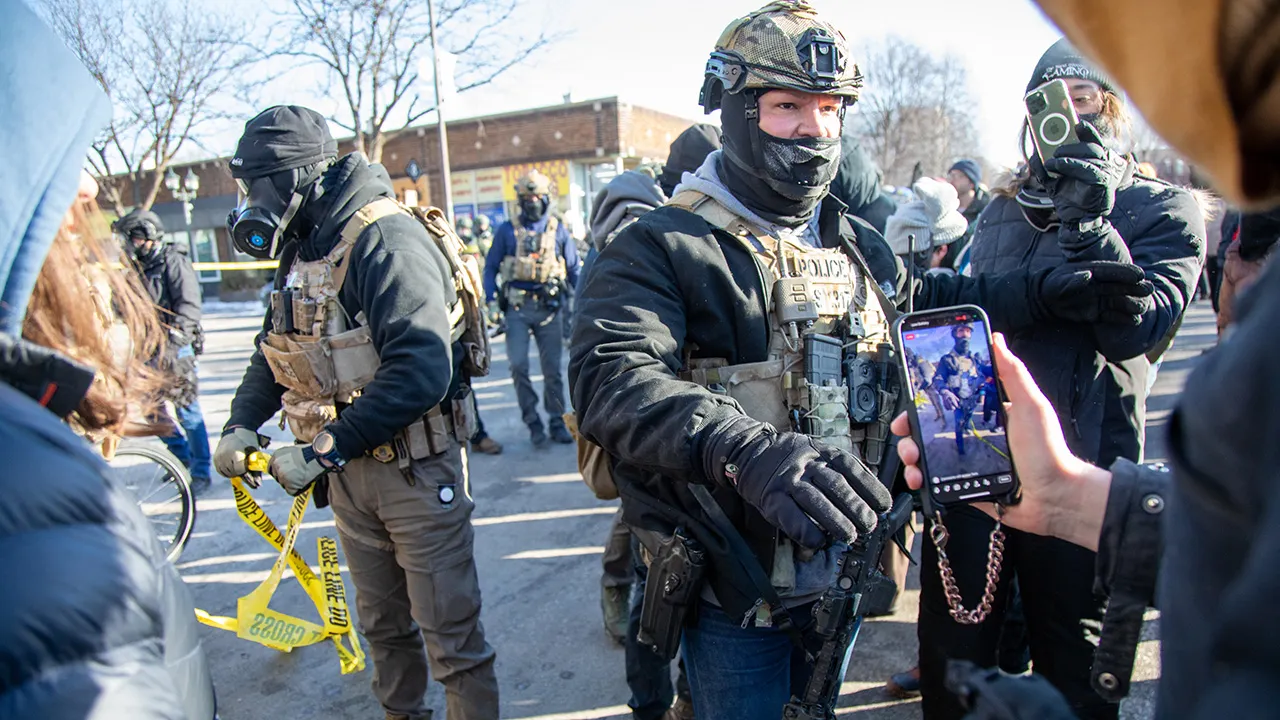
Protesters have surrounded federal agents during enforcement actions, creating tense confrontations that include shouting, whistling, filming, and occasionally escalating into blockades or violence. However, legal analysts emphasize that such resistance, while disruptive, does not inhibit the federal government’s constitutional authority to enforce immigration law.
“There is no general principle of law which says that anything that makes the work of federal agents more difficult in any way somehow violates the Constitution,” said Ilya Somin, a George Mason University law professor, in an interview with Fox News Digital.
The situation has been complicated by two high-profile deaths of U.S. citizens during enforcement operations, which have fueled public outrage and prompted FBI investigations. In late January, protesters clashed with law enforcement after a federal agent shot and killed a man—the second federal-involved shooting in the city that month.
Democratic state leaders have been vocal in their criticism of the operation. Minnesota Governor Tim Walz notably compared ICE’s presence to the Civil War, asking, “I mean, is this a Fort Sumter? It’s a physical assault. It’s an armed force that’s assaulting, that’s killing my constituents, my citizens.”
Meanwhile, Minneapolis Mayor Jacob Frey has stated that the city will not assist with immigration enforcement. “We were never going to agree, and we have not agreed, to enforce federal immigration law. Why? It’s not our job,” Frey told The New York Times.
Legal experts point out that this stance is protected by the anti-commandeering doctrine rooted in the Tenth Amendment, which prevents the federal government from forcing state and local officials to enforce federal law. However, this is distinct from obstruction, which would violate the Supremacy Clause.
“Nullification is when the state officials themselves resist the enforcement of federal law. If they merely fail to help the feds against private parties, that is something that’s protected by anti-commandeering principles,” Somin explained.
As official resistance has taken shape, grassroots opposition has intensified. A network called “Defend the 612” has coordinated what activists describe as “ICE watching,” using encrypted messaging apps to track enforcement activities and share information about agents’ movements.
Federal authorities have responded by arresting individuals accused of directly impeding immigration enforcement. Attorney General Pam Bondi announced charges against 16 people accused of blocking agents, assaulting officers, or interfering with enforcement actions. The Justice Department also charged a self-described Antifa member with cyberstalking after allegedly calling for attacks on ICE and doxxing a pro-ICE individual.
In January, the Department of Justice subpoenaed Governor Walz, Mayor Frey, and three others for information on whether they conspired to interfere with ICE operations, though the status of this investigation remains unclear.
The Trump administration has mentioned the possibility of invoking the Insurrection Act—a rarely used provision that allows the president to respond to unlawful obstructions of federal authority. However, President Trump has indicated this measure is not currently necessary.
Tom Homan, Trump’s border czar leading immigration operations in Minneapolis, has downplayed the impact of protesters. “You’re not going to stop ICE. You’re not going to stop Border Patrol,” Homan said. “These roadblocks they’re putting up? It’s a joke. It’s not going to work, and it’s only going to get you arrested.”
Constitutional scholars agree that while the Insurrection Act could theoretically be invoked, the current situation does not warrant such drastic measures. Fox News contributor Jonathan Turley noted that while “roadblocks and direct interference with the enforcement of federal laws can support such an invocation,” the Minnesota protests have not yet met this threshold.
As tensions continue in the Twin Cities, the legal boundaries between protected protest and unlawful obstruction will likely remain at the center of this evolving immigration enforcement controversy.
Fact Checker
Verify the accuracy of this article using The Disinformation Commission analysis and real-time sources.

14 Comments
The legal experts’ assessment that the protests, while disruptive, do not rise to the level of a constitutional crisis is an important perspective to consider. These are complex issues without easy answers, and it’s good to see a measured, fact-based analysis rather than knee-jerk reactions.
Agreed, this kind of impartial, evidence-based approach is crucial when dealing with politically charged topics. It helps provide much-needed context and clarity amidst the noise.
Interesting examination of the legal boundaries around federal intervention in protests. While the anti-ICE actions may be disruptive, it seems the experts agree they don’t rise to the level of a constitutional crisis. Curious to see how this ongoing situation evolves.
Agreed, the legal analysis provides important context. It’s a delicate balance between federal authority and citizens’ rights to protest.
I’m glad to see legal experts weighing in on the limits of federal power in this context. While the protests may be disruptive, it’s reassuring that they don’t appear to cross the line into a constitutional crisis, at least based on the information provided.
Agreed, the analysis helps provide important clarity on the legal parameters. These are complex issues without simple solutions.
This is a delicate and politically charged issue, so I appreciate the experts’ effort to examine it through a legal lens. While the protests may be disruptive, the analysis suggests they don’t cross the line into a constitutional crisis. It’s a nuanced situation that warrants careful consideration.
Absolutely, maintaining a balanced perspective on these kinds of issues is crucial. The legal analysis provides an important counterpoint to more inflammatory rhetoric or partisan narratives.
This highlights the complexities around immigration enforcement and civil liberties. The federal government has a mandate to uphold laws, but protesters also have constitutional protections. Maintaining that balance will be crucial as this situation continues.
Absolutely. The experts’ perspectives help frame the nuances at play here. It’s a challenging issue without easy answers.
The legal experts’ assessment that the protests, while disruptive, do not constitute a constitutional crisis is a valuable perspective. It’s a complex issue without easy answers, but this analysis helps provide some important context and clarity.
Agreed, this kind of measured, fact-based analysis is crucial when dealing with such polarizing topics. It’s a good reminder to avoid knee-jerk reactions and instead strive for a more nuanced understanding.
This is a sensitive and contentious issue, and it’s good to see it being examined through a legal lens. The experts’ perspectives offer a measured take on the boundaries of federal authority versus protesters’ rights. It will be interesting to see how this situation continues to unfold.
Absolutely, nuance and impartiality are crucial when dealing with such charged political topics. The legal analysis helps frame the discussion in a more constructive way.