


Listen to the article
Federal Transportation Officials Remove Hundreds of Non-English Proficient Truckers in National Crackdown
Federal transportation authorities have taken nearly 2,000 unqualified truckers off American roads during a recent three-day enforcement operation, including approximately 500 drivers penalized for failing to meet English proficiency standards.
The latest iteration of Operation SafeDRIVE (Distracted, Reckless, Impaired, Visibility Enforcement) was conducted from January 13-15 across trucking corridors in 26 states and the District of Columbia. The U.S. Department of Transportation’s Federal Motor Carrier Safety Administration (FMCSA) partnered with state law enforcement agencies in what officials described as a high-visibility enforcement and education effort targeting unsafe drivers.
“Operation SafeDRIVE shows what happens when we work together with our law enforcement partners to pull unqualified drivers and vehicles off American roads,” USDOT Secretary Sean Duffy told Fox News Digital. “We need a whole-of-government approach to ensure the Trump Administration’s strong standards of safety are in place to protect American families and reduce road accidents.”
The operation conducted more than 8,200 inspections that resulted in 704 drivers being taken out of service. Officials also removed 1,231 vehicles from service due to safety violations, and made 56 arrests, including several for DUI/DWI and illegal presence in the United States.
FMCSA Administrator Derek Barrs emphasized that public safety was the operation’s primary goal. “When drivers ignore the rules, operate without proper qualifications, or get behind the wheel impaired, they put all of our lives at risk,” Barrs said.
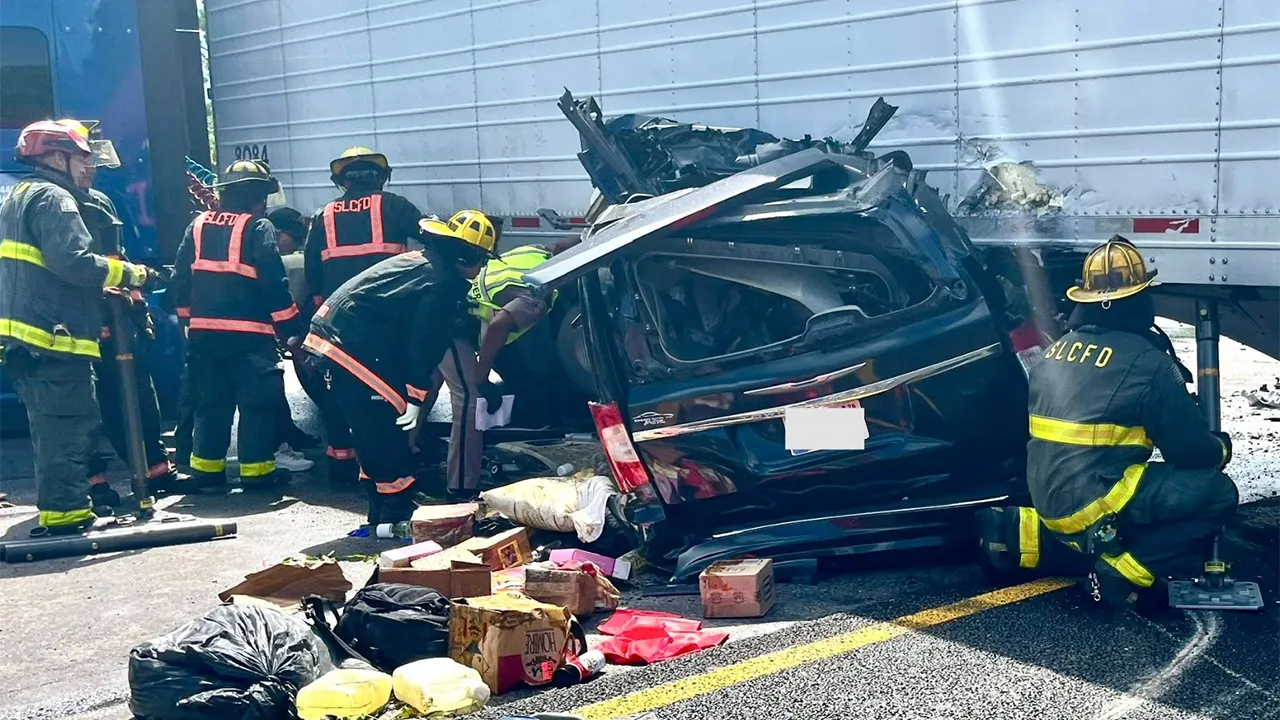
The enforcement operation comes amid heightened concerns about roadway safety following several high-profile incidents involving non-citizen commercial drivers. Just days before the operation’s results were announced, a Kyrgyz national, Bekzhan Beishekeev, caused a deadly crash in Jay County, Indiana, after failing to brake for stopped traffic, crossing the median, and colliding with oncoming vehicles.
Beishekeev had entered the U.S. in 2023 using the CBP-1 app and later obtained a commercial driver’s license (CDL) from the Pennsylvania Department of Transportation. The incident sparked a dispute between Department of Homeland Security officials and Pennsylvania Governor Josh Shapiro over responsibility for vetting driver’s license applicants.
Another recent case involved an Indian national arrested at an Oklahoma weigh station whose New York State-issued commercial driver’s license listed him as “NO NAME.” The individual, later identified as Anmol Anmol, had illegally entered the U.S. in 2023 and was transferred to federal authorities under Oklahoma’s 287(g) cooperation agreement with Immigration and Customs Enforcement (ICE).
DHS Assistant Secretary Tricia McLaughlin criticized New York’s practices, saying the state is “not only failing to check if applicants applying to drive 18-wheelers are U.S. citizens but even failing to obtain the full legal names of individuals they are issuing commercial drivers’ licenses to.”
The trucking industry has increasingly faced scrutiny over licensing standards and verification procedures for commercial drivers. In another incident, an Uzbek national wanted in Tashkent on terrorism charges was apprehended in Oklahoma while possessing a Pennsylvania driver’s license, leading to further disputes between state and federal officials over responsibility for vetting processes.
Pennsylvania officials have defended their practices, with PennDOT Secretary Mike Carroll and Secretary of the Commonwealth Al Schmidt issuing a letter stating that all non-citizens applying for driver’s licenses must provide proof of identity and have their legal presence verified through the federal Systematic Alien Verification for Entitlements (SAVE) database.
The recent enforcement operation and ongoing incidents highlight the complex interplay between state licensing authorities, federal immigration enforcement, and transportation safety regulations as officials work to ensure that commercial drivers meet all qualifications necessary for road safety.
Fact Checker
Verify the accuracy of this article using The Disinformation Commission analysis and real-time sources.

9 Comments
This crackdown seems like a heavy-handed approach that could further strain the already stressed trucking industry. I hope policymakers can find a balance between safety and workforce needs through more constructive dialogue and support.
The rise in truck accidents is concerning, but I’m not convinced that targeting non-English speakers is the most effective way to address the issue. There may be other factors, like driver fatigue or distraction, that also need to be considered.
That’s a fair point. A more holistic review of safety risks and solutions would likely yield better results than a narrow focus on language proficiency.
While I understand the safety concerns, removing hundreds of drivers could exacerbate supply chain issues. Perhaps a phased approach with more emphasis on training and transition support would be a better way forward.
While driving safety is paramount, I worry this crackdown could exacerbate existing labor shortages in the trucking sector. Proactive efforts to improve English skills and legal status, rather than sudden enforcement, may be a more constructive solution.
That’s a thoughtful perspective. A collaborative approach focused on training and support could yield better long-term results than abrupt enforcement actions.
This sounds like a necessary step to improve road safety, though it raises concerns about the impact on the trucking industry and the workers affected. Ensuring English proficiency is understandable, but finding solutions to address labor shortages will also be crucial.
You make a fair point. Balancing safety needs with workforce challenges will require nuanced policymaking to find the right approach.
Improving road safety is crucial, but this crackdown appears to target a relatively narrow issue. I wonder if there are other factors, like driver fatigue or inadequate infrastructure, that also need to be addressed to truly reduce accidents.