


Listen to the article
Federal Judge Upholds Trump Administration’s $259 Million Medicaid Funding Deferral to Minnesota
A federal judge this week declined to block the Trump administration’s withholding of more than $259 million in Medicaid funds from Minnesota, delivering a temporary legal victory to the White House in its expanding anti-fraud initiative.
Judge Eric Tostrud, a Trump appointee, ruled that Minnesota’s challenge to the funding deferral was premature and denied the state’s request for a preliminary injunction. In his 42-page order, Tostrud stated that Minnesota’s legal theories were “novel” and unsupported by law.
The Centers for Medicare and Medicaid Services (CMS) will now be allowed to continue withholding the funds while requiring Minnesota to provide evidence that Medicaid reimbursements were legitimate before receiving payment.
The ruling bolsters the Trump administration’s aggressive anti-fraud campaign, largely spurred by Minnesota’s notorious $250 million Feeding Our Future scandal that first gained national attention in 2022. The fraud scheme has resulted in multiple convictions and transformed Minnesota into a focal point in the broader debate over public benefits fraud.
“Some of the legal theories Minnesota asserts are novel, and the law does not support them,” Tostrud wrote in his decision, which addresses Minnesota’s claims that the deferral violated both the Administrative Procedures Act and constitutional due process requirements.
The case highlights the administration’s shift toward preventative fraud measures rather than pursuing reimbursement after fraud has occurred. President Trump established an anti-fraud task force in March through an executive order that specifically cited Minnesota’s fraud issues as a “case in point” for the need for increased vigilance.
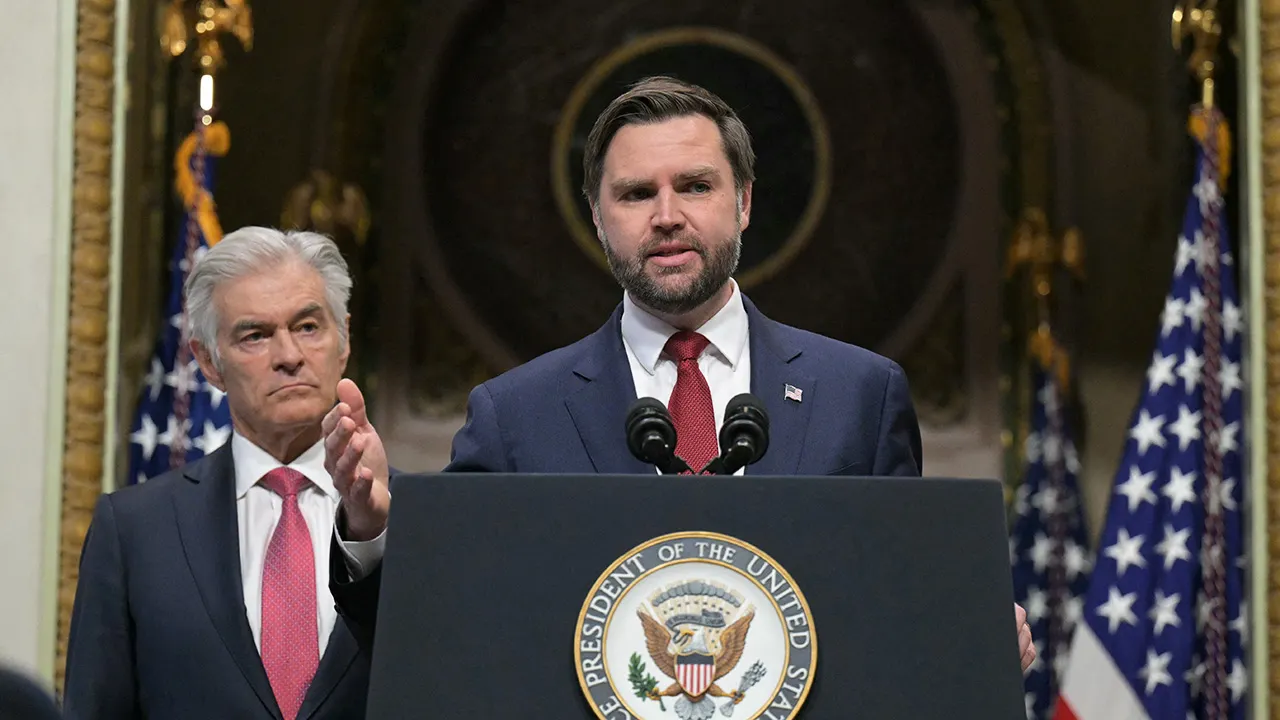
Vice President JD Vance leads the task force as the administration’s fraud czar, coordinating a multi-agency approach to fraud prevention and detection. CMS Administrator Mehmet Oz has been instructed to take a more proactive stance by temporarily withholding reimbursements to states over potential instances of fraud, not just proven cases.
Beyond Minnesota, CMS is considering similar Medicaid deferrals in California, New York, and Maine, potentially triggering additional litigation across multiple federal jurisdictions that could eventually reach higher courts.
At the heart of the dispute is a state-commissioned review of Minnesota’s Medicaid program that identified vulnerabilities in 14 “high-risk” Medicaid services over a four-year period. The report flagged approximately $1.7 billion in potentially improper payments, a figure that became a key justification for the administration’s intervention.
Minnesota Attorney General Keith Ellison, in the state’s lawsuit against the administration and CMS, alleged that “the federal government has weaponized Medicaid against Minnesota as political punishment.” Ellison argued that “deferral has never been used to categorically deny funds to a state across entire service areas, as is being done here.”
Judge Tostrud rejected these arguments, citing the 2019 Supreme Court case Department of Commerce v. New York. He noted that even if the Trump administration’s actions were partially motivated by political considerations, that alone would not make the Medicaid deferral unlawful.
“A court may not set aside an agency’s policymaking decision solely because it might have been influenced by political considerations or prompted by an Administration’s priorities,” Tostrud wrote, quoting a concurring opinion in the case. “Agency policymaking is not a rarified technocratic process, unaffected by political considerations or the presence of Presidential power.”
The ruling comes amid heightened scrutiny of public benefits programs nationwide, with the administration expanding its focus beyond Minnesota. In California, the Vance-led task force has already suspended 221 hospice and healthcare providers as part of the same initiative.
As the legal battle continues, the case represents a significant test of federal authority in managing Medicaid funds and addressing potential fraud in state-administered healthcare programs. Ellison’s office has not yet commented on potential next steps or appeals.
Fact Checker
Verify the accuracy of this article using The Disinformation Commission analysis and real-time sources.

14 Comments
While the details of the Feeding Our Future scandal are concerning, I hope the state of Minnesota is given a fair opportunity to address the administration’s fraud allegations and reclaim the deferred Medicaid funds.
That’s a reasonable perspective. Ensuring due process and a balanced approach is important, even as the government cracks down on fraudulent activity.
The federal court’s ruling bolsters the Trump administration’s broader anti-fraud campaign. This decision could have implications for Medicaid enforcement efforts in other states as well.
Absolutely. This ruling sets a precedent that could embolden the administration to pursue similar Medicaid fraud crackdowns in other jurisdictions.
The federal court’s decision to uphold the Trump administration’s Medicaid fraud enforcement in Minnesota is an important step in combating public benefits abuse. Taxpayer funds should be used responsibly, not squandered through fraudulent schemes.
Agreed. Cracking down on Medicaid fraud is crucial to ensuring program integrity and protecting vulnerable citizens who rely on these essential services.
This ruling demonstrates the Trump administration’s continued commitment to tackling Medicaid fraud, even as it leaves office. It will be interesting to see how the Biden administration approaches this issue going forward.
Agreed. The new administration’s stance on Medicaid fraud enforcement will be a key policy area to watch, as they balance anti-fraud efforts with maintaining access to healthcare.
Combating fraud in public benefit programs is a worthy goal, but the administration should ensure its enforcement actions don’t disproportionately burden vulnerable populations who rely on Medicaid. Nuance and balance are key.
Well said. The administration must strike a careful balance between rooting out fraud and preserving access to essential healthcare services.
The $259 million in deferred Medicaid funds is a significant sum. I’m curious to learn more about the specifics of the Feeding Our Future scandal and how pervasive the fraud issue is in Minnesota’s Medicaid system.
Yes, the scale of the alleged fraud is concerning. It will be important for the state to provide robust evidence to justify the reimbursements and regain the deferred funding.
While the fight against fraud is admirable, I hope the administration’s tactics don’t unfairly target or burden legitimate Medicaid recipients. Careful oversight is needed to balance anti-fraud efforts with preserving access to healthcare.
That’s a fair point. The administration should ensure its enforcement actions don’t inadvertently harm the very people the Medicaid program is meant to serve.