


Listen to the article
In a rare move that could reshape the relationship between the White House and America’s central bank, the Supreme Court heard oral arguments Wednesday in a case determining whether President Donald Trump has the authority to remove Federal Reserve Governor Lisa Cook from her position.
The case has drawn extraordinary attention from economic policy heavyweights, with an unprecedented amicus brief filed by every living former Federal Reserve chair along with six former Treasury secretaries and seven former White House economic advisers. This coalition spans five decades of U.S. economic policymaking and includes figures who served presidents of both parties.
Former Fed chairs Alan Greenspan, Ben Bernanke, and Janet Yellen joined other economic luminaries to argue that allowing presidential removal of Fed governors would “erode public confidence in the Fed’s independence and threaten the long-term stability of the economy.” Such public legal intervention from former Fed chairs and Treasury secretaries is virtually unheard of, as these officials typically maintain a low profile after leaving office.
In their 32-page filing, the group warned that expanding presidential power over Fed board membership is “neither necessary nor appropriate” and would ultimately prove counterproductive by weakening the central bank’s independence—potentially leading to higher inflation and economic instability.
The signatories emphasized that markets and economic actors are closely watching this dispute. “Sectors that pay close attention to the Federal Reserve—including the financial markets, the public, employers and lenders—are watching the current dispute over the President’s removal of Governor Cook to judge how credible the Fed will be going forward,” they wrote.
John Sauer, solicitor general representing the Trump administration, dismissed the amicus brief, arguing it focused on policy preferences rather than legal issues. “Most of Cook’s amici emphasize policy arguments, touting the perceived benefits of the Federal Reserve Board’s independence in setting monetary policy,” Sauer wrote, adding that “policy preferences are not the law, and these particular preferences lack any logical limit.”
The high-stakes case took on additional significance when Federal Reserve Chairman Jerome Powell made the unusual decision to attend the oral arguments in person. Powell’s appearance comes amid his own tensions with the Trump administration, including a criminal investigation by the U.S. Attorney’s Office in Washington, D.C., regarding his congressional testimony about renovations to the Fed’s headquarters.
Powell has characterized the investigation as “unprecedented” and suggested it represents another attempt by the Trump administration to apply pressure on the central bank’s policy decisions. The relationship between Trump and Powell has been strained throughout Trump’s presidency, with the former president frequently criticizing the Fed chair for not cutting interest rates more aggressively.
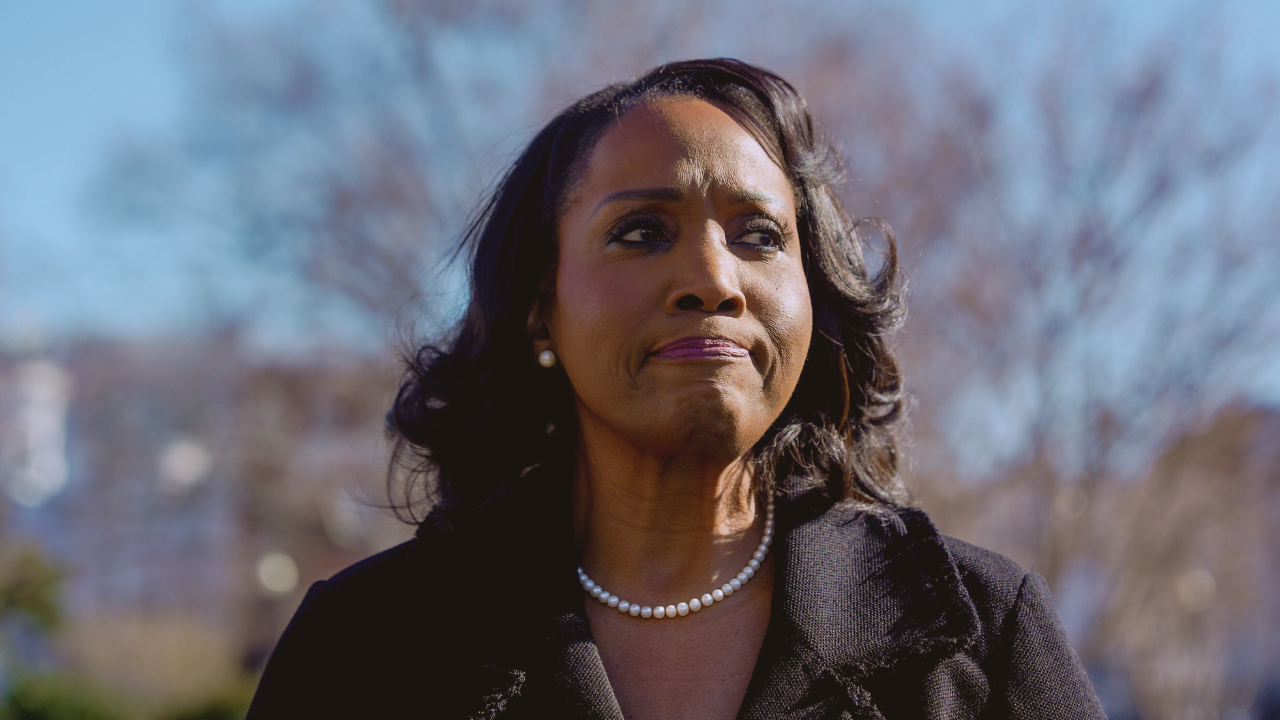
Cook’s position at the center of this legal battle adds another layer of historical significance to her tenure. When appointed, she made history at the Federal Reserve. Now, she stands at the center of a constitutional showdown that could allow a president to fire a Fed governor—something unprecedented in the central bank’s 112-year history.
The Supreme Court’s ruling, expected by summer, will have far-reaching implications for monetary policy independence and the relationship between the executive branch and the Federal Reserve. Financial markets, economists, and policymakers are watching closely, aware that the outcome could fundamentally alter how America’s central bank operates within the government’s balance of powers.
The decision comes at a particularly sensitive time for the economy, as the Federal Reserve navigates post-pandemic monetary policy and inflation concerns, adding urgency to questions about institutional independence and political influence over economic decision-making.
Fact Checker
Verify the accuracy of this article using The Disinformation Commission analysis and real-time sources.

18 Comments
This case highlights the delicate dance between the White House and the central bank. I’ll be interested to see how the Court rules on the boundaries of presidential power over the Fed.
Agreed. It’s a high-stakes decision that could have significant ramifications for the future of US economic policymaking.
This case is a crucial test of the Fed’s ability to operate as an independent institution. I hope the Court recognizes the importance of preserving that independence.
Me too. The stability and credibility of the US economy depends on the Fed being able to make decisions free from political interference.
This is a complex issue, but I’m glad to see the Fed chairs and Treasury secretaries speaking up. Maintaining the Fed’s credibility and apolitical status is critical for the economy.
Absolutely. Trying to exert too much political control over the Fed could seriously undermine its ability to make impartial, data-driven decisions.
Fascinating case – the Fed’s independence is crucial for economic stability. I’m curious to see how the Supreme Court weighs the balance of power between the White House and the central bank.
Agreed, this is an important decision that could have far-reaching implications. The amicus brief from such a distinguished group of economic policymakers carries a lot of weight.
This case raises some fundamental questions about the balance of power between the executive branch and the central bank. I’m curious to see how the Court navigates those issues.
Absolutely. It’s a complex constitutional question with major economic implications. The Court’s ruling will be closely watched.
The intervention of so many former economic policymakers underscores just how important this case is. Their collective voice carries a lot of weight.
Definitely. This isn’t just a technical legal issue – it goes to the heart of the Fed’s role and independence.
Maintaining the Fed’s independence is crucial for ensuring sound monetary policy that serves the interests of the whole economy, not just political agendas. I hope the Court recognizes that.
Well said. The Fed needs to be able to make decisions based on economic data and analysis, not political considerations.
The coalition of former Fed chairs and Treasury secretaries getting involved is quite remarkable. Their collective expertise and experience carry a lot of clout.
Agreed. This shows just how seriously they view the potential threat to the Fed’s independence.
I’ll be following this case closely. The Fed’s independence is a bedrock principle, and I hope the Supreme Court recognizes the importance of preserving it.
Me too. This is a high-stakes decision that could shape the future of monetary policy in the US.