


Listen to the article
Donald Trump’s FBI Raid in Georgia Raises Concerns About Federal Power Use
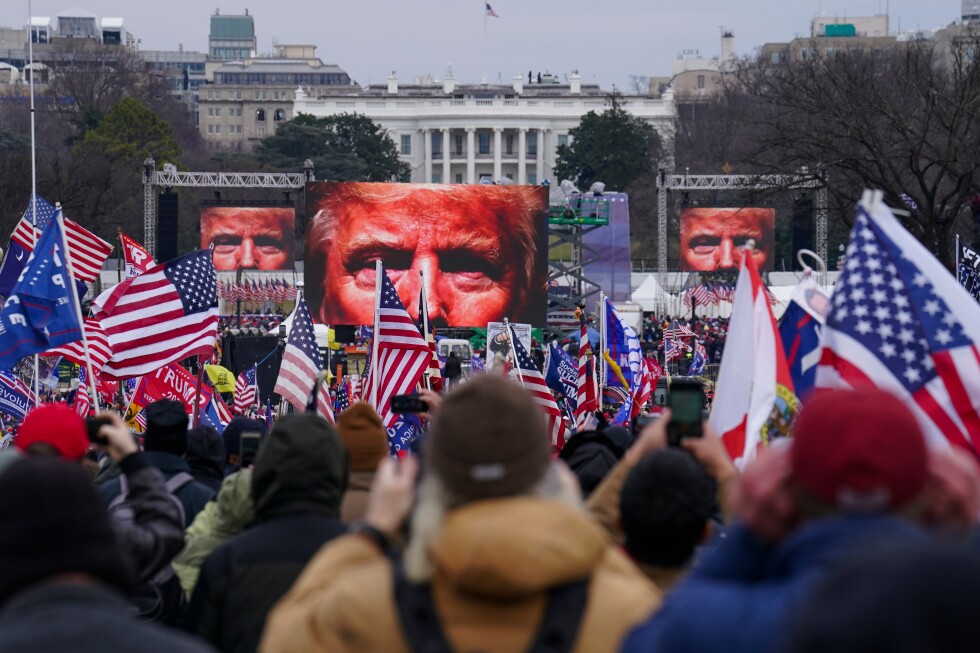
Federal agents served a search warrant at the Fulton County, Georgia election headquarters on Wednesday, seeking 2020 election ballots in a move that has ignited fresh controversy around President Trump’s continued focus on his previous electoral defeat.
The FBI raid in Atlanta comes as Trump has repeatedly signaled his intention to use federal powers to investigate his debunked claims of widespread fraud in the 2020 election. Earlier this month during an appearance at the World Economic Forum in Davos, Switzerland, Trump hinted that charges related to the 2020 election would be forthcoming.
“The man has obsessions, as do a fair number of people, but he’s the only one who has the full power of the United States behind him,” said Rick Hasen, a UCLA law professor, expressing concern about the unprecedented use of federal agencies to pursue personal grievances.
Critics view this latest action as part of a broader pattern of the president using government resources for personal vendettas. Senator Jon Ossoff of Georgia drew parallels to recent controversial immigration enforcement actions in Minnesota that resulted in the deaths of two U.S. citizens who were protesting the crackdown.
“From Minnesota to Georgia, on display to the whole world, is a President spiraling out of control, wielding federal law enforcement as an unaccountable instrument of personal power and revenge,” Ossoff stated.
The timing has raised additional concerns as election officials prepare for the upcoming 2026 midterm elections, where Trump’s party faces significant challenges in maintaining control of Congress. Some observers worry this signals potential interference in future elections.
“Georgia’s a blueprint,” warned Kristin Nabers of the voting rights group All Voting Is Local. “If they can get away with taking election materials here, what’s to stop them from taking election materials or machines from some other state after they lose?”
Georgia has been central to Trump’s election fraud narrative since his infamous January 2, 2021 phone call to Republican Secretary of State Brad Raffensperger, during which he asked Raffensperger to “find” 11,780 votes to overturn Biden’s victory. Raffensperger refused, noting that multiple reviews had confirmed Biden’s narrow win in the state.
Similar recounts and investigations in Michigan, Wisconsin, Nevada, and other battleground states consistently affirmed Biden’s 2020 victory. Trump and his allies lost dozens of court cases challenging election results, and his own attorney general at the time stated there was no evidence of widespread fraud.
The legal consequences for those who promoted election falsehoods have been substantial. Former New York Mayor Rudolph Giuliani settled with two Georgia election workers for $148 million after defaming them with false claims. Fox News paid a $787 million settlement in another defamation case, with the judge declaring it “CRYSTAL clear” that fraud allegations were unfounded.
Trump’s fixation on Georgia previously led to his indictment by Fulton County District Attorney Fani Willis, though the case eventually collapsed after Willis was removed over conflict-of-interest concerns. Trump has since sought damages from the prosecutor’s office.
Since returning to office, Trump has rewarded supporters involved in the January 6, 2021 Capitol attack by pardoning or commuting sentences of approximately 1,500 defendants. He has also signed an executive order attempting to establish new rules for state election systems, though courts have repeatedly blocked these efforts as unconstitutional.
Trump’s retribution campaign has extended to targeting lawmakers who investigated the Capitol riot and former cybersecurity officials who publicly confirmed the 2020 election’s security. Even while managing international conflicts and domestic policy initiatives, he has consistently returned to election grievances, even installing a White House plaque claiming Biden took office after “the most corrupt election ever.”
David Becker, former Department of Justice voting rights attorney and executive director of The Center for Election Innovation & Research, expressed skepticism about potential prosecutions resulting from the Georgia search.
“So much this administration has done is to make claims in social media rather than go to court,” Becker observed. “I suspect this is more about poisoning the well for 2026.”
Fact Checker
Verify the accuracy of this article using The Disinformation Commission analysis and real-time sources.

6 Comments
This situation highlights the need for clear boundaries and oversight when it comes to the use of federal power, especially in the sensitive area of elections. I hope the relevant authorities can provide more transparency around the rationale and process.
As a curious observer, I’m interested to see how this case develops and what the implications might be for the relationship between the executive branch and election administration. Maintaining democratic norms is crucial.
While I appreciate the desire to ensure electoral integrity, this raid seems to cross a line in terms of the appropriate use of federal resources. I hope cooler heads can prevail and a more measured approach can be taken.
This raid seems like a concerning use of federal power to pursue Trump’s personal grievances over the 2020 election. As a political figure, he shouldn’t be able to leverage government resources for his own agenda.
While I understand the desire to investigate potential election issues, this action raises valid concerns about the appropriate use of federal agencies. The precedent it sets is worrying.
I agree. Regardless of one’s political views, the impartiality and integrity of federal institutions must be maintained. This type of partisan action risks undermining public trust.