


Listen to the article
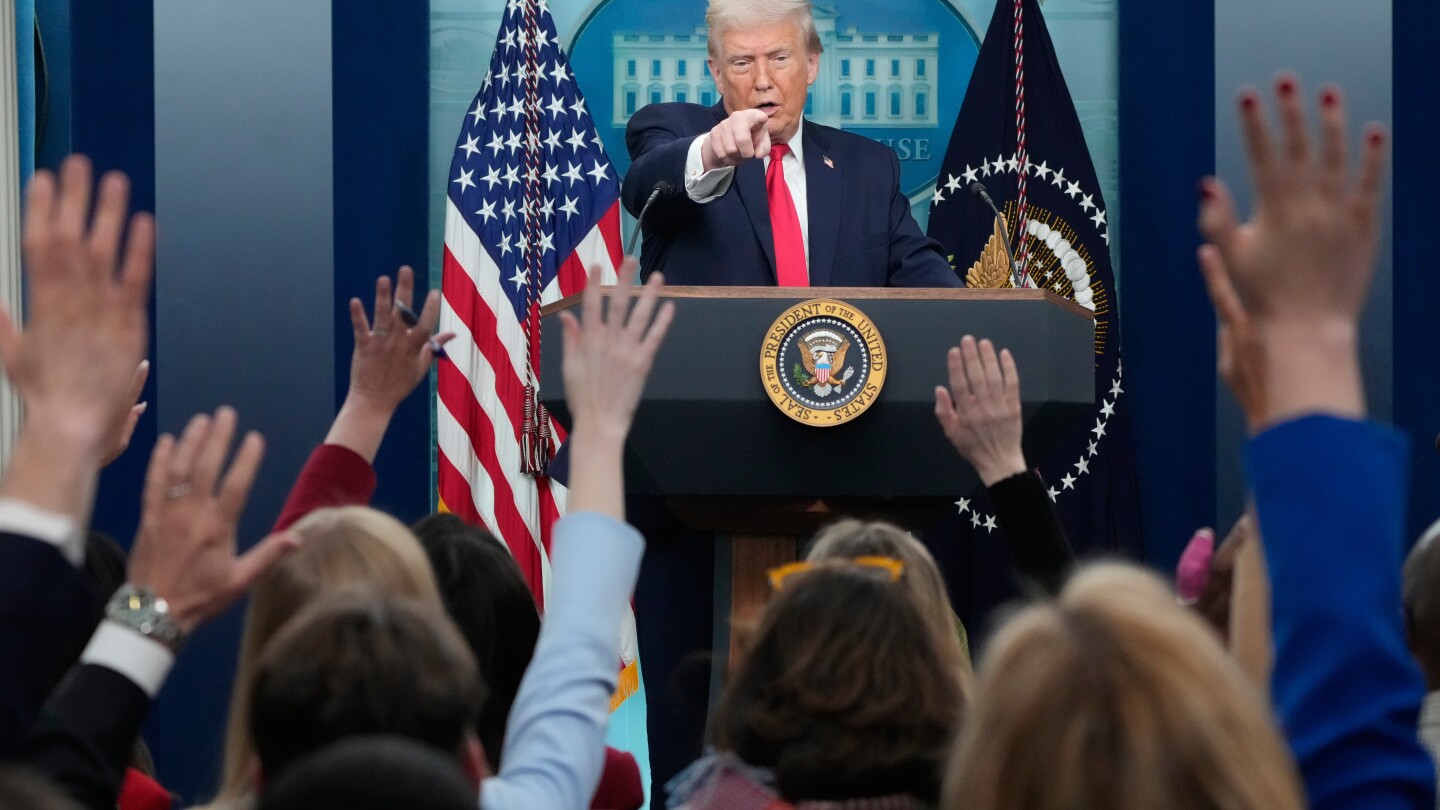
In a wide-ranging press conference marking his first year back in office, President Donald Trump delivered a nearly two-hour briefing where he touted his administration’s accomplishments while repeating numerous false claims that have characterized his 2025 rhetoric.
The marathon session saw the president revisit familiar themes including the 2020 election, foreign policy achievements, economic performance, and energy policy, with fact-checkers quickly identifying multiple inaccuracies throughout his remarks.
Trump once again falsely claimed the 2020 election was “rigged,” stating that former President Biden “didn’t win the election.” This assertion contradicts established facts, as Biden secured 306 electoral votes to Trump’s 232 and won the popular vote by more than 7 million votes. Trump’s Electoral College defeat in 2020 mirrored his 2016 victory margin over Hillary Clinton.
These election fraud allegations have been consistently refuted by judges, state election officials, and even members of Trump’s own administration. Former Attorney General William Barr notably stated in 2020 that the Justice Department had found no evidence of fraud “on a scale that could have affected a different outcome in the election.”
Despite returning to the White House after his 2024 victory, Trump has continued to make the 2020 election a central talking point ahead of the 2026 midterms.
On international affairs, the president claimed to have “settled eight wars,” a statement analysts describe as significantly exaggerated. While Trump has played a role in mediating several conflicts, the situation is more nuanced than his declaration suggests.
Among the conflicts Trump listed were Israel-Hamas, Israel-Iran, Egypt-Ethiopia, India-Pakistan, Serbia-Kosovo, Rwanda-Congo, Armenia-Azerbaijan, and Cambodia-Thailand. However, several of these situations remain unresolved or have seen renewed tensions. Fresh fighting erupted last month between Cambodia and Thailand, while violence between Congolese forces and Rwanda-backed rebels continues.
The Israel-Hamas conflict remains ongoing, and the temporary cessation of hostilities between Israel and Iran represents what many experts consider merely a pause in their long-standing tensions rather than a permanent resolution.
Regarding economic performance, Trump falsely stated that he inherited “the highest inflation, in my opinion, that we’ve ever had.” This claim contradicts historical data. While inflation during the Biden administration peaked at 9.1% in June 2022—driven by pandemic supply chain disruptions, government stimulus, and Russia’s invasion of Ukraine—Americans have experienced worse inflation previously.
During the early 1980s, inflation surpassed 13%, and some estimates place inflation near 20% during World War I. After declining in Trump’s first months back in office, inflation has risen following his April tariff announcements, standing at 2.7% as of December 2025.
Trump’s characterization of “clean, beautiful coal” also received scrutiny. While coal production has become cleaner over the past three decades, experts note it still produces significant carbon dioxide, sulfur dioxide, and nitrogen oxides that contribute to climate change, acid rain, and respiratory illnesses. Coal now accounts for approximately 15% of U.S. electricity production, down from more than half in previous decades.
The president also made misleading claims about California’s wildfire response, suggesting that Los Angeles fire hydrants ran dry during last year’s devastating fires because water policies aimed at protecting endangered species like the Delta smelt diverted water to the Pacific Ocean. Local officials have clarified that hydrant failures resulted from municipal systems being overwhelmed by the unprecedented disaster.
Trump further claimed water from the Pacific Northwest was routed to the Pacific Ocean rather than to firefighting efforts—a statement contradicted by California’s water infrastructure realities. The water Trump ordered released from Central Valley dams never reached Los Angeles, instead flowing to a dry lake basin over 100 miles away.
As the president begins his second year in office, his continued pattern of false statements on key issues highlights the ongoing challenge of separating political rhetoric from factual governance in an increasingly polarized information landscape.
Fact Checker
Verify the accuracy of this article using The Disinformation Commission analysis and real-time sources.

11 Comments
The energy policy discussion is an interesting one, with debates around fossil fuels, renewables, and the future energy mix. I’d encourage looking to objective data and analysis from industry experts to better understand the complex tradeoffs involved.
Absolutely, a balanced and fact-based approach to energy policy is crucial. There are valid arguments on all sides that deserve consideration.
While I understand the desire to tout economic achievements, it’s important to rely on verified statistics rather than making unsubstantiated claims. I’d be curious to hear more about specific policies and data points that have driven economic performance.
The geopolitical landscape is certainly complex, with many nuanced foreign policy challenges. I think it’s important to strive for objectivity and avoid overly partisan rhetoric when discussing these issues. What are your thoughts on striking the right balance?
The economic performance claims are certainly noteworthy, but it’s important to ensure we’re using accurate, verifiable data. I’d be interested to learn more about the specific metrics and indicators that are being highlighted.
While I respect the president’s right to share his views, it’s concerning to see him continue to make unsubstantiated claims about the 2020 election. The results have been thoroughly investigated and confirmed by numerous independent sources. As citizens, we should focus on factual information and seek to strengthen our democratic institutions.
Foreign policy is a delicate balance of national interests, global cooperation, and ethical considerations. I think it’s important to approach these issues with nuance and avoid overly partisan framing, focusing instead on pragmatic solutions.
Discussions around election integrity are understandably contentious, but it’s vital that we uphold democratic norms and rely on verified information. I encourage looking to nonpartisan election officials and credible sources when evaluating the 2020 results.
The mining and commodities sectors are crucial to the global economy, but also come with environmental and social considerations. I’d be interested to hear more about the administration’s approach to balancing economic priorities with sustainability and community engagement.
Energy policy is a complex and multifaceted issue, with valid arguments on various sides. I’d be curious to hear more about the administration’s specific plans and how they aim to address the tradeoffs between fossil fuels, renewables, and emerging technologies.
The mining and commodities sectors play a vital role in the global economy, but also have significant environmental and social impacts. I’d be curious to hear more about the administration’s plans to address sustainability and community engagement in these industries.