


Listen to the article
Fact-Checkers Deliver Mixed Verdict on Trump’s State of the Union Claims
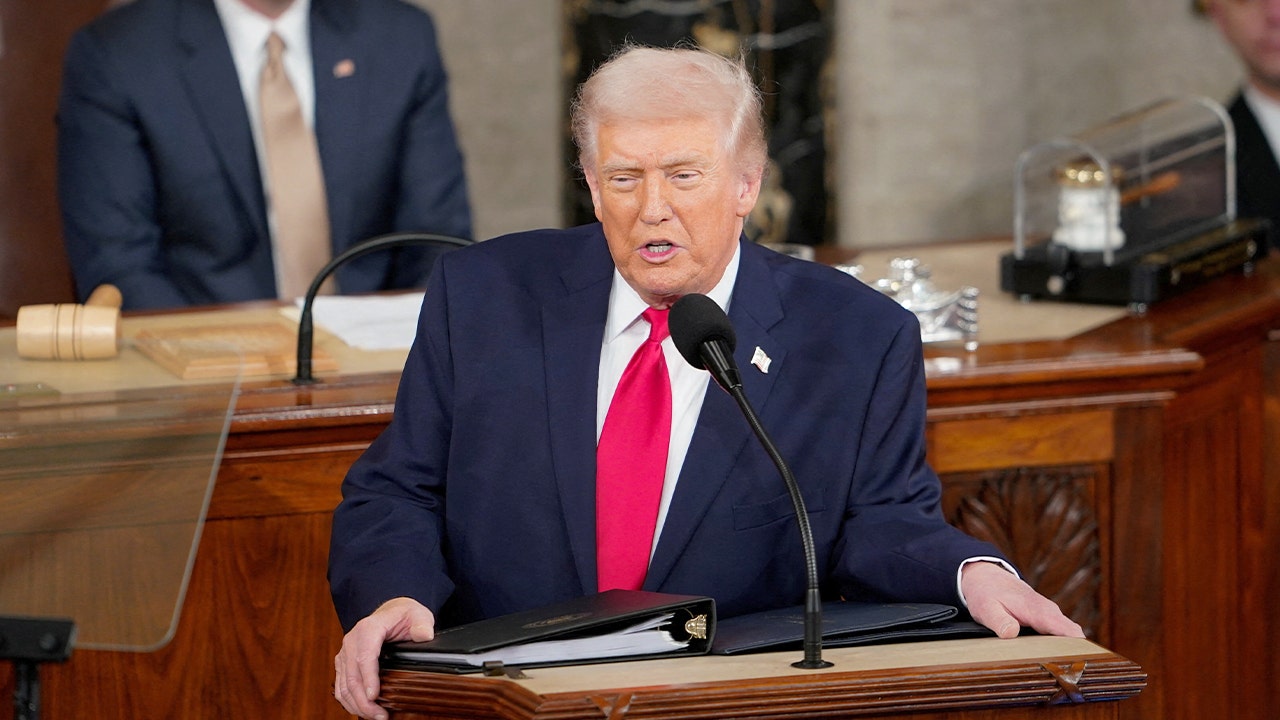
President Donald Trump’s recent State of the Union address received varied assessments from fact-checkers who validated some of his assertions while questioning others. The scrutiny highlights the complex nature of presidential rhetoric as Trump aims to bolster Republican congressional prospects ahead of what analysts predict will be a challenging 2026 midterm election cycle.
Major fact-checking organizations including PolitiFact, FactCheck.org, and The New York Times confirmed Trump’s claim that the U.S. murder rate has reached a historic 125-year low. They also largely backed his assertion that his administration’s immigration policies have dramatically reduced illegal border crossings, with Border Patrol encountering approximately 10,000 migrants in January compared to more than 60,000 in January 2025.
When Trump stated that “zero illegal aliens have been admitted to the United States,” fact-checkers noted this accurately reflected his administration’s policy shift away from the previous administration’s practice of releasing migrants into the country pending asylum hearings. Instead, Trump’s approach has emphasized detention or deportation for those attempting unauthorized entry.
However, several of the president’s other immigration claims drew criticism. His statement that the Biden administration had allowed nearly 12,000 murderers to enter the country illegally was disputed, with fact-checkers noting Department of Homeland Security figures don’t support this assertion. NPR also challenged Trump’s characterization of Iryna Zarutska’s killer as an immigrant, reporting that the suspect, Decarlos Dejuan Brown Jr., was born in North Carolina according to local media.
Trump’s declaration that he ended “eight wars” received particular scrutiny. While fact-checkers acknowledged his role in brokering the Israel-Hamas ceasefire that secured the release of Israeli hostages and establishing a truce between Israel and Iran following airstrikes on Iranian nuclear facilities, they characterized the “eight wars” figure as exaggerated.
The New York Times and FactCheck.org noted that some situations Trump counted weren’t actual wars but rather international disputes. His administration did mediate border tensions between Cambodia and Thailand and brokered agreements between Armenia and Azerbaijan as well as Rwanda and the Democratic Republic of Congo. Trump also referenced conflicts between Serbia and Kosovo, and Egypt and Ethiopia, which some experts classify as disputes rather than wars.
Perhaps the most contentious fact-checks surrounded Trump’s voter fraud allegations. When the president claimed that “cheating is rampant” in federal elections while promoting his SAVE America Act, which would require physical proof of citizenship for voter registration, fact-checkers pushed back forcefully. CNN reporter Daniel Dale characterized these statements as “a rapid-fire series of false claims about US elections.”
While it is illegal for non-citizens to vote, and current registration processes require voters to declare citizenship under penalty of perjury, Trump and his supporters maintain that non-citizen voting remains widespread but undetected. Fact-checkers countered that state and federal prosecutions for such violations are exceedingly rare. NPR cited election expert David Becker, who noted that even states actively searching for such cases find “a surprisingly, shockingly small number.”
On economic matters, fact-checkers confirmed Trump’s statement that more Americans are working than ever before, but qualified that job growth has merely remained steady while the population has grown, meaning labor force participation rates haven’t kept pace with population growth.
Trump’s claim that he would “always” protect Medicaid drew particular criticism. Fact-checkers pointed out that his signature tax and spending legislation, enacted in July 2025 and described by Trump as a “big, beautiful bill,” cut nearly $1 trillion from Medicaid by changing eligibility requirements. As FactCheck.org succinctly noted, “With fewer people on Medicaid, the program costs less.”
The varied assessments reflect the nuanced nature of presidential rhetoric, where verifiable statistics often mingle with broader claims that require context and qualification. As the administration continues to shape its policy agenda, these fact-checks provide voters with important context for evaluating the president’s statements.
Fact Checker
Verify the accuracy of this article using The Disinformation Commission analysis and real-time sources.

8 Comments
It’s good to see fact-checkers taking a balanced approach and acknowledging the nuance in Trump’s claims. This helps provide a more complete picture for readers to form their own opinions.
This article touches on some important issues around immigration and border security. I’d be interested to hear more expert perspectives on the tradeoffs and long-term impacts of the Trump administration’s policies.
Fact-checking is a vital part of a healthy democracy. I appreciate the diligence of organizations like PolitiFact, FactCheck.org, and The New York Times in scrutinizing presidential statements and providing nuanced analysis.
The report on Trump’s border enforcement policies is interesting. While the statistics seem to back up his claims, I’m curious to learn more about the practical and humanitarian implications of his approach.
It’s interesting to see the mixed assessments on Trump’s claims. Fact-checking is important to hold leaders accountable, but the complexity of issues like crime and immigration makes it challenging to arrive at simple verdicts.
The mixed verdict from fact-checkers highlights the complexities involved in evaluating political rhetoric. I think it’s important to consider multiple angles and avoid oversimplifying these important issues.
The article highlights how presidential rhetoric can be nuanced and open to interpretation. I’m glad to see fact-checkers taking a balanced approach in evaluating Trump’s statements, rather than just dismissing them outright.
Agreed. Maintaining objectivity is crucial, even when analyzing politically charged claims. It’s important to understand the context and complexities involved.