


Listen to the article
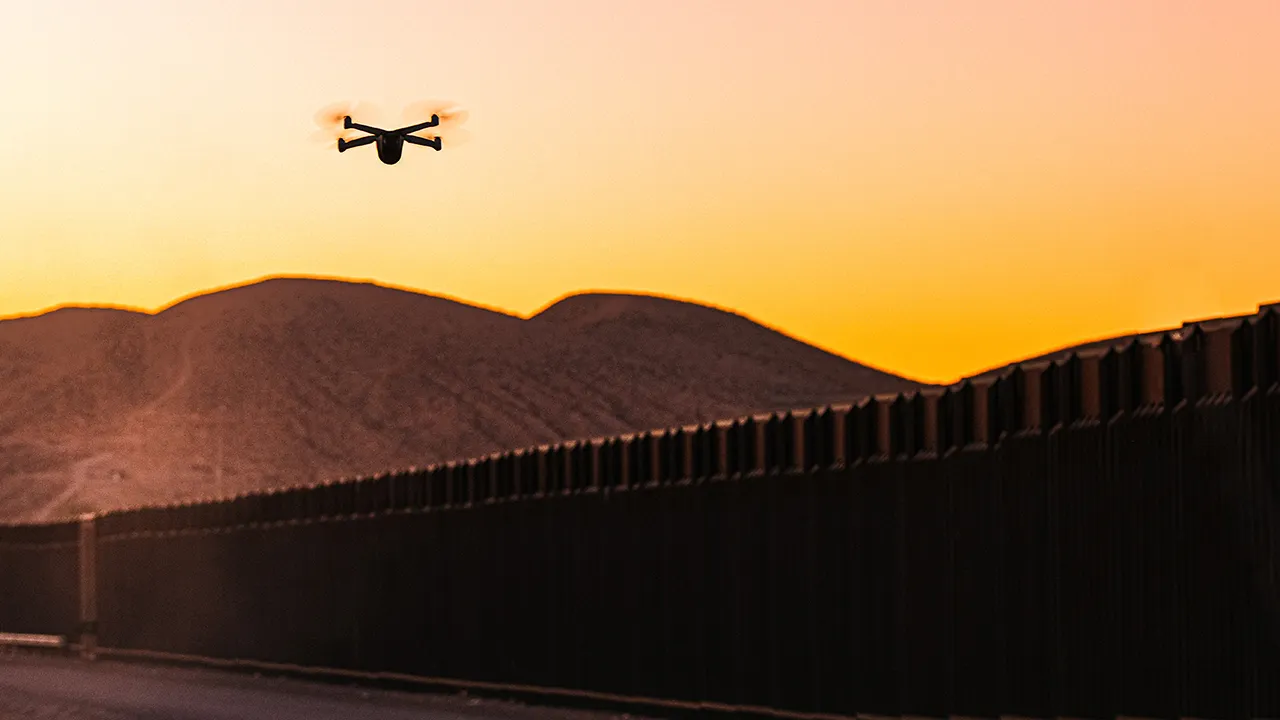
In a significant friendly-fire incident near the U.S.-Mexico border, the Federal Aviation Administration (FAA) has imposed flight restrictions around Fort Hancock, Texas, after a U.S. Customs and Border Protection (CBP) drone was reportedly shot down by a Pentagon-operated laser defense system.
The incident has sparked immediate criticism from senior Democratic lawmakers on the Transportation and Infrastructure Committee, who released a joint statement expressing outrage over the mishap. Representatives Rick Larsen, Bennie Thompson, and Andre Carson claimed their “heads are exploding over the news” and blamed White House “incompetence” for the incident.
The lawmakers specifically criticized what they described as a “short-sighted” decision to bypass bipartisan legislation that would have established proper training protocols for counter-unmanned aircraft systems (C-UAS) operators and improved coordination between the Pentagon, Department of Homeland Security, and FAA.
In response to the incident, the Department of War, CBP, and FAA released a joint statement acknowledging that military forces had used a counter-drone system against what was perceived as a “seemingly threatening unmanned aerial system operating within military airspace.” The agencies emphasized that the engagement occurred “far away from populated areas” with no commercial aircraft in the vicinity.
“The departments said they are “working together in an unprecedented fashion to mitigate drone threats by Mexican cartels and foreign terrorist organizations at the U.S.-Mexico border,” the statement continued, adding that “the Trump Administration is doing more to secure the border and crack down on cartels than any administration in history.”
Congressional sources told Reuters that the Pentagon used a high-energy laser system to accidentally take down the CBP drone. The area near Fort Hancock has been identified as a hotspot for drone incursions believed to be operated by Mexican drug cartels, highlighting the complex security challenges facing border enforcement agencies.
The FAA confirmed to media that a temporary flight restriction (TFR) was already in place around Fort Hancock prior to the incident but has since been expanded “to include a greater radius to ensure safety.” The agency emphasized that the restriction does not affect commercial flights and was implemented for “special security reasons,” according to an official Notice to Air Missions.
This incident comes on the heels of another border security episode earlier this month, when the FAA temporarily grounded flights at El Paso International Airport for approximately eight hours. A Trump administration official previously attributed that closure to “Mexican cartel drones” that had breached U.S. airspace. In that case, the U.S. military later confirmed it had shot down what was ultimately determined to be a party balloon near El Paso.
These incidents underscore the escalating concerns about drone activities along the southern border. The FBI recently established a national counter-UAS training center at Redstone Arsenal as part of broader efforts to address growing threats from criminals and terrorist organizations utilizing drone technology.
The accidental downing of a CBP drone by Pentagon forces highlights significant coordination challenges between various government agencies tasked with border security and airspace protection. It also raises questions about protocols for identifying friendly versus hostile unmanned aircraft in increasingly crowded and contested airspace along the U.S.-Mexico border.
As cartels and other non-state actors continue to adopt sophisticated technologies like drones for surveillance and smuggling operations, U.S. security agencies face mounting pressure to develop effective countermeasures while avoiding costly and potentially dangerous friendly-fire incidents like the one near Fort Hancock.
Fact Checker
Verify the accuracy of this article using The Disinformation Commission analysis and real-time sources.

11 Comments
This is quite an alarming incident. Seems like a major breakdown in coordination and communication between different government agencies. Hopefully they can get to the bottom of what went wrong and implement better protocols to prevent friendly fire in the future.
You’re right, this highlights the need for clear procedures and training when it comes to counter-drone systems. Proper coordination across agencies is crucial to avoid these kinds of mishaps.
As someone who follows developments in the defense and security sectors, I’m quite curious to learn more about the specific counter-drone technology involved and why it malfunctioned in this case. Transparency around the technical details could help inform future system design and deployment.
That’s a good point. Understanding the technical capabilities and limitations of these counter-drone systems is important, especially when they are being used in sensitive border areas. Detailed reporting on the incident could provide valuable insights.
Interesting that the lawmakers are blaming White House incompetence for this. I wonder if there are deeper political factors at play here beyond just the operational failure. It will be important to get a full, impartial investigation to understand the root causes.
I agree, the political posturing is concerning. An objective review focused on improving processes and protocols, rather than assigning blame, would be the best path forward.
This is a complex issue with a lot of moving parts – military, homeland security, aviation regulations. I hope they can get all the relevant parties working together to figure out what happened and prevent similar incidents in the future.
This incident raises some serious questions about interagency coordination and the use of emerging military technologies near civilian airspace. Hopefully the investigation will provide a clear picture of what happened and lead to improved protocols to prevent similar friendly fire accidents in the future.
As someone with an interest in defense and security technology, I’m curious to learn more about the specific counter-drone system used in this incident and why it apparently malfunctioned. Improving the reliability and integration of these systems should be a priority.
Agreed. Transparency around the technical details and lessons learned could help inform future development and deployment of counter-drone capabilities, especially in sensitive border regions.
This is a concerning incident that highlights the need for robust coordination and communication protocols between government agencies involved in border security and airspace management. Hopefully they can get to the bottom of what went wrong and make the necessary improvements.