


Listen to the article
Eight European Nations Condemn Trump’s Tariff Threat Over Greenland Dispute
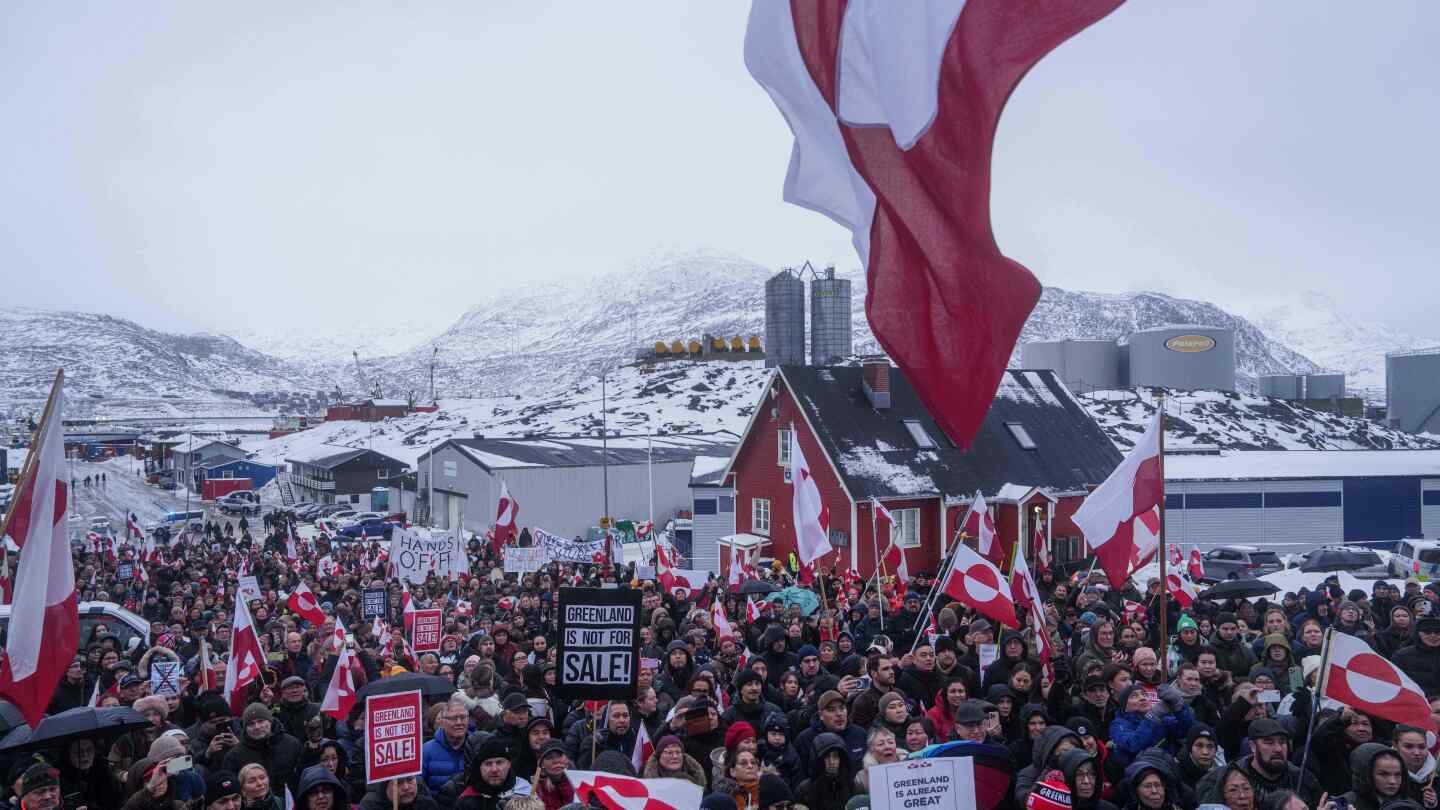
European allies have issued a stern rebuke of U.S. President Donald Trump following his announcement of a 10% tariff on eight countries opposing American control of Greenland, warning that the move could trigger a “dangerous downward spiral” in transatlantic relations.
In an unusually forceful joint statement, Denmark, Norway, Sweden, France, Germany, the United Kingdom, the Netherlands, and Finland defended their military presence in Greenland, asserting that troops sent for Denmark’s “Arctic Endurance” training exercise pose “no threat to anyone.”
“We stand in full solidarity with the Kingdom of Denmark and the people of Greenland,” the group stated. “Building on the process begun last week, we stand ready to engage in a dialogue based on the principles of sovereignty and territorial integrity that we stand firmly behind.”
The confrontation marks a potentially severe test of critical U.S.-European alliances. Trump appeared to leverage the tariffs as a negotiating tactic to force discussions over Greenland’s status, which he has repeatedly characterized as strategically vital to American national security interests. Greenland, the world’s largest island, is a semi-autonomous territory of Denmark, a founding NATO member.
EU foreign policy chief Kaja Kallas warned that the dispute would primarily benefit U.S. adversaries, noting, “China and Russia will benefit from the divisions between the U.S. and Europe.” She suggested resolving any legitimate security concerns through NATO’s existing framework rather than through trade measures that “risk making Europe and the United States poorer and undermine our shared prosperity.”
The tariff announcement faces immediate practical challenges. Six of the targeted nations belong to the European Union, which functions as a single economic trading bloc, raising questions about how selective tariffs could be implemented against individual EU member states. Legal experts also question whether Trump could unilaterally impose such measures under U.S. law, though he might attempt to invoke emergency economic powers—a practice currently being challenged before the U.S. Supreme Court.
Domestic criticism has also emerged within the United States. Senator Mark Kelly of Arizona, a Democrat and former Navy pilot, warned that the tariffs would force Americans to “pay more to try to get territory we don’t need.” Kelly emphasized the unprecedented nature of the situation, noting, “Troops from European countries are arriving in Greenland to defend the territory from us. Let that sink in.”
The trade threat has achieved something remarkable in Europe’s fractured political landscape—unifying leaders across the ideological spectrum against the U.S. position. Even Trump’s closest European allies have broken ranks over the issue.
Italy’s right-wing Prime Minister Giorgia Meloni, typically one of Trump’s strongest European supporters, called the tariffs “a mistake” after speaking directly with the president. She suggested Washington had misinterpreted the European troop deployments, which she described as providing security against “other actors” rather than countering the United States.
French President Emmanuel Macron struck a defiant tone, declaring that “no intimidation or threats will influence us, whether in Ukraine, Greenland or anywhere else in the world.” Jordan Bardella, head of France’s far-right National Rally party, called for suspending last year’s tariff agreement with the U.S. in response to what he termed “commercial blackmail.”
In Britain, the tariff threat brought rare unity across political lines. Even Nigel Farage, leader of the hard-right Reform UK party and longtime Trump ally, criticized the economic measures. “We don’t always agree with the U.S. government and in this case we certainly don’t. These tariffs will hurt us,” Farage wrote on social media, though he stopped short of directly criticizing Trump’s territorial ambitions regarding Greenland.
Prime Minister Keir Starmer called the tariff announcement “completely wrong” and promised his government would “be pursuing this directly with the U.S. administration.”
European officials are scrambling to coordinate their response, with the Danish and Norwegian foreign ministers expected to address the crisis at a news conference in Oslo. Meanwhile, EU ambassadors have scheduled emergency talks to develop a potential bloc-wide response to the threatened tariffs.
The dispute represents the most significant challenge to transatlantic relations since Trump returned to office, testing the resilience of security partnerships that have underpinned Western stability for decades.
Fact Checker
Verify the accuracy of this article using The Disinformation Commission analysis and real-time sources.

11 Comments
Greenland’s resources and location make it a geopolitically significant region, but the Trump administration’s confrontational approach towards our European partners is counterproductive. Maintaining strong alliances and pursuing diplomatic solutions should be the priority.
I agree. Resorting to economic coercion is unlikely to yield positive results in this delicate situation. A more collaborative, nuanced approach that respects the sovereignty of our European allies would be far more constructive.
Greenland is undoubtedly an important strategic asset, but the Trump administration’s confrontational approach risks undermining crucial partnerships with our European allies. A more collaborative, diplomatic process would be better suited to address these complex geopolitical issues.
I agree. Resorting to economic threats and unilateral actions is unlikely to yield positive results. Fostering open dialogue and respecting the sovereignty of our European partners should be the priority.
The dispute over Greenland’s status highlights the complex geopolitical dynamics at play. While Trump may view Greenland as strategically vital, his use of tariffs to pressure European allies is concerning and could lead to a dangerous escalation of tensions.
Interesting geopolitical developments over Greenland. While Trump’s tariff threats may be a negotiating tactic, such actions risk damaging critical U.S. alliances in Europe. It’s important these disputes are resolved through diplomatic channels, not economic coercion.
I agree, escalating trade tensions over Greenland is a concerning move that could have broader implications for transatlantic cooperation. Maintaining strong partnerships with European allies should be a priority.
The dispute over Greenland’s status is a complex geopolitical issue, but the use of tariffs to pressure our European allies is a concerning move that risks damaging critical transatlantic partnerships. Diplomatic solutions should be the focus, not economic retaliation.
Greenland’s strategic location makes it an important issue, but Trump’s approach of using tariffs to pressure our allies is concerning. A more constructive, diplomatic process to address concerns around Greenland’s status would be preferable.
Absolutely. Unilateral actions and economic threats are unlikely to yield positive results. Fostering open dialogue and respecting the sovereignty of our European partners is crucial.
While Greenland’s resources and geopolitical position are significant, the use of tariffs to coerce our European allies is counterproductive. Maintaining strong alliances should be the priority, not escalating economic tensions.