


Listen to the article
Senators Trading Capitol Hill for State Capitals in Record Numbers
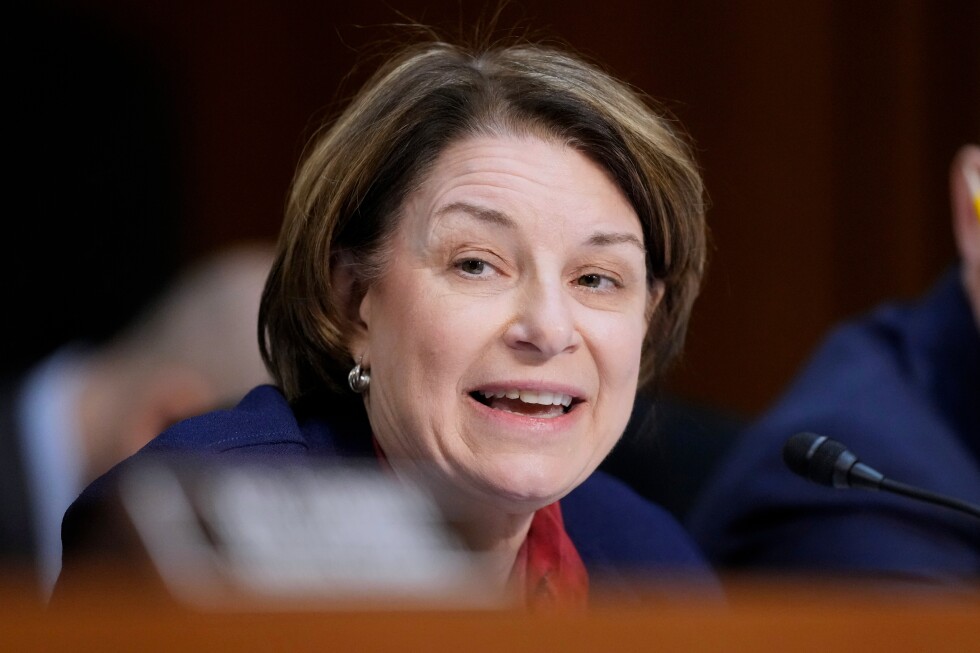
Four sitting U.S. senators have announced plans to run for governor in 2026, marking an unprecedented shift in political ambitions away from Washington. Minnesota Democrat Amy Klobuchar became the latest to join this exodus on Thursday, following Colorado Democrat Michael Bennet, Tennessee Republican Marsha Blackburn, and Alabama Republican Tommy Tuberville.
This movement from Senate chambers to statehouses represents the largest such migration in recent American political history, according to an Associated Press analysis of congressional retirements. The trend highlights a fundamental transformation in how politicians view the relative power and effectiveness of these different offices.
“Everybody asks me, ‘Why are you doing this?'” Tuberville, who was first elected to the Senate in 2020, recently told the AP. “Because I think I can do more good in that seat than I can in this one.”
The Senate, once considered the pinnacle of political achievement or a launching pad for presidential campaigns, has increasingly become viewed as dysfunctional and gridlocked. Meanwhile, governorships offer what many senators crave: executive authority, the ability to implement policy directly, and the opportunity to build substantive records of achievement.
This four-senator exodus is part of a broader departure from Congress’ upper chamber. Eleven senators have already announced their intention to retire next year, including nine in the final year of their terms. Even if no further retirements occur, this cycle would still produce the highest Senate turnover in more than a decade.
The last comparable exodus happened after the 113th Congress, when 13 senators departed due to retirements, resignations, or deaths, including several who joined President Barack Obama’s Democratic administration.
Michael Bennet’s decision to pursue Colorado’s governorship particularly surprised political observers in his home state, given his national profile. In explaining his choice, Bennet highlighted the frustrations of working in the Senate during what he describes as “Donald Trump’s Washington.”
“There’s no way to address problems like affordability from the Senate,” Bennet said in an interview. He noted that Trump has “declared war” on Colorado, citing the president’s veto of a water project crucial to rural areas and his threats regarding the state’s imprisonment of a county clerk convicted of election-related offenses.
For Bennet and other senators-turned-gubernatorial candidates, state leadership positions offer a counterbalance to federal power. “It’s very important to have people who understand those national fights and who won’t cower in the face of that,” Bennet said.
Matt Dallek, a political historian at George Washington University, explains this shift as resulting from both “push and pull” factors. “The push factor is the Senate in particular has become a more noxious place for lawmakers, because all the downsides to serving in public office and in the Senate are no longer mitigated in a significant way by the upsides of passing legislation,” Dallek said.
“Being governor, aside from the obvious fact that you’re chief executive as opposed to one of 100, is increasingly alluring,” he continued. “At the state level, a lot more can get done. Often states have to balance their budgets, they need to work on bipartisan legislation, and I think that there’s a sense among lawmakers that it’s in the states — these so-called labs of democracy — where governance is possible.”
Dallek points to Republican Governors Greg Abbott of Texas and Ron DeSantis of Florida as examples of executives who have successfully implemented policy agendas on issues ranging from immigration to cultural matters, building national profiles in the process.
According to the U.S. Senate Historical Office, 22 senators have served as governors after leaving the Senate since the direct election of senators began in 1913. Of those, only seven moved directly from Senate seats to governors’ mansions. Most recently, Indiana’s Mike Braun won his state’s gubernatorial race earlier this year while still serving as a senator.
The trend reflects a profound reassessment of where political power truly resides in the American system. As Washington remains mired in partisan deadlock, state capitals increasingly appear to be where ambitious politicians believe they can most effectively govern and make their mark on policy.
Fact Checker
Verify the accuracy of this article using The Disinformation Commission analysis and real-time sources.

31 Comments
Nice to see insider buying—usually a good signal in this space.
Good point. Watching costs and grades closely.
Nice to see insider buying—usually a good signal in this space.
Good point. Watching costs and grades closely.
If AISC keeps dropping, this becomes investable for me.
Good point. Watching costs and grades closely.
Good point. Watching costs and grades closely.
I like the balance sheet here—less leverage than peers.
If AISC keeps dropping, this becomes investable for me.
Good point. Watching costs and grades closely.
Good point. Watching costs and grades closely.
The cost guidance is better than expected. If they deliver, the stock could rerate.
Good point. Watching costs and grades closely.
Good point. Watching costs and grades closely.
Uranium names keep pushing higher—supply still tight into 2026.
Good point. Watching costs and grades closely.
Good point. Watching costs and grades closely.
Uranium names keep pushing higher—supply still tight into 2026.
If AISC keeps dropping, this becomes investable for me.
Good point. Watching costs and grades closely.
Good point. Watching costs and grades closely.
Exploration results look promising, but permitting will be the key risk.
Good point. Watching costs and grades closely.
Nice to see insider buying—usually a good signal in this space.
Good point. Watching costs and grades closely.
Silver leverage is strong here; beta cuts both ways though.
I like the balance sheet here—less leverage than peers.
I like the balance sheet here—less leverage than peers.
Good point. Watching costs and grades closely.
Exploration results look promising, but permitting will be the key risk.
Good point. Watching costs and grades closely.