


Listen to the article
Justice Department’s Epstein File Release Marred by Privacy Breaches
Nude photos, victims’ identities, and personal information were among the sensitive data mistakenly revealed when the U.S. Justice Department released investigative files on Jeffrey Epstein last week. The document dump, meant to comply with a recently passed law, has been plagued by inconsistent and sometimes nonexistent redactions, exposing information that was supposed to remain confidential.
The extensive collection of files, posted on the Justice Department’s website, represents the largest release to date in the years-long investigations into Epstein, who killed himself in a New York jail cell in 2019 while awaiting trial on federal sex trafficking charges.
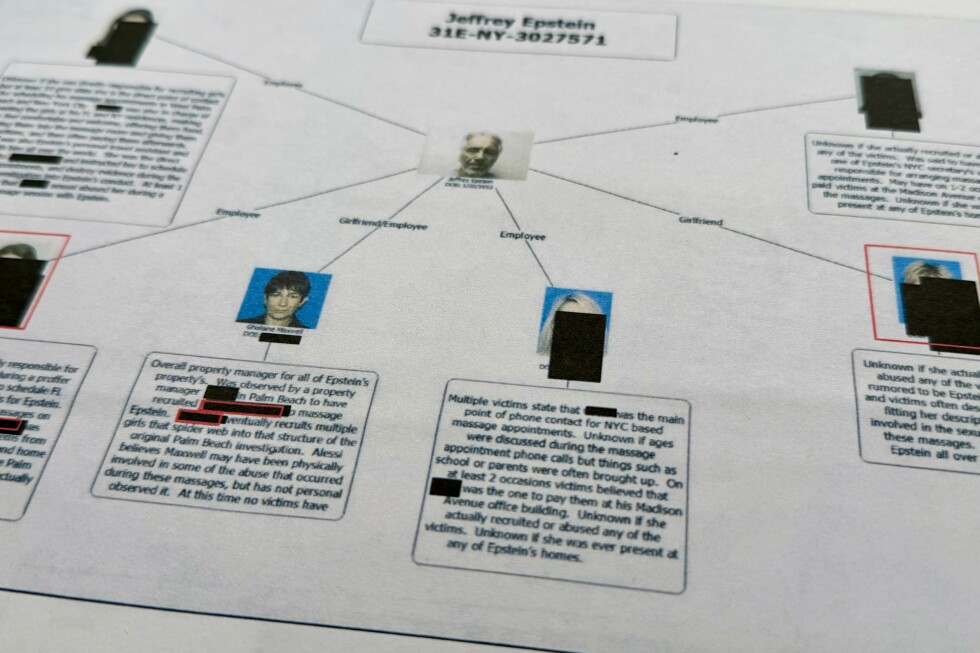
Despite instructions to protect victims’ privacy, the released documents contained numerous breaches. A photo of one underage girl who was hired to give sexualized massages to Epstein in Florida appeared in a chart of his alleged victims. Several police reports included the unredacted names of victims, including some who never publicly identified themselves.
Even as the Justice Department worked to fix these oversights, problematic images remained on the site as of Wednesday evening, including selfies of nude and topless women with their faces fully visible.
“The failure here is not merely technical,” said attorney Brittany Henderson, who represents some of Epstein’s victims. “It is a failure to safeguard human beings who were promised protection by our government. Until every document is properly redacted, that failure is ongoing.”
Annie Farmer, who has previously spoken publicly about being sexually assaulted by Epstein and Ghislaine Maxwell when she was 16, discovered her date of birth and phone number had been revealed in the files. “At this point, I’m feeling really most of all angry about the way that this unfolded,” she told NBC News. “The fact that it’s been done in such a beyond careless way, where people have been endangered because of it, is really horrifying.”
Some accusers and their attorneys have called for the Justice Department to take down the site and appoint an independent monitor to prevent further errors. A judge had scheduled a hearing on the matter for Wednesday in New York but canceled it after Henderson cited progress in resolving the issues. However, Henderson noted they were still weighing “all potential avenues of recourse” for the “permanent and irreparable” harm caused to some women.
The Justice Department has attributed the problems to technical or human errors and said it is working to republish properly redacted versions. The task of reviewing and redacting millions of pages occurred under significant time pressure. President Donald Trump signed the law requiring the disclosure on November 19, giving the Justice Department just 30 days to release the files—a deadline it ultimately missed, citing the need for additional time to comply with privacy protections.
Hundreds of lawyers were diverted from their regular duties, including criminal cases, to review documents—to the point where at least one New York judge complained that it was delaying other court matters.
The inconsistent redactions have led to both overexposure and peculiar overcaution. In one news clipping, the Justice Department apparently blacked out the name “Joseph” from a Nativity scene caption. In an email, a dog’s name appeared to have been redacted: “I spent an hour walking (REDACTED) and then another hour bathing her blow drying her and brushing her. I hope she smells better!!”
Department officials have said staff were instructed to limit redactions only to information related to victims and their families, though in many documents the names of lawyers and public figures were also blacked out.
The photo redaction process has been particularly problematic. While the Justice Department intended to black out any portions showing nudity and any photos that could potentially identify victims, many images still show identifiable women in compromising situations. In some cases, women’s faces were obscured but enough of their bodies remained visible to potentially cause embarrassment. One collection of over 100 images of a young woman were nearly all blacked out, except for the final image, which revealed her entire face.
The Associated Press is reviewing the released documents in collaboration with journalists from CBS, NBC, MS NOW, and CNBC, with each outlet responsible for its own independent news coverage of the material.
Fact Checker
Verify the accuracy of this article using The Disinformation Commission analysis and real-time sources.

8 Comments
This is a very disappointing outcome. The victims deserve to have their privacy protected, and the government failed to do so in this case. They need to do a thorough investigation and implement robust safeguards to ensure this doesn’t happen again.
This is a disturbing breach of privacy for the victims. Sensitive information like this should have been properly redacted before release. The authorities need to handle these cases with the utmost care and respect for the people involved.
You’re right, this is a major failure in protecting victims’ confidentiality. The government must do better to safeguard sensitive personal details in these high-profile cases.
This is a clear example of why extreme caution is needed when handling such sensitive materials. The failure to properly redact the Epstein files is a major breach of trust and raises serious questions about the Justice Department’s procedures.
It’s troubling to see that crucial redactions were not carried out thoroughly enough, exposing private information about victims. This kind of sloppy handling of sensitive case files is unacceptable.
Agreed, the lack of proper redaction is extremely concerning. The authorities need to review their processes to ensure this doesn’t happen again and victims’ privacy is fully protected.
Releasing private photos and unredacted victim details is a shocking and unacceptable violation of the victims’ rights. The government has a responsibility to safeguard this information, and they clearly fell short here.
You’re absolutely right. This kind of careless handling of confidential materials is simply inexcusable. The authorities must be held accountable and fix their processes to prevent such breaches in the future.