


Listen to the article
The Trump administration claimed Friday that emergency measures to maintain operations at aging coal-fired power plants helped prevent major blackouts during the severe cold weather that has engulfed much of the United States over the past two weeks.
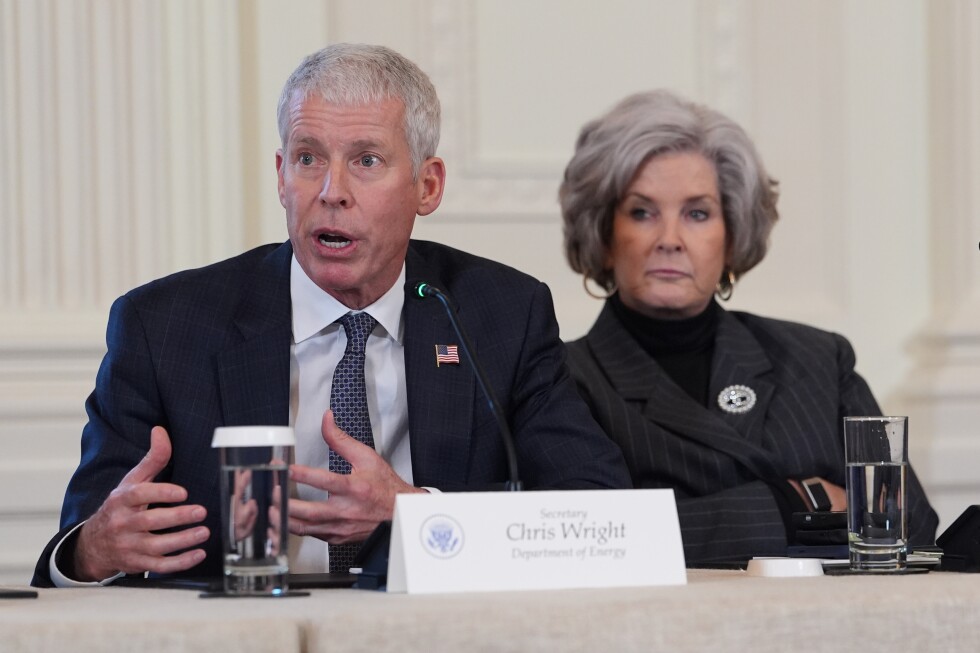
While hundreds of thousands of Americans experienced brief power outages due to ice accumulation on local power lines, the nation’s regional power grids largely maintained reliable electricity service, according to Energy Secretary Chris Wright.
“The big picture story is where we actually got energy from during this storm,” Wright said during a news conference at the Energy Department. “In fact, we had times where our existing capacity couldn’t deliver anything and the lights would have gone out if not for emergency orders.”
In preparation for the frigid conditions, the administration suspended pollution limits on fossil fuel plants and ordered backup generators at data centers and other large facilities to be available to grid operators for emergency power supply.
Deputy Energy Secretary James Danly highlighted the administration’s approach as a “new way of doing business” during power emergencies, contrasting it with grid performance during a similar severe storm in 2021. “The bottom line here is that we managed to ensure that there was sufficient capacity,” Danly said. “Not one area had a blackout or a forced outage due to loss of capacity.”
At the storm’s peak, nearly one million customers lost power, though most outages were short-lived. As of Friday, approximately 55,000 customers remained without electricity, including more than 17,000 in Mississippi and 7,000 in Texas, according to poweroutage.us.
Wright presented statistics showing that during peak generation, natural gas provided 43% of electric power, followed by coal at 24% and nuclear at 15%. Renewable sources, including wind, solar, and hydropower, contributed a combined 14%. He noted that the proportion of wind power dropped by 40% during the storm, while coal and natural gas usage increased substantially.
The Energy Secretary dismissed solar as “meaningless” during severe storms in certain regions, stating, “It’s not an all-weather power source.” This position aligns with the Trump administration’s frequent defense of fossil fuel-friendly policies, which they claim counter Biden administration and Democratic state policies that allegedly threaten grid reliability and increase electricity costs.
However, the administration’s orders to extend the life of coal plants have faced significant opposition. Some state and utility officials argue these measures unnecessarily burden ratepayers by keeping expensive plants operational.
According to a report from Grid Strategies, a consulting firm, preventing coal plants from retiring over the next three years could cost consumers at least $3 billion annually. “A lot of these plants were retiring because they’re no longer economic to operate,” explained Michael Goggin, an executive vice president at the firm. “It’s expensive to keep them going.”
Legal challenges have emerged, with opponents arguing that Congress intended emergency powers to be used only in rare, temporary situations. The nonprofit owners of Colorado’s Craig Generating Station recently filed a protest with the Energy Department seeking to reverse Wright’s December 30 order to keep Unit 1 operational just one day before its scheduled shutdown.
In their request for a rehearing, the Tri-State Generation and Transmission Association and Platte River Power Authority contended that their members were being unfairly forced to maintain a costly and unreliable plant. They also claimed the department failed to demonstrate why this was the best alternative and was essentially punishing them for other utilities’ mistakes.
Wright dismissed these criticisms, asserting there would be “far larger costs from blackouts.”
Clean energy advocates countered that renewable sources actually saved consumers billions during the storm while helping maintain power, particularly in regions with significant investments in wind, solar, and energy storage.
John Hensley, a senior vice president at the American Clean Power Association, noted that in Texas, wind, solar, and storage provided about 25% of power for the grid’s 27 million customers—a substantial increase since 2021 and a key factor in avoiding widespread blackouts.
Hensley added that wind and solar also contributed significant power in the Midwest and Southwest. However, in the mid-Atlantic region served by grid operator PJM, renewables accounted for only 5% of power generation, which Hensley attributed to insufficient investment in renewable infrastructure and the Trump administration’s resistance to new wind and solar development.
“Blaming renewables for not performing during the storm is like trying to blame someone on the bench for losing the game,” Hensley said. “They didn’t get a chance to play.”
Fact Checker
Verify the accuracy of this article using The Disinformation Commission analysis and real-time sources.

9 Comments
The administration’s approach of suspending pollution limits and ordering backup generators seems pragmatic in the face of extreme weather, though it raises questions about sustainability. It’ll be important to evaluate the tradeoffs and find the right balance going forward.
That’s a good point. While emergency measures may have been necessary in the short term, the long-term goal should be to build a more resilient and sustainable energy grid that can withstand severe conditions without compromising environmental standards.
The administration’s ‘new way of doing business’ during power emergencies is an interesting approach, but it raises valid concerns about the environmental impact. It will be crucial to find a balance that ensures reliable energy while also prioritizing sustainability and emissions reduction.
It’s good to see that emergency measures helped maintain electricity service during the winter storm, but the environmental tradeoffs are concerning. This highlights the need for comprehensive energy policies that prioritize both reliability and sustainability.
I agree. Striking the right balance between reliable energy and environmental protection is a complex challenge, but one that must be addressed through forward-looking policymaking and innovative solutions.
Preserving grid reliability during severe weather is critical, but the long-term implications of suspending pollution limits are worrying. I hope this episode sparks a broader discussion about how to build a more resilient and environmentally responsible energy system.
Interesting to see how emergency measures helped keep the lights on during the severe winter storm. It’s always a balancing act between reliable energy and environmental concerns. I wonder what the long-term implications will be for the energy grid and regulations.
This highlights the challenges of maintaining a reliable energy supply during extreme weather events. While the administration’s actions may have prevented blackouts, the environmental impact is concerning. Innovative solutions are needed to improve grid resilience while also addressing climate change.
The administration’s actions seem pragmatic in the face of a crisis, but the long-term implications for the environment are troubling. Developing more resilient and sustainable energy infrastructure should be a top priority to prepare for future extreme weather events.