


Listen to the article
In a stark display of partisan division, House Majority Whip Tom Emmer has accused Democrats of hypocrisy over their opposition to the recently passed Safeguarding American Voter Eligibility (SAVE America) Act, highlighting what he sees as contradictory stances on photo identification requirements.
The legislation, which cleared the House last week with unanimous Republican support and just one Democratic vote from Rep. Henry Cuellar of Texas, would mandate federally accepted photo identification for voting in federal elections. The ID would also need to verify proof of citizenship.
“These guys are doing the same old broken record about voter suppression,” Emmer told Fox News Digital. “Why aren’t they screaming about photo IDs at the airport? Why aren’t they screaming about photo IDs when you check out a book at the library?”
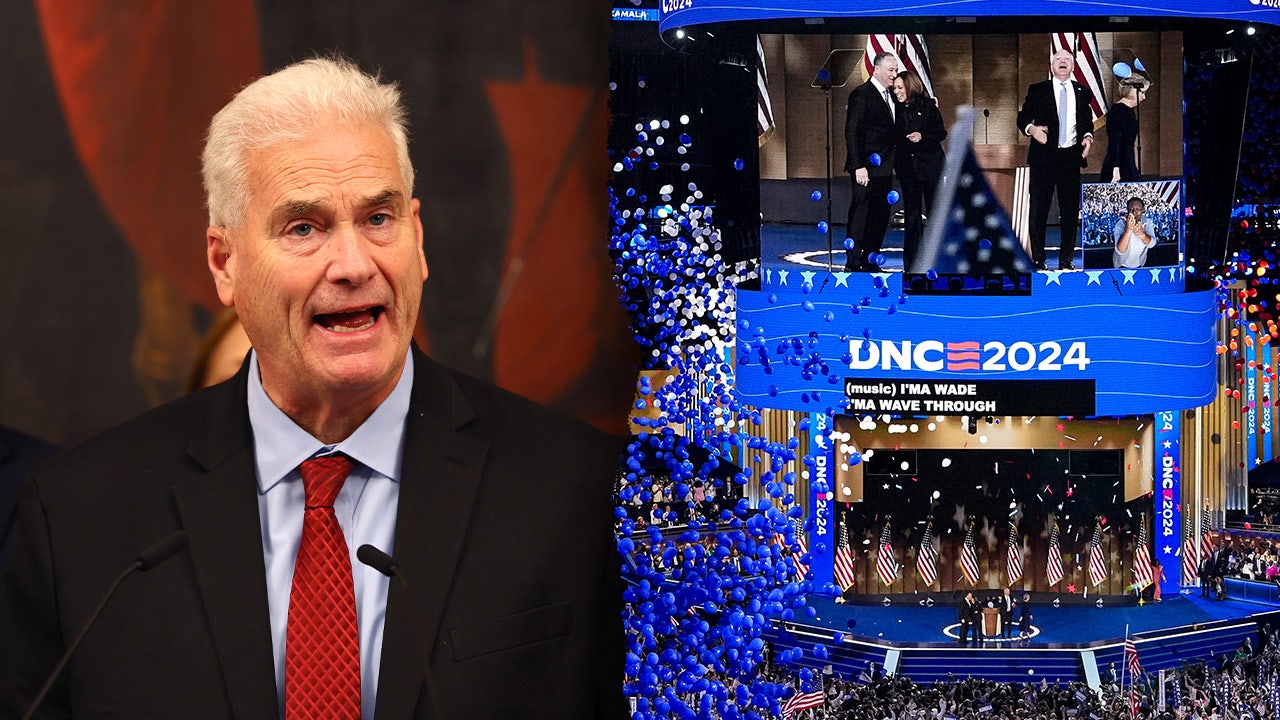
Emmer specifically pointed to what he characterized as inconsistency in Democratic positions, noting that photo identification was required for attendees at the Democratic National Convention in Chicago last year when Kamala Harris accepted the party’s presidential nomination.
“By the way, if they think it’s voter suppression, why do they require photo IDs at the Democrat National Convention to get in?” Emmer questioned. “I mean, I think Americans are so much smarter than these people can understand, can let themselves understand.”
The SAVE America Act represents an expanded version of a previous bill that passed the House in April last year with slightly more Democratic support—four votes instead of just one. The updated legislation maintains requirements for states to purge ineligible voters from rolls but adds the photo ID mandate for federal elections.
Democratic leadership has been vocal in their opposition. House Minority Leader Hakeem Jeffries labeled the bill as “voter suppression,” while Senate Minority Leader Chuck Schumer characterized it as “a modern-day Jim Crow.” Jeffries has specifically criticized a provision that would allow the Department of Homeland Security to initiate deportation proceedings if an undocumented immigrant is discovered on voter rolls, arguing this could lead to weaponization of such information.
The bill also establishes that photo identification must denote proof of citizenship, a requirement that has raised concerns among voting rights advocates who argue it could disenfranchise eligible voters who lack such documentation.
Despite Democratic opposition in Congress, voter ID requirements enjoy broad public support according to multiple polls. A Pew Research Center survey from August 2023 showed that 83% of Americans favor government-issued photo ID requirements for voting, with only 16% opposed. Similarly, a Gallup poll from October 2024 indicated 84% support for photo ID requirements in federal elections.
This disconnect between Democratic lawmakers’ positions and public opinion polls highlights the complex political dynamics surrounding election security measures. Republicans have increasingly made election integrity a cornerstone issue, particularly since the 2020 election, while Democrats have focused on concerns about voter access and potential disenfranchisement.
The bill faces uncertain prospects in the Democratic-controlled Senate, where it would likely need to overcome a filibuster to advance to a floor vote. Even if it were to pass both chambers, President Biden would likely veto the legislation based on his administration’s previous positions on voting rights.
The debate over the SAVE America Act reflects broader national tensions about balancing election security with voting access – a conversation that continues to evolve as the country approaches another major election cycle.
Fact Checker
Verify the accuracy of this article using The Disinformation Commission analysis and real-time sources.

10 Comments
I appreciate Emmer’s point about the inconsistency in Democratic positions on photo ID requirements. It’s a fair critique, though the issue of voting access is understandably sensitive. Reasonable people can disagree on the best approach.
Voter ID laws are a contentious topic, with valid concerns on both sides. Emmer seems to be highlighting partisan hypocrisy, but the voting process does have distinct considerations around access and rights. Finding the right balance is crucial for democracy.
Interesting to see the partisan divide over voter ID requirements. It’s a complex issue with valid arguments on both sides. Curious to hear more about how this legislation would be implemented and if it would truly improve election integrity.
This is a complex issue without easy answers. While Emmer makes a fair point about inconsistent Democratic positions, the voting process does differ from other ID requirements in important ways. I hope lawmakers can work in good faith to strengthen election integrity.
I appreciate Emmer raising this issue, as it speaks to the need for nuance and consistency in election policies. Voter ID requirements touch on important principles of election integrity and voter access. I hope lawmakers can find a solution that upholds both.
Voter ID laws are a tricky balance between election security and accessibility. Emmer raises a valid question about the Democratic ‘double standard’, but the voting process does differ from other ID requirements. Curious to see how this plays out.
I agree, the voting process is unique and shouldn’t be directly equated to other ID requirements. This is a nuanced issue that requires careful consideration of all perspectives.
While Emmer makes a fair point, the voting process has unique considerations around accessibility and civil rights that may justify different ID standards. I hope both parties can find common ground to strengthen election integrity without disenfranchising voters.
Absolutely, the voting process needs to balance security and accessibility. It’s a complex issue without easy solutions, so I’m glad to see lawmakers grappling with it seriously.
This seems like another example of the intense political polarization we’re seeing. Both parties appear to be acting more on partisan interests than principles of fair and accessible elections. I hope they can find a compromise that prioritizes democratic integrity.