


Listen to the article
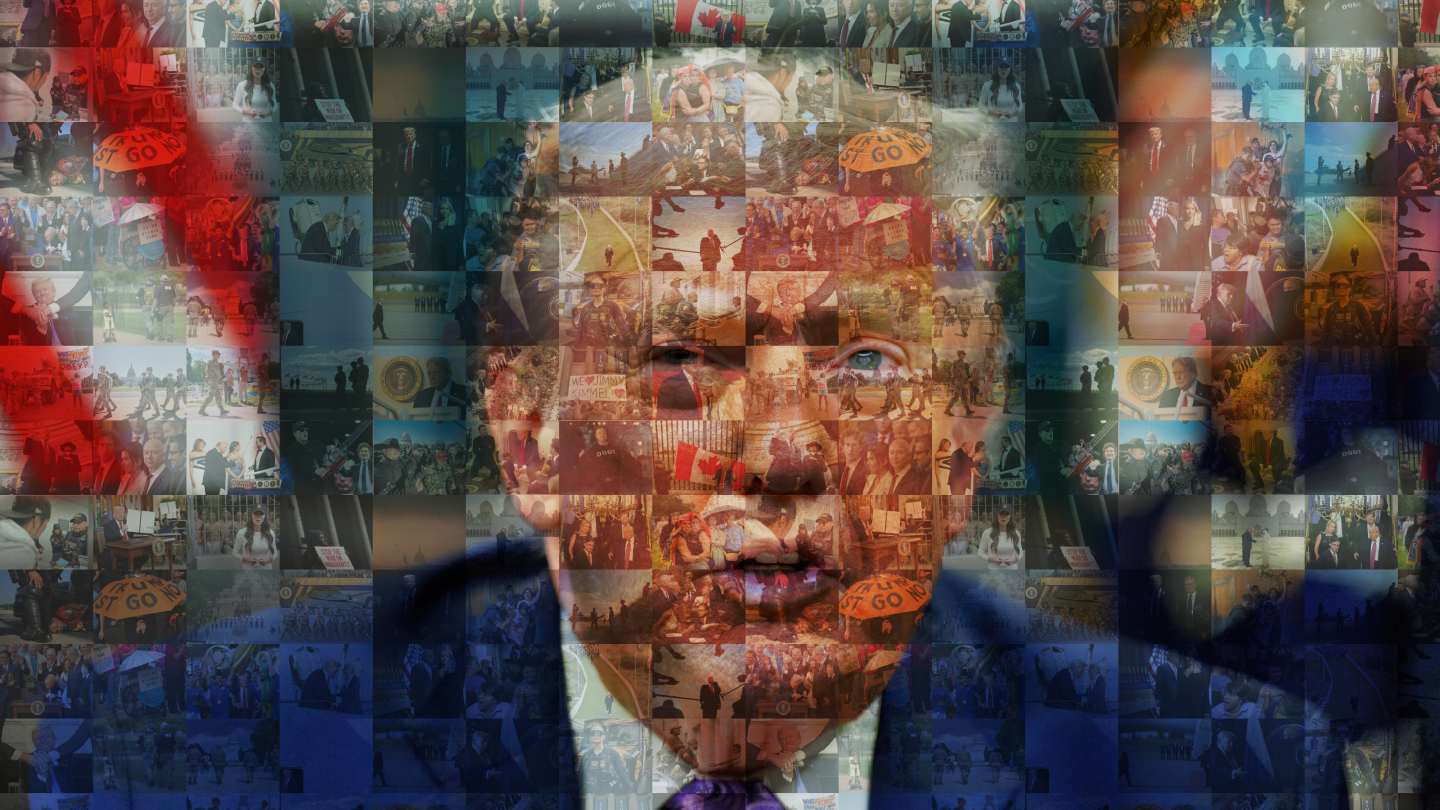
In a whirlwind of activity that has become his trademark, President Donald Trump has dominated January’s news cycle with a series of provocative actions and statements. From suggesting military intervention in Venezuela to proposing aggressive tariffs, making threats against multiple nations, and even posing with someone else’s Nobel Peace Prize, Trump’s first half of January exemplifies his unique approach to the presidency.
For Trump, the presidential platform serves as an endless opportunity to command attention, with little concern for traditional decorum or potential fallout. His governance style prioritizes visibility above all, using social media as his primary amplifier to maintain a constant presence in American consciousness.
“The president exists loudly,” observed Republican Senator John Kennedy of Louisiana. “The president will play with fire. I haven’t seen him yet play with live hand grenades, but I’ve seen him come damn close. That’s just the way he is, and it’s not going to change.”
Trump’s social media presence has evolved significantly in his second term. He frequently signs off posts with “THANK YOU FOR YOUR ATTENTION TO THIS MATTER!” – a phrase he’s used 242 times according to data from Factba.se. This approach reflects decades spent cultivating media attention, first in New York tabloids and later as a reality television personality.
The relationship between Trump and major technology platforms has transformed dramatically since his first administration. After being banned from Twitter and Facebook following the January 6, 2021 Capitol attack, Trump now enjoys alliances with Silicon Valley leaders. Twitter, renamed X under Elon Musk’s ownership, has become a friendly platform for the president. Musk briefly led Trump’s Department of Government Efficiency before returning to the president’s inner circle after a temporary rift.
Meta CEO Mark Zuckerberg joined Musk among the tech executives attending Trump’s second inauguration, signaling a warming relationship between Trump and the technology sector that once opposed him.
Trump’s team now leverages artificial intelligence to rapidly produce memes and videos that keep him at the forefront of online conversations. These posts often venture into controversial territory, including an October image depicting Trump wearing a crown, flying a plane, and dumping excrement on political opponents – content that House Speaker Mike Johnson dismissed as mere “satire.”
The president’s penchant for inserting himself into the spotlight extends beyond politics. In September alone, Trump attended three major sporting events around New York City. His appearance at the U.S. Open final caused extensive security delays and was met with boos from the crowd – yet still achieved his goal of visibility on the stadium’s screens and across social media platforms.
White House Chief of Staff Susie Wiles described Trump, who abstains from alcohol, as possessing an “alcoholic’s personality,” suggesting he operates with a belief that there are no limits to what he can do. This unbridled approach has successfully created the disruption Trump seeks to impose both domestically and internationally.
His social media posts have become weapons, threatening to cut aid to states that oppose him. Comments regarding Greenland and Denmark sparked a diplomatic crisis and raised questions about NATO’s long-term viability.
However, Trump faces challenges in two notable areas: the Epstein files and economic affordability concerns. Despite initially telling supporters to “not waste Time and Energy on Jeffrey Epstein,” Trump eventually yielded to congressional pressure, signing legislation that mandated making the files public – though the Justice Department has already missed release deadlines.
Critics including Representative Alexandria Ocasio-Cortez and Governor JB Pritzker have suggested Trump’s January news blitz serves partially as a distraction from the Epstein issue.
Similarly, Trump has struggled to convince Americans he understands their economic concerns. After dismissing affordability challenges as a “Democratic hoax,” his subsequent efforts to address the issue – including a prime-time address and mortgage rate initiatives – have been overshadowed by more sensational stories of his own making.
A Michigan visit intended to focus on affordability may ultimately be remembered for images of Trump making an obscene gesture at a critic, highlighting his difficulty staying on message when affordability concerns remain paramount for many voters.
Recent polling reveals the limitations of Trump’s approach. According to a December AP-NORC poll, only about 30 percent of Americans approve of his handling of healthcare, slightly below his overall approval rating. His once-strong numbers on immigration have also declined, with January polling showing approval from just 40 percent of Americans on that issue, down from about 50 percent at the start of his first term.
Meanwhile, Democrats are adapting to the attention economy that Trump has mastered. California Governor Gavin Newsom, a potential 2028 presidential contender, hosts a podcast and engages Trump through social media mockery. New York City Mayor Zohran Mamdani transformed from an obscure state lawmaker to leading America’s largest city partly through unscripted videos connecting with voters in authentic settings.
The question remains whether Trump has permanently altered the American presidency. Ari Fleischer, White House press secretary under George W. Bush, describes Trump as “the definition of unique” but predicts that whoever succeeds him will bring a slower velocity to the office – suggesting that while Trump’s influence on presidential communication is significant, it may not represent a permanent transformation.
Fact Checker
Verify the accuracy of this article using The Disinformation Commission analysis and real-time sources.

6 Comments
Regardless of one’s political leanings, it’s undeniable that Trump has had a significant impact on the political landscape. His willingness to push boundaries is certainly a defining characteristic of his presidency.
Love him or hate him, you can’t deny that Trump has a knack for staying in the spotlight. His use of social media to bypass traditional media is certainly a bold strategy.
Trump’s constant presence in the news cycle is a double-edged sword. On one hand, it keeps the public informed and engaged. On the other, it can distract from the nuances of policymaking and governance.
It’s interesting to see how President Trump continues to command attention through his unique governance style. While his tactics may be unconventional, they certainly keep the public engaged.
I’m curious to see how Trump’s approach to the presidency will evolve in his second term. Will he continue to prioritize visibility and controversy, or will he take a more conventional path?
While I may not agree with all of Trump’s actions and statements, I appreciate his efforts to engage the public and draw attention to important issues. Effective governance often requires a delicate balance.