


Listen to the article
Justice Department Removes Pardon Attorney from “Weaponization Working Group”
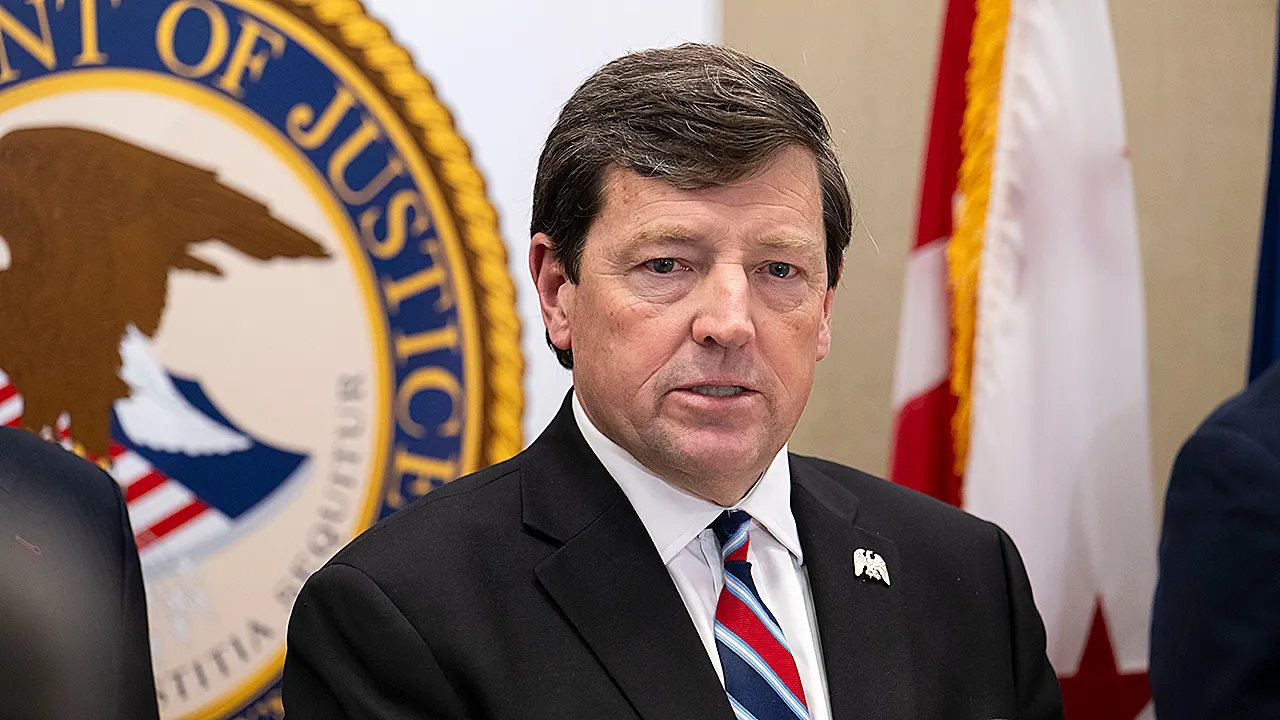
The Justice Department has removed Ed Martin, its current pardon attorney, from an internal “Weaponization Working Group” that is now meeting with increased frequency, Fox News has learned.
A DOJ spokesperson confirmed Martin’s removal on Monday but did not specify the reason behind the decision. “President Trump appointed Ed Martin as Pardon Attorney and Ed continues to do a great job in that role,” the spokesperson stated.
Martin, who was appointed to his current position on May 14, 2025, will remain in his role as pardon attorney, a position that involves reviewing clemency applications and advising the White House on pardons and commutations. However, he will no longer participate in the department’s internal working group examining potential weaponization of federal law enforcement.
The Weaponization Working Group was formed in early 2025 as an internal review body designed to investigate claims that federal law enforcement and prosecutorial powers were misused for political or partisan purposes. According to sources familiar with the matter, the panel is now meeting more frequently and aims to eventually convene daily.
Martin’s involvement with the DOJ has followed a complex trajectory since the beginning of President Trump’s second administration. Trump initially nominated Martin, a former defense attorney who represented individuals charged in the January 6, 2021, Capitol riot, to serve as U.S. Attorney for the District of Columbia in February of last year. However, after facing resistance from lawmakers that stalled his confirmation process, Trump withdrew the nomination and instead successfully nominated Jeanine Pirro to the position.
When appointing Martin as pardon attorney in May 2025, Trump simultaneously named him director of the Justice Department’s Weaponization Working Group, a position he held until his removal was announced this week.
Martin has been a controversial figure in his time at the DOJ, particularly regarding his actions involving New York Attorney General Letitia James. In August, he drew criticism after visiting James’s Brooklyn residence and publicly suggesting she resign. A lawyer representing James condemned the visit as a “made-for-media stunt,” though Martin later defended his actions, saying he visited the property to “lay eyes on it” and subsequently shared images of the visit on social media.
Adding to the controversy, Martin was granted special prosecutorial authority to pursue mortgage fraud investigations involving both James and Senator Adam Schiff (D-Calif.). Both officials have denied any wrongdoing and characterized the investigations as politically motivated. Martin also urged James to step down in what he described as a “confidential” letter that he later shared publicly on social media platform X.
Martin’s removal from the working group comes amid growing scrutiny of the Justice Department’s approach to investigating political figures who have been critical of the current administration. Legal experts have expressed concerns about the potential politicization of the department’s prosecutorial powers, particularly in cases involving high-profile political opponents.
The Weaponization Working Group remains a significant part of the administration’s efforts to investigate what it characterizes as past abuses of federal law enforcement. Critics, however, have expressed concerns that the group itself could be used as a tool to target political opponents under the guise of addressing prior weaponization.
The DOJ has not named a replacement for Martin in the working group, nor indicated whether his removal signals a change in direction for the panel’s ongoing work.
Fact Checker
Verify the accuracy of this article using The Disinformation Commission analysis and real-time sources.

28 Comments
Exploration results look promising, but permitting will be the key risk.
Good point. Watching costs and grades closely.
Good point. Watching costs and grades closely.
If AISC keeps dropping, this becomes investable for me.
Good point. Watching costs and grades closely.
Good point. Watching costs and grades closely.
Exploration results look promising, but permitting will be the key risk.
Uranium names keep pushing higher—supply still tight into 2026.
Good point. Watching costs and grades closely.
Uranium names keep pushing higher—supply still tight into 2026.
Good point. Watching costs and grades closely.
Good point. Watching costs and grades closely.
If AISC keeps dropping, this becomes investable for me.
Good point. Watching costs and grades closely.
Good point. Watching costs and grades closely.
I like the balance sheet here—less leverage than peers.
Good point. Watching costs and grades closely.
Good point. Watching costs and grades closely.
The cost guidance is better than expected. If they deliver, the stock could rerate.
I like the balance sheet here—less leverage than peers.
I like the balance sheet here—less leverage than peers.
The cost guidance is better than expected. If they deliver, the stock could rerate.
Silver leverage is strong here; beta cuts both ways though.
Good point. Watching costs and grades closely.
I like the balance sheet here—less leverage than peers.
Exploration results look promising, but permitting will be the key risk.
Good point. Watching costs and grades closely.
Good point. Watching costs and grades closely.