


Listen to the article
Two people at the center of attention during the Licking County Commissioners’ first meeting of the year were a burly guy in a green-and-tan uniform and a wisp of a young girl whose name is on a law that will help him do his job better.
That includes saving lives.
The man is Licking County Chief Dog Warden Larry Williams – named warden of the year in 2023 by the Ohio County Dog Wardens Association – who was a key resource for state Rep. Kevin Miller, R-Newark, and two of his legislative colleagues as they crafted a bill to better address dangerous and vicious dogs. Miller, a former Ohio State Highway Patrol trooper, said he called Williams at all hours of the day and night for details that would help with the bill.
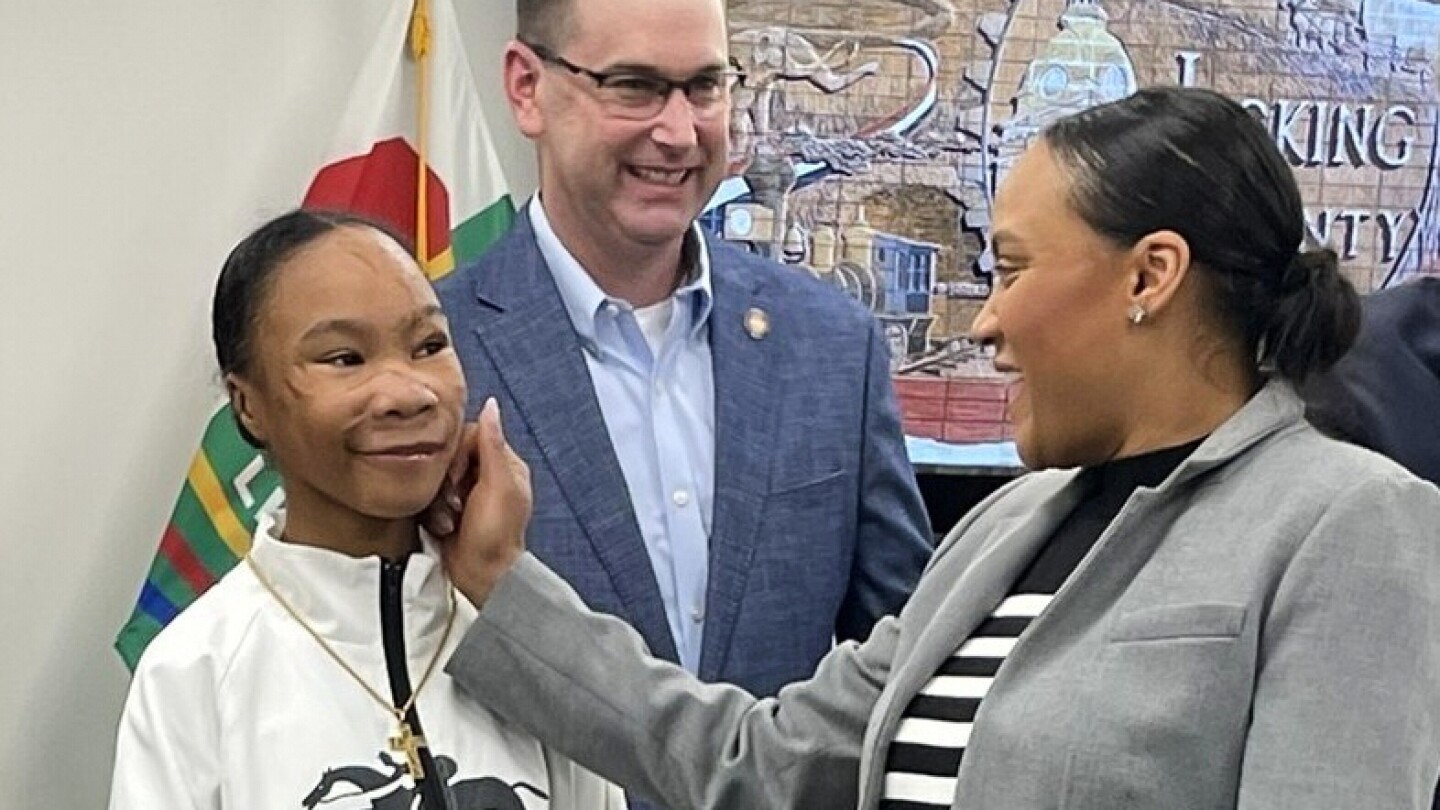
The girl is Avery Russell, 12, of Blacklick, in eastern Franklin County, who was brutally attacked by two pit bulls and lived to tell about it. She told her story of pain, multiple surgeries and survival to news reporters, state lawmakers and the governor – and other survivors of such attacks.
She is the brave, scarred face on a story that has played out thousands of times in Ohio, and when Avery’s Law takes effect on March 18, Ohio’s county dog wardens such as Williams and his partner, Assistant Chief Dog Warden Jeremy Grant, will have much stronger tools to deal with dog owners whose pets are deemed dangerous or vicious.
All of them were honored Thursday, Jan. 8, at the Licking County Administration Building in Newark by Licking County Commissioners Rick Black, Tim Bubb and Duane Flowers, along with Miller and one of his two legislative colleagues, Rep. Meredith Lawson-Rowe, D-Reynoldsburg, who worked on the bill that became Avery’s Law when Gov. Mike DeWine signed it on Dec. 19. Rep. Cecil Thomas, D-Cincinnati, who also contributed to the bipartisan bill, did not attend the brief ceremony.
The bill passed unanimously in both houses in about six months, Miller said, describing it as “light speed” for Statehouse action. This rapid passage reflects growing public concern about dangerous dog attacks, which have become a pressing public safety issue across Ohio.
The new law significantly strengthens Ohio’s approach to dangerous dogs. It imposes criminal penalties on dog owners who negligently fail to prevent unprovoked attacks. It also gives local dog wardens the authority to seize dogs immediately following such attacks – a crucial power that was previously limited.
Additionally, the law revises investigation and enforcement requirements when authorities receive complaints about potential violations of dog laws. It includes protections for dogs defending themselves, their owners, or property, while mandating euthanization of dogs that kill or seriously injure a person after due process.
Lawson-Rowe said that after two pit bulls attacked Avery at a Reynoldsburg house in June 2022, the city law director suggested that Lawson-Rowe take legislative action. When she learned that Miller and Thomas also had prepared bills, they worked together to combine the three.
“My one non-negotiable in the bipartisan effort was that the bill carry Avery’s name – my hero, Avery Russell,” Lawson-Rowe said.
Avery’s mother, Drew Russell, said Thursday that the day of the attack changed their lives in ways they couldn’t imagine. “It was like a bomb went off,” she explained, describing how she found herself shifting most of her attention to Avery’s recovery.
As she and Avery stood clutching bouquets of roses at the ceremony, Drew Russell addressed criticism that she was exploiting her child in the campaign for legislative change. “No,” Drew Russell insisted. “She wants to do this” with the goal of protecting other children.
The push for Avery’s Law gained momentum after several major Ohio newspapers published a statewide investigation into vicious dog attacks in March 2023, revealing in detail how Ohio’s existing dog laws were failing victims and their families.
The investigative series showed that approximately 17,000 dog bites are reported each year to local public health agencies in Ohio – with many more going unreported. Many attacks cause serious injuries, including disfigurements, amputations, and deaths.
“Children are disproportionately represented in the serious injuries and deaths,” the series reported. “Pediatric hospitals across Ohio treat hundreds of children for dog bites each year.”
Before Avery’s Law, owners of vicious dogs typically paid relatively small fines and faced minor misdemeanor charges. Only in rare cases, when prosecutors could document a history of aggressive behavior, were felony charges possible against negligent dog owners.
That changes on March 18 when Avery’s Law takes effect, representing one of the most significant reforms to Ohio’s dangerous dog laws in recent memory. For dog wardens like Larry Williams, the new legislation provides essential tools to protect communities and prevent future tragedies like the one that forever changed Avery Russell’s life.
Public health experts and animal control professionals across Ohio have praised the new law as a balanced approach that holds irresponsible owners accountable while still respecting responsible pet ownership.
Fact Checker
Verify the accuracy of this article using The Disinformation Commission analysis and real-time sources.

16 Comments
While the initial attack on Avery Russell was horrific, it’s inspiring to see how she’s turned that trauma into positive change. Giving dog wardens more tools to address dangerous dogs is a sensible policy shift.
Absolutely. Avery’s courage in sharing her story is truly remarkable. This new law named after her will be an important legacy.
While tragic that Avery Russell was attacked, it’s heartening to see her turn that experience into positive change. Empowering dog wardens to better address vicious dogs is an important public safety initiative.
I agree, Avery’s bravery in speaking up is truly admirable. Passing legislation that protects people from dangerous animals is a meaningful legacy.
It’s great to see community members like Avery Russell and the dog warden working together to improve public safety. Strengthening laws around vicious dogs is an important issue, and their collaborative efforts will have a real impact.
Yes, the teamwork between Avery, the state representative, and the dog warden is really admirable. Their work to empower dog wardens is a sensible and much-needed policy change.
This story highlights the power of personal experience and determination to drive legislative change. Avery Russell’s bravery in sharing her story has led to stronger laws that will protect others from similar attacks. Impressive work.
Absolutely. Avery has turned a tragic personal experience into a positive legacy that will save lives. Her advocacy is truly inspiring.
This is an inspiring story about how a young girl’s bravery and a dog warden’s dedication have led to real change in vicious dog laws. It’s great to see community members coming together to make their neighborhoods safer.
I agree, Avery Russell showed tremendous courage in sharing her story. Her advocacy will likely save many lives going forward.
This story highlights the importance of community involvement in shaping public policy. A concerned citizen, a state representative, and a dedicated dog warden worked together to strengthen laws around vicious dogs. Impressive teamwork.
Yes, it’s great to see everyday people like Avery Russell making a real difference. Their efforts will undoubtedly save lives going forward.
It’s heartening to see how a young person like Avery Russell can make a meaningful impact on public policy. Strengthening laws around vicious dogs is an important public safety issue, and her advocacy has driven real change.
Agreed. The collaboration between Avery, the state representative, and the dog warden is a great example of how citizens can work with officials to improve their communities.
Strengthening vicious dog laws is an important public safety issue. The collaboration between Representative Miller, the dog warden, and young Avery Russell is commendable. Proactive measures like this can help prevent future attacks.
Absolutely. Giving dog wardens the proper tools and resources to enforce dangerous dog laws is crucial. This new law named after Avery is a positive step forward.