


Listen to the article
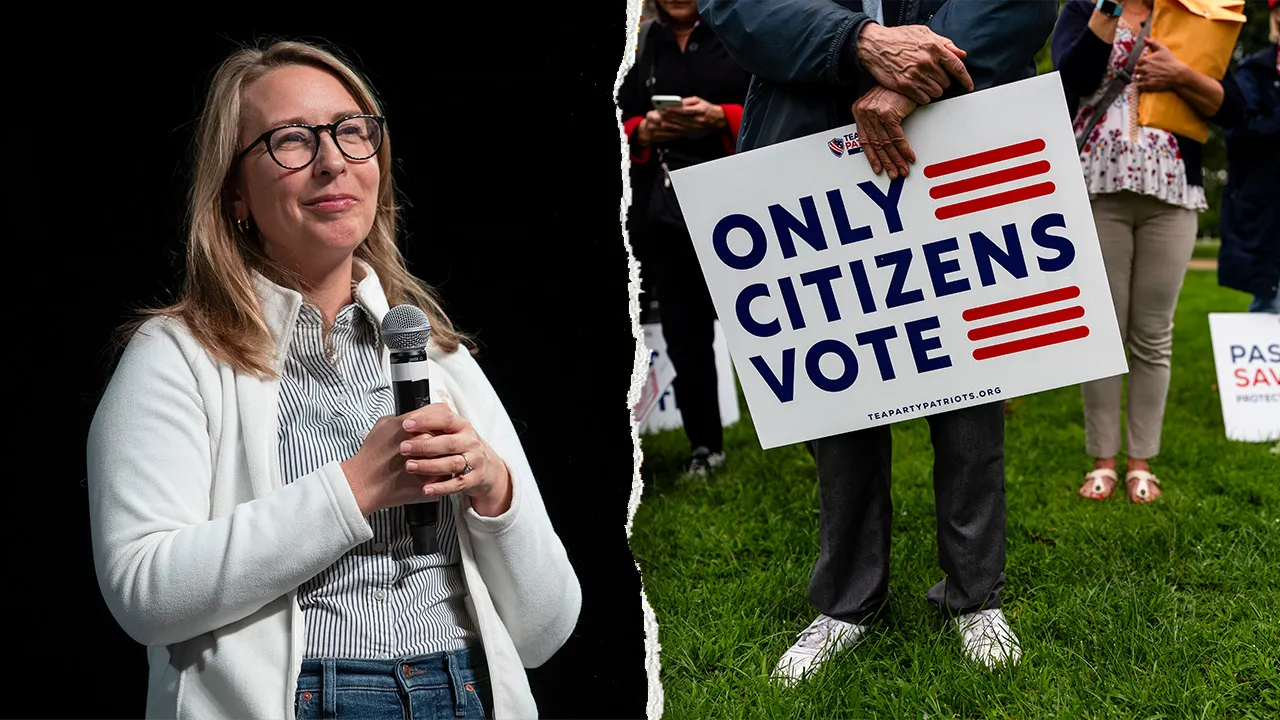
In a controversial dispute over voter ID legislation, Democratic Rep. Hillary Scholten of Michigan has raised concerns that the Republican-backed SAVE America Act could prevent millions of married women from voting due to name discrepancies on their identification documents.
During a recent press event, Scholten claimed, “Nearly 70 million married women in this country have changed their last name, but their birth certificates don’t reflect that.” She added that in Michigan’s third district alone, approximately 167,000 women could potentially be unable to register to vote simply because they didn’t change both their ID and birth certificate after marriage.
However, Republican lawmakers and legal analysts have disputed Scholten’s characterization of the legislation, calling it inaccurate and misleading.
The SAVE America Act would require federal voter registrants to present government-issued photo identification to verify their citizenship. It would also mandate photo ID for voting, a requirement that has become a partisan flashpoint in the ongoing national debate over election security and voter access.
Democrats, including Scholten, have opposed the legislation, arguing it creates unnecessary obstacles for eligible voters. “Republicans are trying to sell the SAVE Act as a way to stop non-citizens from voting, but we know that’s already illegal. What this bill really does is make it harder for citizens to vote, especially women,” Scholten stated when an earlier version of the bill was considered by the House.
A close examination of the bill’s text contradicts Scholten’s specific claim about birth certificates. While the legislation does list birth certificates as one way to confirm identity, it does not specify a requirement that the last name on the birth certificate must match other forms of identification in the manner Scholten described.
The bill indicates that voters can use “a certified birth certificate issued by a state in which the applicant was born… [that] includes the full name, date of birth, and place of birth of the applicant” as supplementary identification alongside other forms of ID.
A senior GOP staff member firmly rejected Scholten’s interpretation, calling it “another Democrat propaganda talking point” and noting that married women should have their marriage licenses as documentation of name changes.
The Federalist Society, a conservative-leaning legal organization, has also weighed in on the controversy. According to their analysis, “The SAVE Act itself contemplates these name changes and provides protections so that Americans who have changed their names — because of marriage or otherwise — are not prevented from voting.”
The society points out that the bill directs the bipartisan federal Election Assistance Commission to establish guidelines for states to accept supplementary documents, such as marriage licenses, to verify citizenship when a voter’s birth certificate and current name don’t match.
Beyond birth certificates, the legislation allows voters to prove citizenship through other forms of identification, including passports, REAL IDs, and military identification cards.
The dispute highlights the increasingly polarized debate over voting rights and election security in the United States. Republicans have generally championed stricter voter ID laws as necessary safeguards against potential fraud, while Democrats have frequently characterized such measures as attempts to suppress voter participation, particularly among minority and marginalized communities.
Michigan’s own voter ID regulations add another layer to the controversy. According to the state’s Department of Health and Human Services, birth certificates may only be changed to correct a birth record, change a sex designation, correct a place of birth, or amend a parental record—marriage-related name changes are not listed as acceptable reasons for modification.
Scholten’s office did not respond to requests for clarification on her statements about the legislation.
Fact Checker
Verify the accuracy of this article using The Disinformation Commission analysis and real-time sources.

10 Comments
The SAVE Act’s potential impact on married women is concerning. It’s crucial that voting rights are protected, especially for historically marginalized groups. I hope a fair compromise can be reached.
Interesting debate over the SAVE Act’s impact on married women’s voting rights. It’s a complex issue with valid concerns on both sides. I hope lawmakers can find a balanced approach that protects election integrity without disenfranchising voters.
Agreed, the goal should be to improve voter access and security without unfairly targeting any group. Hopefully the parties can work together on reasonable solutions.
This is a tough issue with valid arguments on both sides. I hope lawmakers can find a way to address election security concerns without disproportionately impacting married women and other vulnerable voters.
Agreed, any voting reforms need to be carefully considered to avoid unintended consequences. Maintaining election integrity is important, but not at the expense of voter access.
The SAVE Act’s impact on married women’s voting rights is a complex and sensitive issue. I’m curious to see how this dispute unfolds and what kind of solutions lawmakers can come up with.
This is a tricky situation with valid concerns on both sides. Protecting election integrity is important, but not at the cost of disenfranchising voters. I hope lawmakers can find a balanced solution.
Absolutely, any reforms need to be carefully evaluated to ensure they don’t create new barriers to voting, especially for vulnerable populations. A nuanced approach is required here.
This seems like a tricky situation with no easy answers. I can understand the concern about potential voter suppression, but also the desire for stronger election security measures. It will be important to find a reasonable compromise.
Yes, reasonable people can disagree on the right approach here. Hopefully the debate can remain civil as they work to balance these competing priorities.