


Listen to the article
In a renewed effort to address public safety concerns, the Department of Homeland Security has issued another appeal to California Governor Gavin Newsom, urging him to retain criminal illegal immigrants in law enforcement custody rather than releasing them into communities.
The agency revealed that Immigration and Customs Enforcement (ICE) currently has 33,179 active detainers for criminal illegal immigrants in California’s local, state, and federal prisons. Since January 20, 2025, authorities report that 4,561 criminal illegal immigrants have been released from law enforcement custody after ICE detainers were ignored.
“We are calling on Governor Newsom and his administration to commit to honoring the ICE arrest detainers of the more than 33,000 criminal illegal aliens in California’s custody,” said Assistant Secretary Tricia McLaughlin. “It is common sense and vital for public safety. Criminal illegal aliens should not be released from jails back onto our streets to terrorize more innocent Americans.”
McLaughlin emphasized the importance of cooperation, noting that “seven of the 10 safest cities in the U.S. cooperate with ICE law enforcement.”
The Trump administration has consistently argued that failing to honor ICE detainers endangers communities and law enforcement personnel. This stance has created ongoing tension with California’s state leadership, which has implemented various sanctuary policies limiting cooperation with federal immigration authorities.
When approached for comment, Newsom’s office referenced a previous statement on social media: “California cooperates with ICE when it comes to REMOVING CRIMINALS — like sick rapists and murderers — in our state prisons.” The governor’s office maintains that since Newsom took office in 2019, the California Department of Corrections and Rehabilitation has coordinated the transfer of more than 12,000 people to ICE custody, including those convicted of serious violent offenses.
“California law ensures violent offenders are held accountable while also ensuring that victims and witnesses — including victims of domestic violence and human trafficking — are not terrorized into silence by fear of deportation,” the governor’s office stated in a news release.
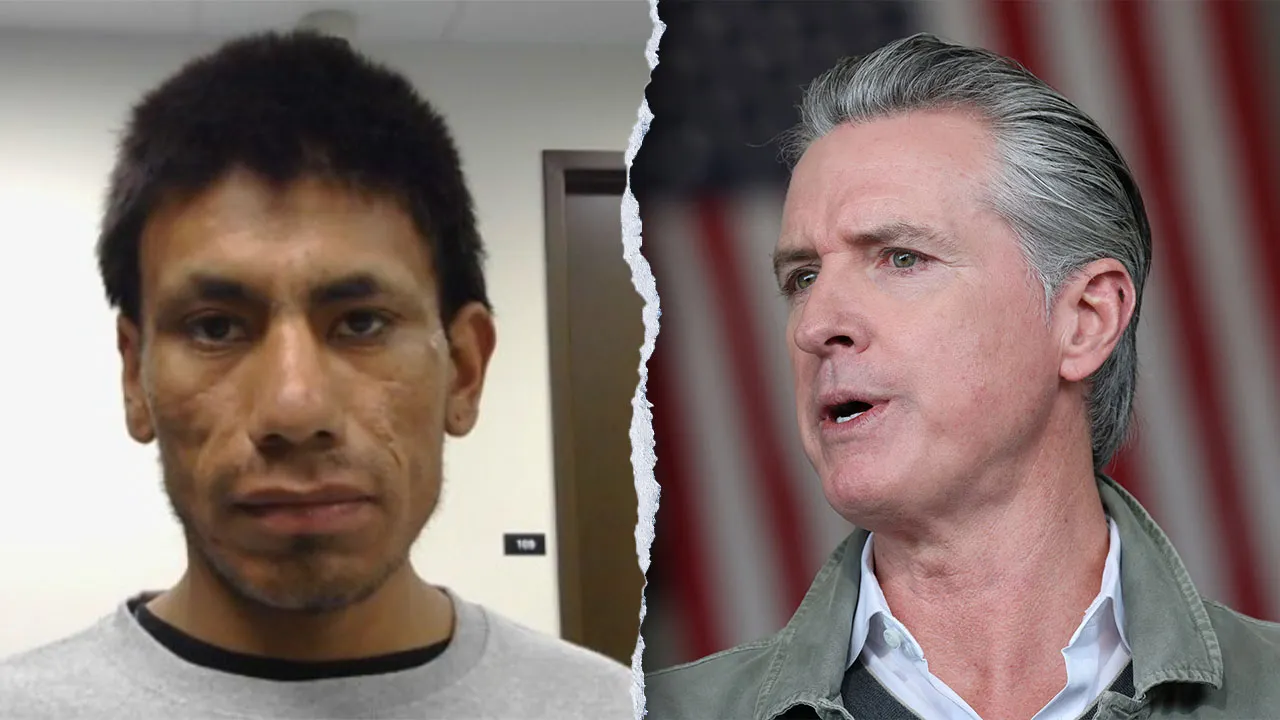
DHS cited a recent incident on February 2 to illustrate their concerns. Federal authorities attempted to take Jorge Lopez Santos into custody at the Ventura County Jail after his arrest by local authorities for possession of a controlled substance, possession of unlawful paraphernalia, possession of burglary tools, and trespassing.
Although ICE had lodged an arrest detainer to safely apprehend Santos inside the jail, officials refused to honor it. This forced federal agents to make the arrest in the jail’s lobby following his release, where they encountered resistance from anti-ICE demonstrators.
“As law enforcement tried to transfer the illegal alien from the lobby to their custody, 15 agitators gathered outside the jail, surrounded the officers and attempted to prevent the arrest,” DHS reported. “The agitators refused to follow law enforcement commands.”
During the confrontation, a female demonstrator allegedly physically assaulted a federal officer and was subsequently arrested. Such incidents highlight the potential dangers faced by law enforcement when forced to make arrests in public settings rather than secure facilities.
According to federal authorities, Santos entered the United States in November 2021 as a non-immigrant, non-agricultural worker with authorization to remain until August 25, 2022, but failed to depart when his visa expired.
The ongoing dispute reflects broader national debates about immigration policy, public safety, and the proper relationship between federal enforcement efforts and state authority. California’s approach to immigration enforcement has been particularly contentious, with critics arguing that sanctuary policies endanger public safety and supporters maintaining that they protect community trust and civil liberties.
As immigration remains a central political issue, the tension between federal authorities and states with restrictive cooperation policies like California seems likely to continue, particularly as both sides point to public safety concerns to justify their positions.
Fact Checker
Verify the accuracy of this article using The Disinformation Commission analysis and real-time sources.

10 Comments
From a factual standpoint, the statistics presented suggest a concerning trend that warrants attention. However, the political and social complexities around immigration make this a challenging issue to navigate.
This is a sensitive topic, but I appreciate the factual tone of the reporting. It’s important to understand the nuances and potential implications, even if one doesn’t agree with all the policy positions.
Well said. Maintaining an objective, evidence-based perspective is crucial when discussing complex issues like this.
As a mining and commodities investor, I’m curious how this issue may impact the broader political and economic landscape, especially given California’s importance for certain critical minerals.
That’s an interesting perspective. The policy decisions around immigration could have ripple effects across different industries and sectors.
This is a concerning issue with public safety implications. While immigration is a complex topic, it’s important that the governor and federal authorities work together constructively to address criminal activity and protect citizens.
Keeping dangerous criminal illegal immigrants off the streets is a reasonable public safety measure. However, the details and overall immigration policy approach should be carefully considered to balance different priorities.
I agree, a nuanced approach is needed here. Reasonable people can disagree on the best way forward.
As someone interested in the mining and energy sectors, I’ll be closely following how this situation unfolds and how it may impact relevant industries and investments. Transparency and thoughtful policymaking are essential.
While public safety is paramount, I hope the authorities can find a balanced approach that respects individual rights and due process. Cooperation between state and federal agencies is key.