


Listen to the article
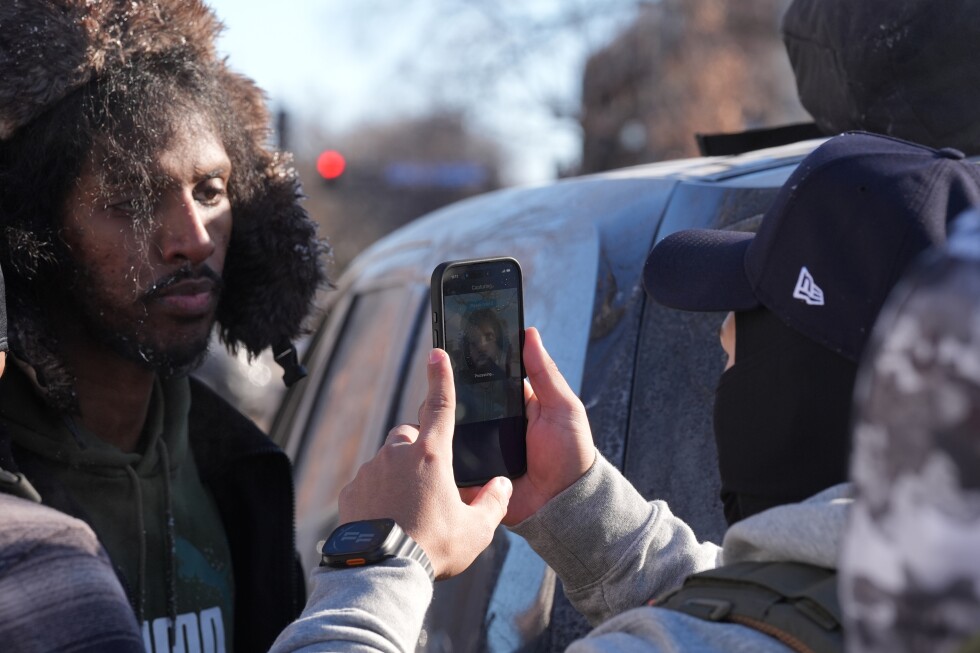
Federal agents boxed in Luis Martinez’s SUV on a freezing Minneapolis morning, forcing him to stop in the middle of the street. Masked agents demanded his ID and scanned his face with a cellphone, repeatedly asking if he was a U.S. citizen.
This encounter illustrates the aggressive tactics employed in the Trump administration’s ongoing immigration crackdown in Minnesota, described as the largest of its kind. The operation has drawn national scrutiny after federal agents shot and killed two U.S. citizens this month.
While Department of Homeland Security (DHS) officials claim their enforcement efforts target serious offenders, evidence suggests a different reality. Photographs, videos, and internal documents reveal agents heavily relying on biometric surveillance and extensive interconnected databases, demonstrating how digital surveillance has become central to the administration’s immigration enforcement strategy.
Civil liberties experts express grave concern that these expanding systems risk ensnaring both citizens and non-citizens alike, often with minimal transparency or oversight.
In the past year, Homeland Security and other federal agencies have dramatically expanded their data collection capabilities through agreements with local, state, federal, and international agencies, plus contracts with technology companies and data brokers. These databases contain immigration and travel records, facial images, and vehicle information.
For Martinez, the facial scan found no match. Only after producing his U.S. passport—which he carried specifically fearing such encounters—did agents let him go.
“I had been telling people that here in Minnesota it’s like a paradise for everybody, all the cultures are free here,” Martinez said. “But now people are running out of the state because of everything that is happening. It’s terrifying. It’s not safe anymore.”
Federal authorities can now monitor American cities at unprecedented scales. Agents can identify people through facial recognition, track movements via license-plate readers, and sometimes use commercially available phone-location data to reconstruct daily routines and associations.
When questioned about these surveillance tools by The Associated Press, DHS declined to disclose what it termed “law enforcement sensitive methods.” The department defended its practices, stating that technology aids in arresting “criminal gang members, child sex offenders, murderers, drug dealers, identity thieves and more, all while respecting civil liberties and privacy interests.”
Dan Herman, a former Customs and Border Protection senior adviser during the Biden administration now with the Center for American Progress, warned about the government’s access to personal data and surveillance systems. “They have access to a tremendous amount of trade, travel, immigration and screening data. That’s a significant and valuable national security asset, but there’s a concern about the potential for abuse,” Herman said.
On Wednesday, DHS disclosed it has been using a facial recognition app called Mobile Fortify, which compares face scans with “trusted source photos” to verify identities. The app, made by NEC, was operational for Customs and Border Protection (CBP) and Immigration and Customs Enforcement (ICE) before the immigration crackdown expanded to Los Angeles in June.
In interactions observed by reporters and in online videos, agents rarely request consent before scanning people’s faces and sometimes continue scanning even when people object. In Minnesota, AP journalists witnessed masked agents holding phones approximately one foot from people’s faces to capture biometric details.
Unlike airport facial recognition systems, where travelers are typically notified and may opt out, Martinez reported being given no choice during his encounter.
According to a lawsuit filed against DHS by Illinois and Chicago, Mobile Fortify has been used in the field over 100,000 times. DHS claims the app supports “accurate identity and immigration-status verification” with a “deliberately high-matching threshold.”
Without federal guidelines governing facial recognition tools, the U.S. Commission on Civil Rights warned in a September 2024 report that their deployment raises serious concerns about accuracy, oversight, transparency, discrimination, and access to justice.
The Trump administration scaled back a program providing ICE officials with body cameras last year, though administration officials confirmed some agents involved in the fatal shooting of Minneapolis ICU nurse Alex Pretti were wearing them. That footage is currently under review. Gregory Bovino, who until recently led the Border Patrol’s Minneapolis operations, began wearing a body camera following a judge’s order late last year.
DHS is currently exploring or deploying more than 100 artificial intelligence systems, including some for law enforcement activities. Congress authorized CBP to receive over $2.7 billion last year to expand border surveillance systems and incorporate AI and other emerging technologies.
Government contractor Palantir received $30 million to extend a contract for a system designed to locate individuals flagged for deportation. The administration also disclosed it’s using Palantir’s AI models to analyze tips submitted to its immigration enforcement hotline.
Rachel Levinson-Waldman of the Brennan Center for Justice’s Liberty and National Security Program questioned the expanding scope of surveillance: “We are developing these technologies for immigrant enforcement. Are we also going to expand it or wield it against U.S. citizens who are engaging in entirely lawful or protest activity?”
Fact Checker
Verify the accuracy of this article using The Disinformation Commission analysis and real-time sources.

13 Comments
This is a very concerning report that highlights the need for urgent reforms and oversight when it comes to immigration enforcement tactics. We must protect the rights of all individuals, citizens and non-citizens alike, while also addressing legitimate security concerns.
This is a concerning development that seems to go against principles of due process and equal protection under the law. Aggressive tactics like this risk eroding public trust and infringing on fundamental rights.
Absolutely. Expanding biometric surveillance and data-sharing across agencies is a concerning trend that requires close scrutiny. We must find the right balance between security and civil liberties.
This is a concerning development that highlights the need for robust safeguards and oversight when it comes to immigration enforcement tactics and the use of new surveillance technologies. We must protect civil liberties while also addressing legitimate security concerns.
This is a complex issue with legitimate security concerns, but the aggressive tactics and lack of transparency are deeply troubling. We need a more balanced, rights-respecting approach to immigration enforcement.
Agreed. Overreliance on surveillance technology and biometric data-sharing risks creating an oppressive and unaccountable system that could ensnare both citizens and non-citizens. Serious reforms are needed.
The reports of federal agents using such intrusive surveillance methods and detaining US citizens in these immigration raids are very worrying. This seems like a dangerous overreach that requires immediate investigation and action.
Troubling to see the aggressive tactics and expanded surveillance being used in immigration enforcement. We need to ensure citizens’ rights are protected, even as we address legitimate border security concerns.
Agreed. The lack of transparency and oversight on these new digital surveillance systems is very worrying. Urgent need for robust safeguards to prevent overreach and infringement of civil liberties.
The aggressive tactics and expanded surveillance described in this report are extremely worrying. We need to ensure that immigration enforcement efforts do not infringe on the civil liberties and constitutional rights of citizens. Robust safeguards and transparency are essential.
The details in this report are quite alarming. Agents conducting immigration raids that sweep up US citizens raises major constitutional concerns that demand urgent attention and oversight.
While I understand the desire for tighter border security, the heavy-handed tactics and lack of transparency described in this report are deeply concerning. We cannot allow immigration enforcement to trample on the rights of citizens.
Absolutely. The expanded use of biometric surveillance and data-sharing across agencies is a troubling trend that needs to be reined in through stronger legal and ethical oversight. Maintaining the balance between security and civil liberties is critical.