


Listen to the article
The House of Representatives passed an $80 billion spending package Wednesday evening with strong bipartisan support, marking a significant step toward preventing a government shutdown at the end of the month. The bill cleared the chamber in a decisive 341-79 vote, demonstrating rare cross-party cooperation on federal funding.
The legislation, referred to as a “minibus,” combines two of Congress’s twelve annual appropriations bills. It covers funding for the State Department and related national security operations, as well as federal financial services and general government functions. The package now heads to the Senate for approval before reaching President Donald Trump’s desk.
Despite this progress, funding for the Department of Homeland Security (DHS) remains a contentious issue. The DHS appropriation was initially expected to be part of this minibus but was ultimately excluded. House Appropriations Committee Chairman Tom Cole (R-Okla.) has indicated he would like to see DHS funding included in the final comprehensive package later this month.
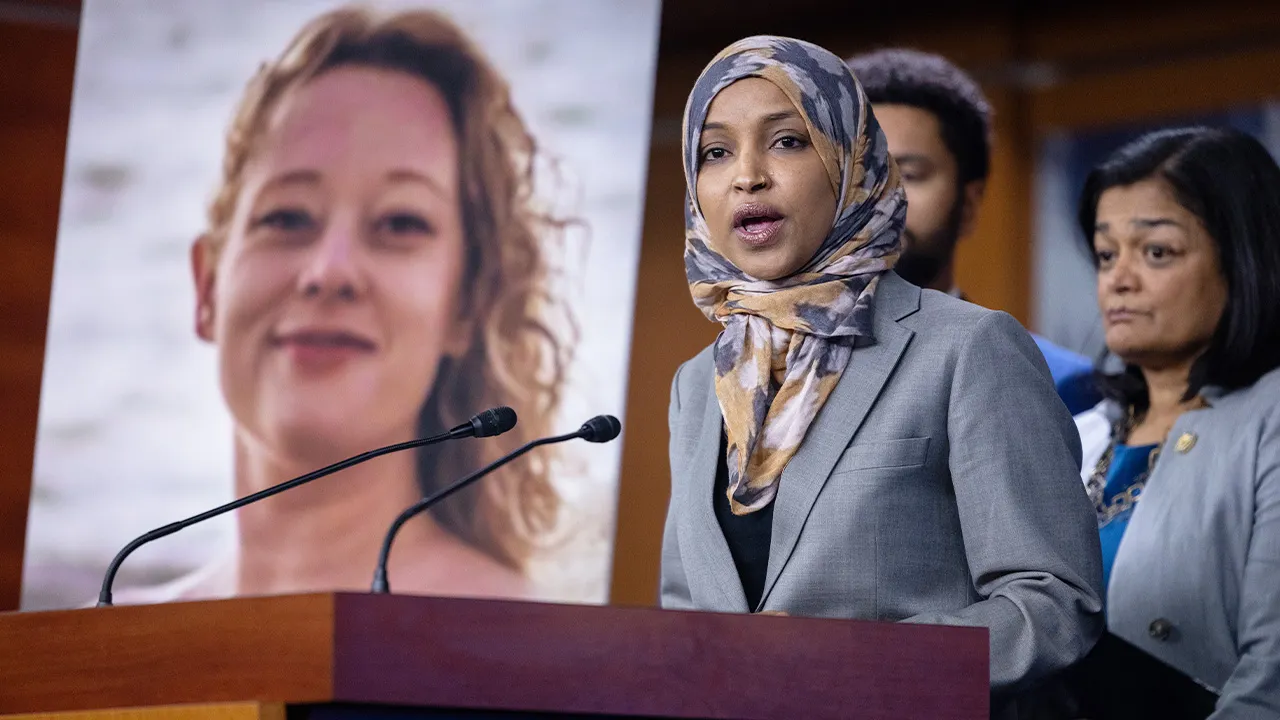
The controversy surrounding DHS stems from progressive lawmakers’ demands for significant reforms to Immigration and Customs Enforcement (ICE). This push gained momentum following an incident where an ICE agent fatally shot Renee Nicole Good, a 37-year-old U.S. citizen, during a confrontation where her car reportedly made physical contact with a law enforcement official.
The incident has sparked sharp partisan divisions. DHS Secretary Kristi Noem and other Republican officials maintain the agent acted in self-defense, while Democratic lawmakers have called for criminal investigations into the shooting.
Rep. Rosa DeLauro (D-Conn.), the top Democrat on the Appropriations Committee, has advocated for handling DHS funding separately. “It’s got to be by itself,” DeLauro told reporters Tuesday. “It’s got to be separate.”
Meanwhile, the Congressional Progressive Caucus has taken a firm stance on the issue. Rep. Ilhan Omar (D-Minn.) announced that caucus members would oppose all funding for immigration enforcement until meaningful reforms are implemented.
“Our caucus members will oppose all funding for immigration enforcement in any appropriation bills until meaningful reforms are enacted to end militarized policing practices. We cannot, and we should not continue to fund agencies that operate with impunity,” Omar stated at a press conference.
The State Department portion of the approved package includes $850 million for an “America First Opportunity Fund,” designed to give the Secretary of State flexibility to respond to unforeseen international circumstances. The bill also provides millions in security assistance for Israel and Taiwan, among other global partners.
Both parties found elements to celebrate in the legislation. Republicans highlighted that the bill supports “President Trump’s America First foreign policy by eliminating wasteful spending on DEI or woke programming, climate change mandates, and divisive gender ideologies.” Democrats pointed to provisions that “support women globally” by “protecting funding for bilateral family planning and the United Nations Population Fund.”
The financial services component allocates over $13 billion to the U.S. Treasury for the remainder of fiscal year 2026. It includes language that prevents the IRS from “targeting individuals or groups for exercising their First Amendment rights or ideological beliefs,” according to Republicans. Additionally, it provides $872 million for the Executive Office of the President and $9.69 billion in discretionary funding for the Federal Judiciary.
The Senate is expected to vote on and pass a previous three-bill funding package on Thursday before departing for a weeklong recess. Neither party appears willing to risk another government shutdown, with Senate Democrats viewing the package as an opportunity to fund several of their priorities.
Senate Majority Leader John Thune (R-S.D.) acknowledged the challenges ahead, particularly regarding DHS funding. “Homeland is obviously the hardest one, and it’s possible that, if we can’t get agreement, that there could be some sort of CR that funds some of these bills into next year,” Thune said, referring to a potential continuing resolution as a temporary measure.
Despite these hurdles, bipartisan funding negotiations continue—a marked difference from the contentious atmosphere that surrounded the previous government funding deadline in October. However, the Senate won’t be able to address the two-bill package until lawmakers return toward the end of the month, creating a tight timeline to finalize all funding before the deadline.
Fact Checker
Verify the accuracy of this article using The Disinformation Commission analysis and real-time sources.

10 Comments
The bipartisan support for this spending bill is encouraging, as it demonstrates some level of cooperation between parties on critical government funding. The ongoing controversy around DHS, though, highlights the divisive nature of immigration policy.
You’re right, the politics around DHS and immigration enforcement remain highly contentious. Finding a balanced approach will be challenging but important for finalizing this appropriations package.
An $80 billion package for the State Department and other agencies is substantial, but the exclusion of DHS is concerning. Resolving the political tensions around immigration enforcement will be key to finalizing this appropriations bill.
Absolutely, the DHS funding dispute is the major challenge here. Finding a solution that satisfies all sides will be crucial to avoiding a government shutdown.
An $80 billion funding package for the State Department and other agencies is a significant investment, though the exclusion of DHS is concerning. Resolving these differences will be crucial to preventing a government shutdown.
Agreed, the DHS funding issue needs to be addressed. Hopefully the Senate can find a compromise solution that works for all sides.
This spending bill demonstrates some bipartisanship, which is positive. However, the lack of DHS funding is worrying and could create further political turmoil. Striking the right balance on immigration enforcement will be critical.
You make a good point. The DHS funding issue is clearly a major sticking point that needs to be resolved. Compromise will be essential to getting a final bill passed.
This $80 billion spending package for the State Department, financial services, and general government functions seems like a positive step forward in averting a government shutdown. However, the exclusion of DHS funding is concerning and could lead to further political tensions.
I agree, the lack of DHS funding in this bill is worrying. Resolving the issues around immigration enforcement will be key to getting a comprehensive package passed.