


Listen to the article
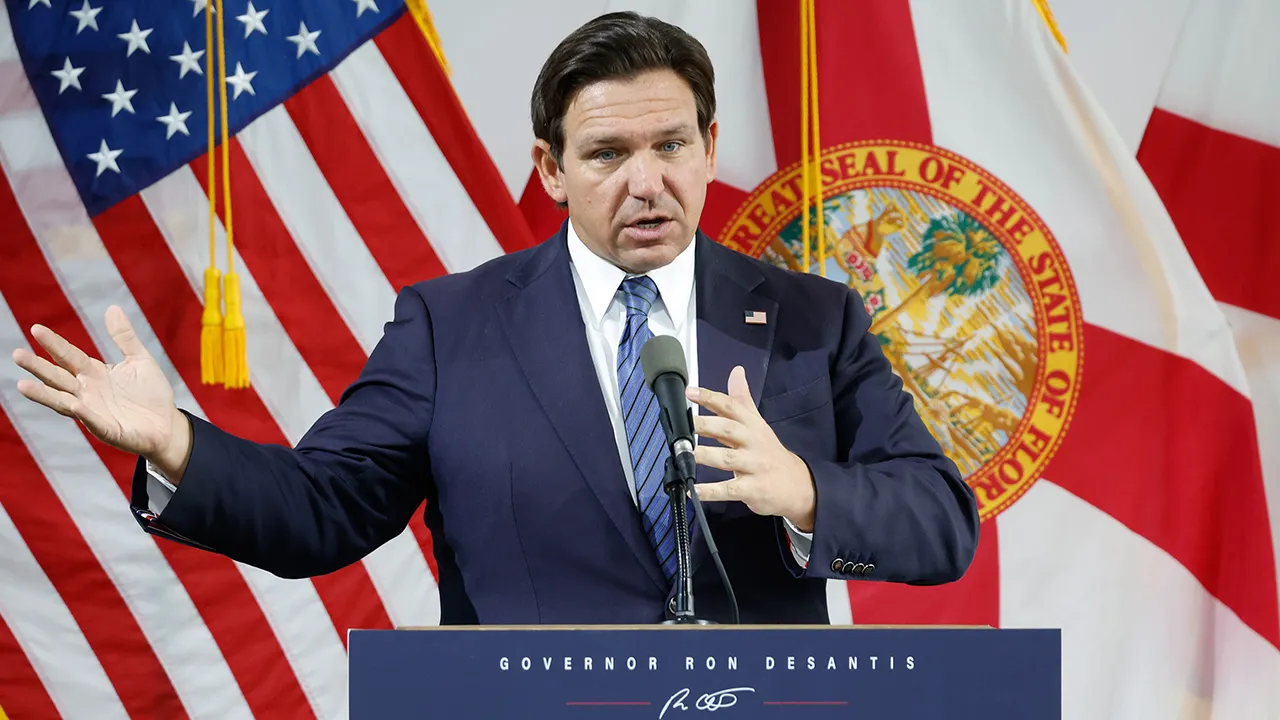
Florida Governor Ron DeSantis signed legislation Monday establishing a state-level process to designate terrorist organizations and penalize universities that support them, describing the measure as part of a broader effort to combat Islamic extremism within the state.
“We’ll do millions for public safety, millions for education, but never one red cent for jihad,” DeSantis declared during the signing ceremony, where he stood behind a sign denouncing Sharia law. The governor argued that while the federal government regularly designates terrorist organizations, Florida needed its own mechanism to address such threats.
The legislation, HB1471, reaffirms that Florida courts cannot enforce foreign or religious law, including Sharia law. The bill grants the Florida Department of Law Enforcement authority to declare groups as domestic terrorist organizations, subjecting them to various prohibitions, including barring them from receiving any public funding.
A key provision of the law targets Florida’s higher education institutions. Universities showing support for designated terrorist organizations will be barred from receiving public funds. Additionally, the law mandates that schools expel students who promote such groups.
“If there is a school that is aligned with [the Council of American Islamic Relations], should you have any of your money going to things like that? I think not,” DeSantis said during the signing event.
The legislation comes amid heightened national security concerns following a March incident at Old Dominion University in Virginia, where a gunman opened fire in a classroom, killing an instructor who was an Army veteran and injuring two others. Authorities reported that the attacker shouted “Allahu Akbar” during the shooting, and the case is being investigated as a likely act of terrorism.
This attack occurred in the wake of joint U.S.-Israeli military strikes against Iran in February, which intensified fears about potential retaliatory actions by Iranian proxies operating within the United States. The governor referenced the Old Dominion incident specifically as an example of the threats the legislation aims to address.
College campuses have been particularly tense environments since October 7, 2023, when Hamas launched a terrorist attack against Israel. The attack and subsequent Israeli military response triggered widespread protests and demonstrations across American universities, some of which have escalated into disruptive encampments and confrontations with authorities.
The bill has drawn significant criticism from civil liberties advocates. The American Civil Liberties Union of Florida condemned the legislation as “dangerous,” arguing it creates a system where government can unilaterally label organizations as domestic terrorists without adequate constitutional protections.
“This legislation attempts to create a system where the government can unilaterally label individuals and organizations as ‘domestic terrorists’ and trigger sweeping consequences without meaningful standards, transparency, or constitutional guardrails,” said Bacardi Jackson of the ACLU Florida in a statement.
The new law follows DeSantis’s earlier executive order designating both the Council on American-Islamic Relations (CAIR) and the Muslim Brotherhood as foreign terrorist organizations. That order remains in legal limbo after a federal judge temporarily blocked its implementation.
The legislation represents Florida’s latest move in a series of measures addressing national security concerns at the state level, and reflects the growing tension between security priorities and civil liberties protections, particularly in the context of campus activism and religious freedom debates.
As implementation begins, legal challenges to the law appear likely, particularly regarding its constitutionality and potential impacts on free speech and academic freedom within Florida’s educational institutions.
Fact Checker
Verify the accuracy of this article using The Disinformation Commission analysis and real-time sources.

7 Comments
This seems like a rather heavy-handed approach to a complex issue. While public safety is crucial, I’m concerned about the potential for abuse and infringement on civil liberties. Hope the state strikes the right balance in the implementation.
This seems like a heavy-handed approach to combating extremism. While public safety is important, I’m concerned about the potential for overreach and infringing on civil liberties. Curious to see how this is implemented and if it truly makes Floridians safer.
As a Floridian, I’m interested to see how this plays out. Combating violent extremism is crucial, but I worry this law could do more harm than good if not executed carefully. Curious to hear from legal experts on the potential impacts and unintended consequences.
As a Floridian, I have mixed feelings about this new law. While combating extremism is important, I worry this approach could do more harm than good if not executed carefully. Curious to hear from experts on the potential impacts and unintended consequences.
This seems like a rather broad and sweeping approach to a complex issue. While I understand the desire to enhance public safety, I’m concerned about the potential for abuse and overreach. Hope the state strikes the right balance between security and civil liberties.
I appreciate the governor’s efforts to address terrorism, but I’m not convinced this is the right way to go about it. Targeting universities and religious law feels more like political grandstanding than an effective security strategy. Curious to see how this is implemented and if it actually improves public safety.
Interesting move by DeSantis, though I’m not sure this is the best way to address terrorism concerns. Targeting universities and religious law feels like a political play rather than an effective security measure. I hope the implementation is thoughtful and balanced.