


Listen to the article
In a bold move that escalates tensions between local governments and federal immigration authorities, Denver Mayor Mike Johnston issued an executive order Thursday authorizing city officials to detain Immigration and Customs Enforcement (ICE) agents who use excessive force against civilians in the city.
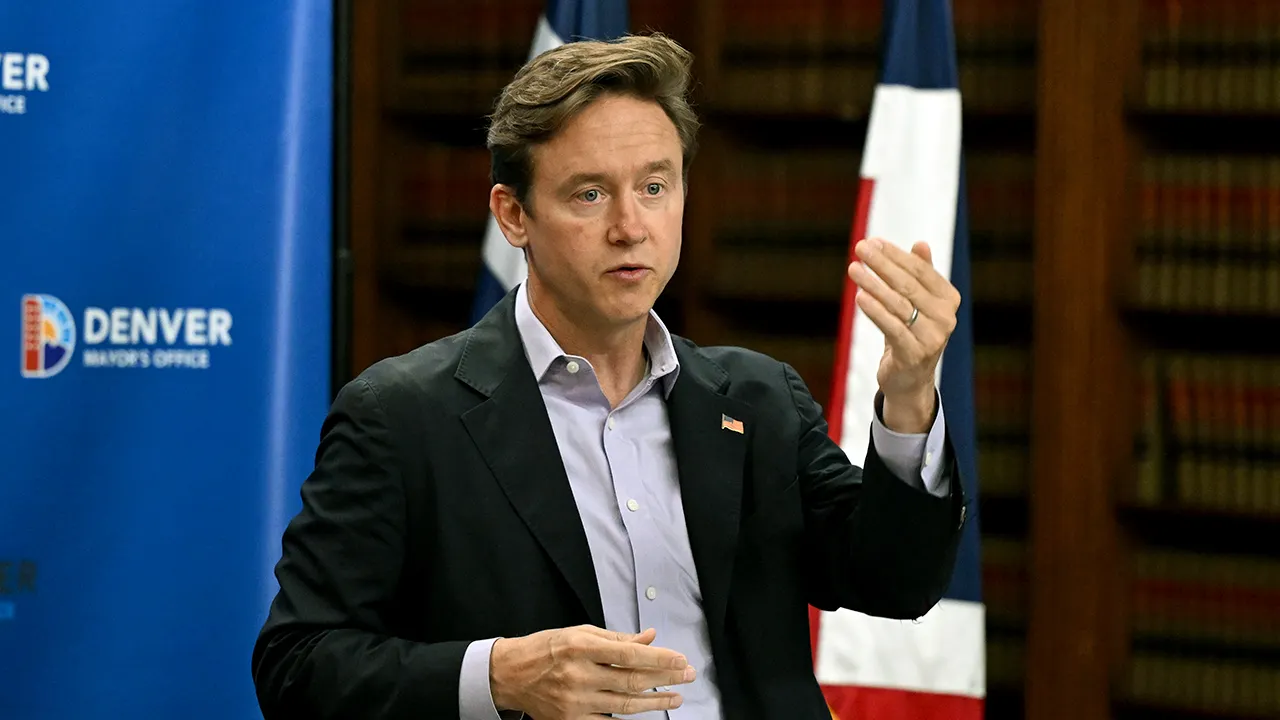
Standing on the steps of Denver’s city government plaza, Johnston declared, “To protect Denver, our first responders will always provide life-saving aid to anyone who is injured, no matter who injured them. No ICE officer gets to stand in our way of saving someone’s life.”
The mayor’s directive explicitly states that if city officials witness ICE agents using excessive force against Denver residents, local authorities will intervene to detain those agents and remove them from the situation. Johnston emphasized that federal agents should be held to the same standards of conduct as city police officers.
“Regardless of what the federal government does, we will not abdicate our responsibility to prosecute crimes in our city,” Johnston added.
The executive order was drafted by Denver City Attorney Michiko “Miko” Brown, whom Johnston noted is a descendant of Japanese Americans who were sent to internment camps under President Franklin Roosevelt’s Executive Order 9066 during World War II. In his announcement, Johnston referenced the historical significance of the courthouse behind him, named for former Colorado Republican Governor Ralph Carr, who notably opposed Roosevelt’s internment of Japanese, German, and Italian Americans in 1942.
Johnston framed the executive order as a protection against what he termed “abductions” of residents, stating that “no one will have to worry if their dad will be abducted when he heads to the store.”
The Denver directive comes just weeks after Philadelphia District Attorney Larry Krasner made headlines with his own controversial statements about federal immigration enforcement. Krasner referred to ICE agents as “a small bunch of wannabe Nazis” and threatened that “if we have to hunt you down the way they hunted down Nazis for decades, we will find your identities.”
Krasner’s remarks prompted Representative Greg Steube, a Florida Republican and member of the House Intelligence Committee, to request an investigation by Attorney General Pam Bondi under federal statutes that criminalize threats against federal officers.
Unlike Krasner’s statements, Johnston’s executive order puts concrete policy in place that could create direct confrontation between local and federal authorities. This potential jurisdictional conflict raises significant legal questions about the boundaries of local power to restrict federal immigration enforcement.
The Department of Homeland Security, which oversees ICE, has not yet responded to requests for comment on Denver’s new policy.
Johnston concluded his announcement by appealing to what he described as Western values: “In Denver, we have proven time and time again that we are stronger than any obstacle we face because we are a city that turns to each other and not on each other. Through fires and floods, booms and busts, and tournaments and raids, we have stayed true to the values of the West: All are welcome. All are valued. All are protected.”
This executive order represents the latest development in the ongoing tension between sanctuary cities and the federal government over immigration enforcement. Denver joins other metropolitan areas that have implemented policies limiting cooperation with ICE, though few have gone as far as authorizing the detention of federal agents.
Legal experts anticipate potential court challenges to Denver’s policy, as federal supremacy in immigration enforcement has historically been upheld by courts, while states and municipalities have sought varying degrees of independence in determining how their resources are used in immigration matters.
As this situation develops, it will likely serve as a significant test case for the limits of local authority in immigration enforcement contexts and could potentially reshape federal-municipal relationships across the country.
Fact Checker
Verify the accuracy of this article using The Disinformation Commission analysis and real-time sources.

11 Comments
This seems like a bold step to hold federal agents accountable for their actions in the city. It will be important to see how this plays out in practice and whether it can effectively deter excessive force.
I agree, this could be a risky move that invites legal challenges. But the mayor appears committed to defending Denver’s residents against any abuses.
I appreciate the mayor’s desire to hold federal agents accountable, but I’m concerned this could lead to dangerous escalation between local and national authorities. Deescalation and dialogue may be a wiser path forward.
This seems like a bold and principled stance by the Denver mayor, even if it may invite legal battles down the road. Public safety should be the top priority for any local government.
This is a complex issue with valid concerns on both sides. The mayor is clearly trying to uphold the city’s values, but the legal implications could be significant. I’ll be following this story closely.
Agreed, there are no easy answers here. It will be critical for the city and federal authorities to find a constructive way to work together and find the right balance.
This executive order raises important constitutional questions about the limits of local versus federal power. I’ll be watching closely to see how the courts ultimately rule on the mayor’s actions.
I’m glad to see a local leader taking a firm stand to protect their community, even in the face of potential federal pushback. It will be interesting to monitor how this situation evolves.
The mayor’s directive raises important questions about the limits of local control versus federal immigration enforcement. I’m curious to see how the courts end up interpreting the scope of this order.
Interesting move by the Denver mayor to protect residents from potential ICE overreach. It’s a delicate balance between federal and local authority, but public safety should be the top priority.
The mayor’s move is certainly provocative, but I can understand the motivation to protect Denver residents from potential abuses. This is sure to be a contentious legal battle ahead.