


Listen to the article
The Democratic National Committee announced on Tuesday a multimillion-dollar voter registration initiative, marking a significant shift in how the party approaches expanding its base. The DNC will begin with at least $2 million dedicated to training organizers in Arizona and Nevada, states crucial to Democratic hopes in the upcoming midterm elections.
This strategic pivot represents the DNC’s move to take greater control over voter registration efforts traditionally handled by nonprofit advocacy groups and individual campaigns. Party officials describe it as potentially their largest-ever push to register new voters, with particular attention to demographics that drifted away from Democrats in the last presidential election: young people, voters of color, and Americans without college educations.
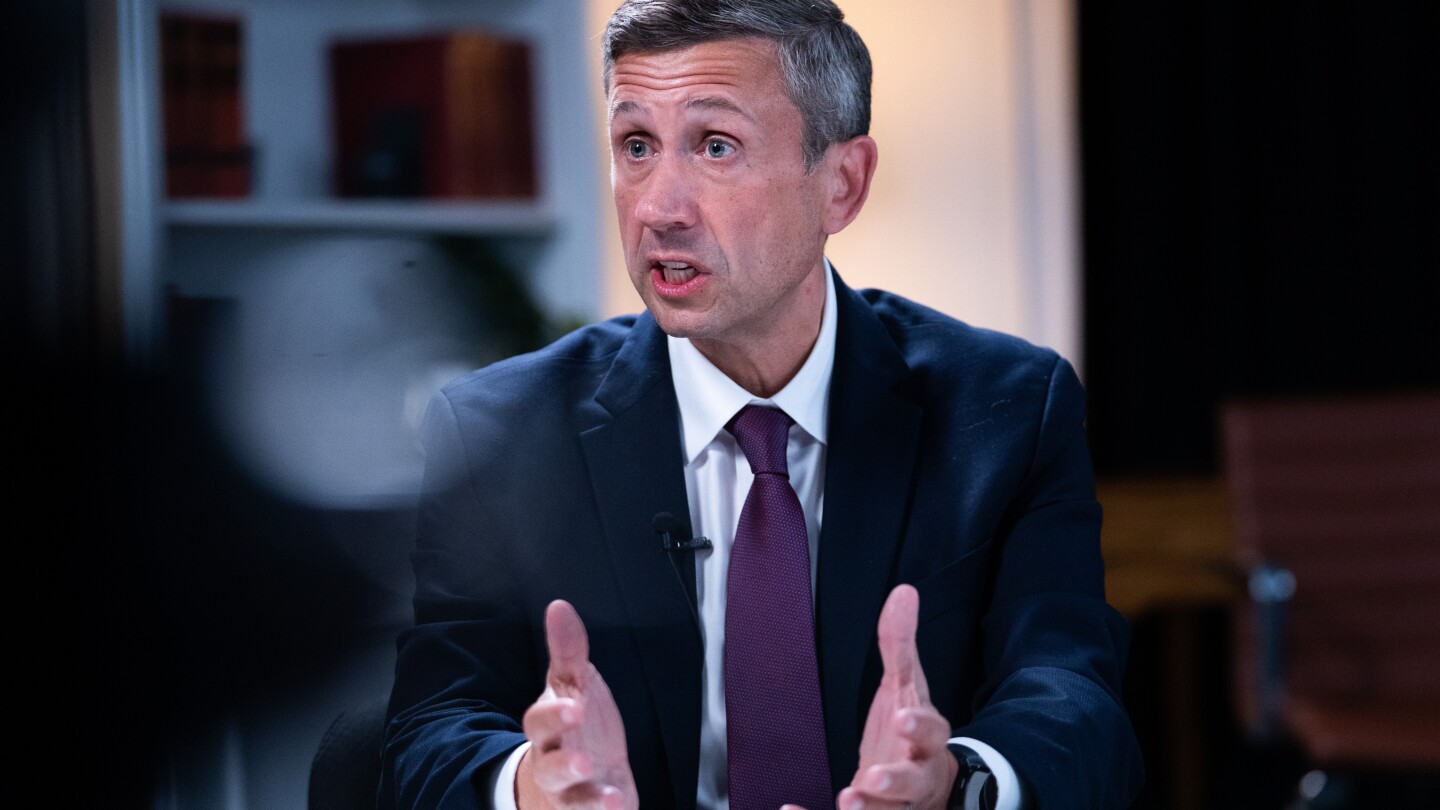
“It’s a crisis. And for our party to actually win elections, we have to actually create more Democrats,” said DNC Chair Ken Martin in an interview with The Associated Press. “We need all hands on deck, not just the outside groups.”
The initiative signals a fundamental change in Democratic strategy. For decades, Democrats have largely relied on advocacy organizations and civic groups for voter registration. However, these efforts are legally required to remain nonpartisan. Party leaders now want a more explicitly partisan approach similar to Republicans, who have traditionally depended less on outside organizations to register and mobilize their voter base.
While acknowledging the importance of nonprofit partners that have “done amazing work to actually get people engaging in their democracy,” Martin emphasized the urgent need for direct party involvement. “Given the significant disadvantage that we have and the advantage the Republicans have, we actually have to do more,” he said.
A key component of the DNC strategy involves recruiting organizers from diverse backgrounds, including gig economy workers and young parents—groups often overlooked in traditional grassroots organizing. Democrats believe these organizers’ personal experiences will help party strategists better connect with blue-collar Americans who have become increasingly disaffected with politics and with whom the party fears it has lost touch.
Santiago Mayer, founder of progressive youth political group Voters for Tomorrow, which is collaborating with the DNC, praised the initiative. “I think it’s incredible that Democrats are actually investing in reaching Democratic voters who have been left behind,” Mayer said. “We got killed on persuasion in 2024, and I think this is a really important step, fixing it and ensuring that we do not have a repeat of that in 2026.”
To generate enthusiasm for the program, the DNC plans to release dozens of videos featuring lawmakers, activists, and party leaders from across the country. The party also intends to foster interstate competition throughout the year to boost participation and effectiveness.
The White House, however, dismissed the initiative as mere public relations. James Blair, a deputy White House chief of staff and former political director for Donald Trump’s 2024 presidential campaign, criticized the program on social media platform X, writing: “This is fake. They are broke. In debt. Been losing voter registration in every state in the union since 2024. We call this ‘PR.'”
Despite such criticism, DNC officials view the investment as building crucial infrastructure for long-term electoral success. Martin emphasized the forward-looking nature of the initiative: “This is a critical piece of the infrastructure that we’re building to actually not only win the moment in ’26 but to win the future. For us to put ourselves in a position to win in ’28 and ’30 and ’32, we actually have to keep doing this work and do it consistently.”
The initiative comes as Democrats face unified Republican control in Washington and seek to regain ground in Congress through the midterm elections. Party strategists hope this more direct and sustained approach to voter registration will help reverse recent electoral setbacks and establish a more durable Democratic coalition for future electoral cycles.
Fact Checker
Verify the accuracy of this article using The Disinformation Commission analysis and real-time sources.

12 Comments
I’m a bit skeptical about the Democrats’ ability to ‘create more Democrats’ through a massive registration push. Voter behavior and affiliations are complex, and it remains to be seen whether this strategy will translate into increased turnout and support in November.
That’s a fair point. Voter registration is just one piece of the puzzle. The Democrats will also need to focus on messaging, mobilization, and getting their base excited to show up at the polls.
This seems like an important move by the Democrats to try to shore up their base ahead of the midterms. Registering new voters, especially those who may have drifted away, could make a real difference. But it will be a challenge to execute effectively across different states and communities.
You’re right, the execution will be critical. Curious to see if they can leverage digital tools and outreach strategies to scale these efforts efficiently.
This seems like a risky but necessary move by the Democrats. Relying too heavily on outside groups for voter registration has clearly had its limits. Taking more control could pay dividends, but they’ll need to be strategic and adaptable in their approach.
Agreed, the DNC is likely feeling the pressure to take a more proactive role. It will be interesting to see if this shift in strategy translates into tangible gains for the party in the midterms.
Interesting shift in the Democratic voter registration strategy. I wonder how this will impact turnout and engagement in the upcoming midterms, especially with the focus on key demographics. It will be important to watch how this plays out across different states and districts.
Agree, the DNC taking more control over registration efforts could be a significant strategic change. Curious to see how they allocate the $2 million and what the measurable impacts will be.
The Democratic strategy shift on voter registration is intriguing. I’m curious to see if they can effectively reach and engage the key demographics they’re targeting, like young people and voters of color. Execution will be crucial, as will their ability to respond to evolving dynamics on the ground.
That’s a good point. Connecting with those groups and motivating them to register and turn out will be a major challenge. The DNC will need innovative, tailored approaches to make an impact.
This seems like a bold move by the Democrats, but I’m not sure if it will pay off. Voter registration is important, but there are so many other factors that influence election outcomes. I hope they can execute this strategy effectively, but I’m a bit skeptical about their ability to ‘create more Democrats’ as the DNC chair claims.
I share your skepticism. Voter registration is just one piece of the puzzle. The Democrats will need a multi-pronged approach that also focuses on messaging, mobilization, and addressing the core concerns of their target demographics.