


Listen to the article
Miami’s Special Election Emerges as Political Barometer Ahead of 2024
Nearly three decades have passed since a Democrat last served as Miami’s mayor, a dry spell the party hopes to end in this week’s special runoff election. As one of the final electoral contests before next year’s midterms, the race has evolved from a local campaign into a closely watched indicator of the nation’s political climate almost a year into President Donald Trump’s second term.
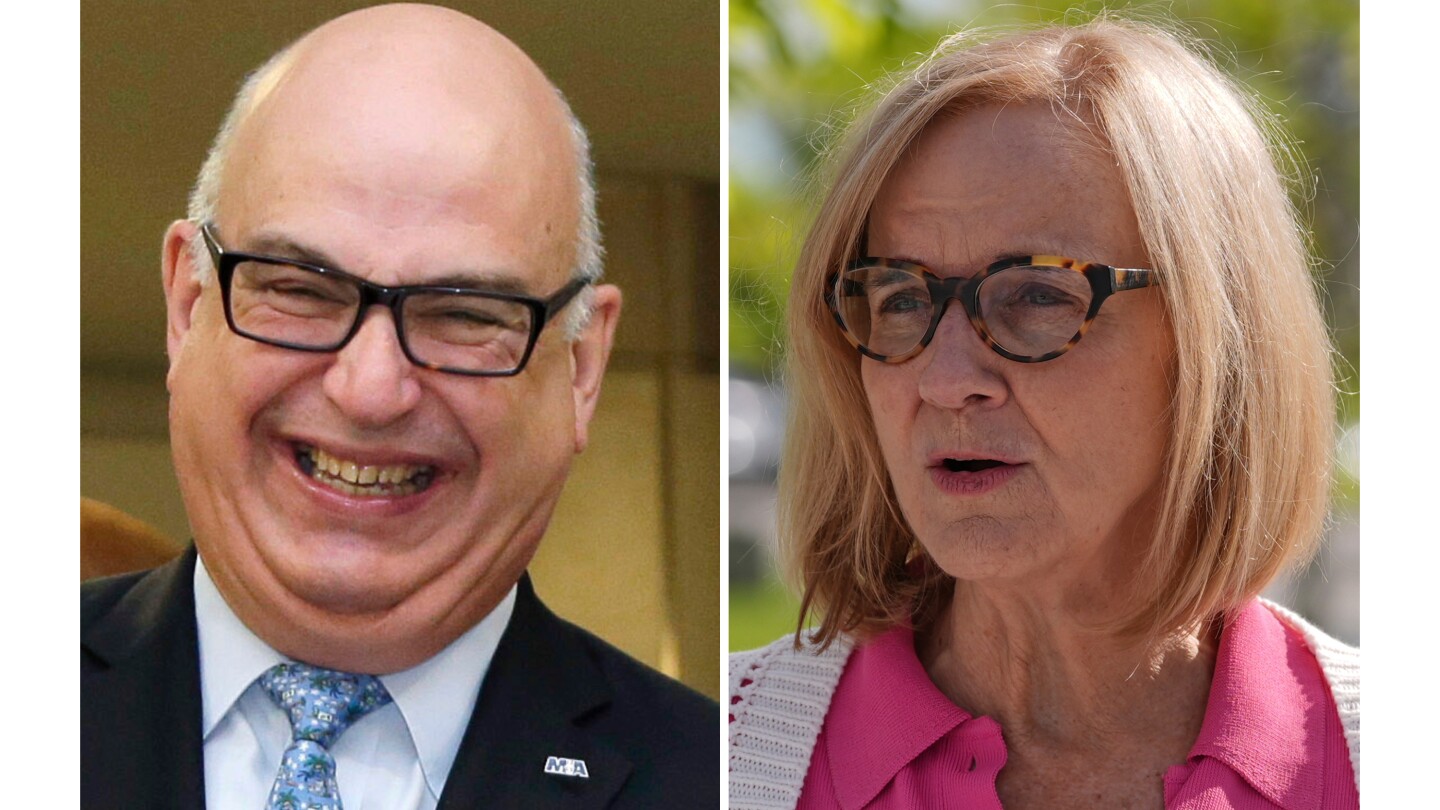
The nonpartisan mayoral race has attracted high-profile endorsements from both sides of the political aisle. Trump himself, along with Florida Republican heavyweights Governor Ron DeSantis and Senator Rick Scott, have thrown their support behind conservative candidate Emilio Gonzalez, a former city manager. Meanwhile, Democratic candidate Eileen Higgins, who previously served on the county commission, has garnered endorsements from national Democratic figures including former Transportation Secretary Pete Buttigieg.
For Democrats, a victory on Tuesday would provide significant momentum heading into a crucial election year when control of Congress hangs in the balance. This would be especially meaningful in a region that has increasingly favored Republicans and where Trump plans to build his presidential library.
Higgins, affectionately known as “La Gringa,” has embraced this nickname used by Spanish speakers for white Americans. A Spanish speaker herself, she has focused primarily on local concerns such as affordable housing while also addressing national issues including the Trump administration’s immigration policies—a sensitive topic in a city with substantial Hispanic and foreign-born populations.
“I have been a Democrat serving in a primarily Republican district, and all I have done is work for the people,” Higgins told The Associated Press.
With nearly 487,000 residents, Miami ranks as Florida’s second-largest city behind Jacksonville. However, it serves as the epicenter of the state’s cultural diversity and stands among the nation’s most prominent international destinations, giving its mayor considerable influence beyond city limits.
The city is part of Miami-Dade County, which Trump flipped in the 2023 election, decisively defeating Kamala Harris after losing the county to Joe Biden in 2020. A defeat for Gonzalez would represent a significant setback for both the Republican Party and Trump in this crucial region.
Early voting patterns show encouraging signs for Higgins, according to her campaign manager Christian Ulvert. By Thursday, about 44% of mail ballots had been cast by registered Democrats compared to roughly 30% by registered Republicans, with in-person early voting beginning the following day.
“What you’re seeing is great Democratic enthusiasm and turnout that matches that enthusiasm,” Ulvert noted.
If elected, Higgins would become the first non-Hispanic mayor of Miami in almost three decades. She has pledged to identify city-owned land for affordable housing development and eliminate unnecessary spending. During a recent forum sponsored by the Greater Miami Chamber of Commerce, she emphasized her commitment to serving as a full-time mayor without outside employment—a pointed reference to ethical concerns raised about the current term-limited mayor, Francis Suarez.
The political dynamics of Miami’s Latino community play a crucial role in this election. While Latino voters have traditionally favored Democrats nationally, Republicans in Florida have secured strong support among Cuban, Venezuelan, and Nicaraguan immigrants who resist policies they associate with the socialist governments they fled. Trump capitalized on these sentiments to win Miami-Dade County in 2023, reversing his 30-point loss to Hillary Clinton there in 2016.
However, some Florida Republicans expressed concern following November’s elections, when Democrats won closely watched gubernatorial races in New Jersey and Virginia with strong performances among nonwhite voters. The Democratic victor in New Jersey captured approximately two-thirds of the Hispanic vote, according to AP Voter Poll data, largely attributed to concerns about inflation and the Trump administration’s stringent immigration policies.
Republican U.S. Representative Maria Elvira Salazar, whose district includes Miami, called these results a “wake-up call.” Even Ileana Garcia, who founded Latinas for Trump in 2016, has criticized recent immigration enforcement actions as “inhumane.”
Gonzalez, who previously served as director of U.S. Citizenship and Immigration Services under President George W. Bush, has attempted to sidestep immigration controversies, stating during a debate that immigration enforcement is “a federal issue” not pertinent to Miami’s mayorship.
Higgins has taken a more direct approach, criticizing Miami’s participation in a federal program that delegates immigration authority to local law enforcement. She has pledged to explore legal options to withdraw from this arrangement to rebuild community trust.
The mayoral race has become a focal point for Democrats seeking to reestablish relevance in a state that has shifted from swing status to reliable Republican territory. Several potential 2028 Democratic presidential contenders have backed Higgins, including Buttigieg, Arizona Senator Ruben Gallego, and former Chicago Mayor Rahm Emanuel.
Many issues dominating the race resonate nationally, particularly income inequality and housing affordability, with Miami ranking among the nation’s least affordable housing markets. Local voters like 30-year-old Gustavo Ascani cite homelessness and traffic congestion as priorities, suggesting Republicans may have “overlooked, after having locally been in power for so long, certain issues that are important for the people in Miami.”
Other concerns include upcoming health insurance premium increases as Affordable Care Act subsidies expire in January. The Obama-era health law remains popular in South Florida, with polls indicating most affected residents blame Trump and Republicans for the anticipated rate hikes.
As Robin Peguero, a Democratic congressional candidate in the area, observed: “It’s kitchen table issues, whether it’s an election for local officials or whether there is an election for the president. It’s a rejection of what is happening in this country.”
Fact Checker
Verify the accuracy of this article using The Disinformation Commission analysis and real-time sources.

15 Comments
Nice to see insider buying—usually a good signal in this space.
Good point. Watching costs and grades closely.
Good point. Watching costs and grades closely.
Interesting update on Democrats see an opening to win the Miami mayor’s race in the latest test of the US political mood. Curious how the grades will trend next quarter.
Good point. Watching costs and grades closely.
Good point. Watching costs and grades closely.
If AISC keeps dropping, this becomes investable for me.
I like the balance sheet here—less leverage than peers.
Good point. Watching costs and grades closely.
Good point. Watching costs and grades closely.
Silver leverage is strong here; beta cuts both ways though.
Good point. Watching costs and grades closely.
Good point. Watching costs and grades closely.
Interesting update on Democrats see an opening to win the Miami mayor’s race in the latest test of the US political mood. Curious how the grades will trend next quarter.
I like the balance sheet here—less leverage than peers.