


Listen to the article
Senate Democrats Chart Narrow Path to Majority in 2026 Midterms
Senate Democratic leaders see a potential route to winning back the majority in the 2026 midterm elections, though their path remains precarious with little margin for error.
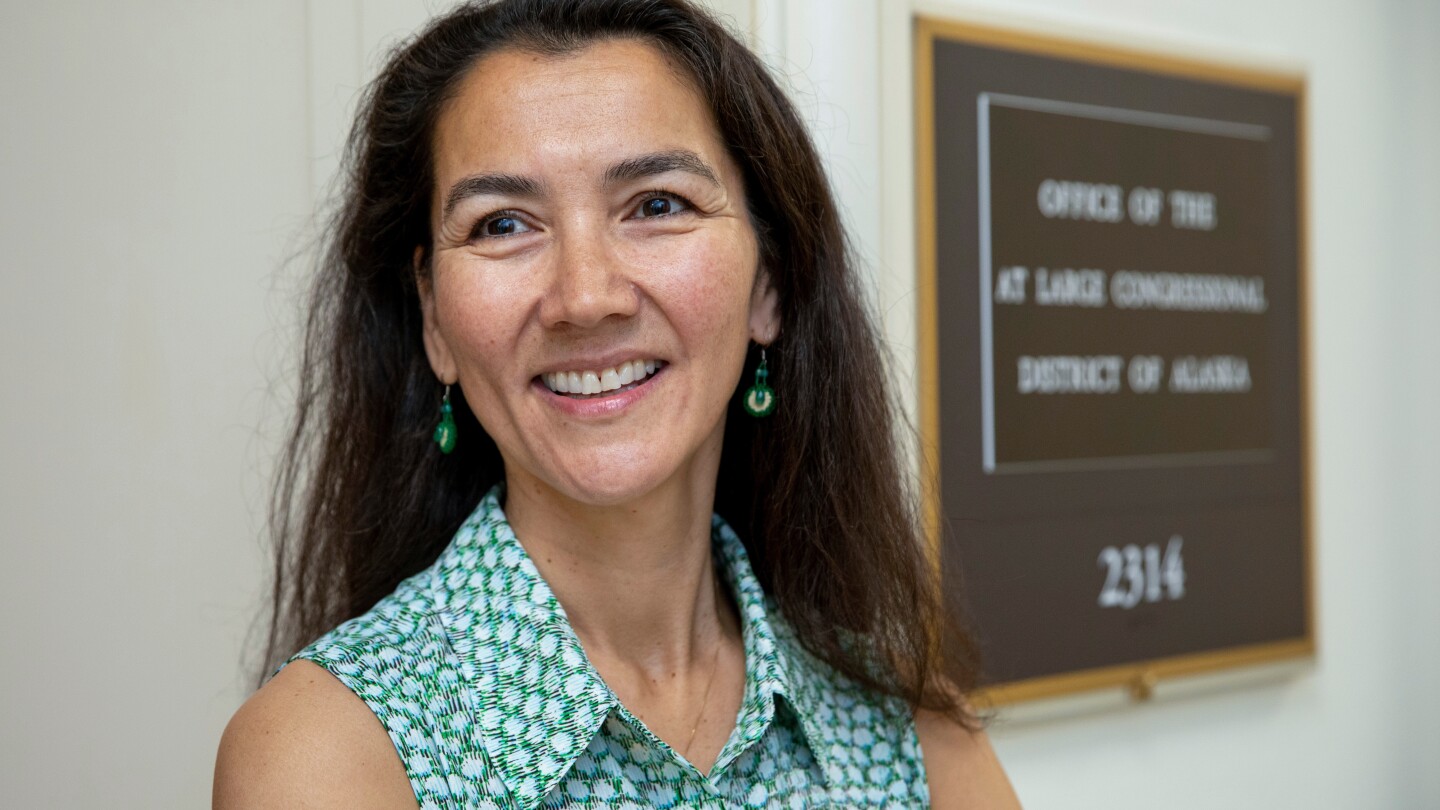
The party received a significant boost when former Rep. Mary Peltola announced Monday she will challenge Republican incumbent Dan Sullivan for Alaska’s Senate seat. Her entry gives Democrats four candidates with statewide recognition in states currently held by Republicans. To reclaim the Senate majority, Democrats must net four seats—a task that seemed nearly impossible just a year ago.
Republicans currently hold 53 seats while Democrats control 47, including two independents who caucus with them. Despite the numerical challenge, Senate Minority Leader Chuck Schumer expressed optimism about his party’s chances.
“I say it’s a much wider path than the skeptics think, and a much wider path than it was three months ago and certainly a year ago,” Schumer told The Associated Press.
The Democratic strategy hinges on four key states where they believe they have recruited strong candidates: former three-term Senator Sherrod Brown in Ohio, former two-term Governor Roy Cooper in North Carolina, two-term Governor Janet Mills in Maine, and now Peltola in Alaska.
However, these recruits come with significant vulnerabilities. Both Brown and Peltola lost their reelection bids in 2024, raising questions about their electoral viability. Mills faces a competitive primary challenge from progressive veteran Graham Platner, who has shown impressive fundraising prowess despite controversies surrounding past social media posts and a tattoo allegedly linked to Nazi imagery.
The age of Democratic candidates has also emerged as a potential liability. After President Biden withdrew from the 2024 race amid concerns about his advanced age, critics question Schumer’s strategy of recruiting septuagenarian candidates. Mills and Brown are both well into their 70s, and Schumer himself is 75.
“Voters sent a very clear message in 2024 that they’re sick of the gerontocracy. They’re sick of Democrats putting up old candidates and that they want some new blood,” said Lis Smith, a national Democratic strategist.
Schumer defended his recruitment strategy, emphasizing electability above all else. “It’s not young versus old. It’s not left versus center. It’s who can best win in the states,” he said.
Before Democrats can test their general-election viability, they must navigate contentious primaries that highlight lingering divisions within the party. In Michigan, where Democratic Sen. Gary Peters is retiring, Republicans have unified behind former Rep. Mike Rogers while Democrats face a crowded August primary after failing to recruit Governor Gretchen Whitmer.
Similar primary battles are unfolding in Minnesota, Texas, and Iowa, forcing Democrats to allocate resources to states not central to their path to majority. This internal discord has prompted criticism from within the party. Senator Chris Van Hollen, part of an informal group of Democratic senators known as “Fight Club,” has openly challenged party leadership’s approach to the midterms, particularly the practice of intervening in Democratic primaries.
Republicans remain confident about their chances to maintain Senate control. Betsy Ankney, former political director for the National Republican Senatorial Committee, pointed to Donald Trump’s substantial victories in Alaska and Ohio in 2024—by 13 and 11 percentage points, respectively—as significant obstacles for Democratic candidates.
“Republicans are rightly focused on real tangible targets in Georgia and Michigan,” Ankney said, describing them as “very real pickup opportunities.”
Democrats’ path to a majority almost certainly depends on defending vulnerable incumbents, particularly Senator Jon Ossoff in Georgia, where Trump won in 2024 by 2.2 percentage points. They must also hold Michigan, where Peters’ retirement creates an open seat in a state Trump narrowly carried.
Despite these challenges, Democrats see reasons for optimism in recent polling data. A new Gallup survey found that 47% of U.S. adults now identify with or lean toward the Democrats, compared to 42% for Republicans—giving Democrats an advantage in party affiliation for the first time since Trump’s first term.
However, analysts caution that this shift likely reflects dissatisfaction with Trump rather than enthusiasm for Democrats. The survey indicates that independents tend to gravitate toward the party out of power, which currently benefits Democrats.
As economic concerns persist and the political environment remains unsettled, veteran Republican pollster Ed Goeas warned that assumptions about improved economic conditions could backfire for Republicans.
“I think they are going to end up getting frustrated going into the summer because, first of all, the economy is not on all levels improving,” Goeas said. “It’s going to be a target-rich environment for Democrats.”
With nearly three years until the 2026 midterms, both parties acknowledge the fluidity of the political landscape. As one observer put it: “It’s going to be close.”
Fact Checker
Verify the accuracy of this article using The Disinformation Commission analysis and real-time sources.

16 Comments
Interesting development for the Democrats in the Senate race. It will be a tough battle, but having strong candidates in key states gives them a fighting chance. Curious to see how the dynamics play out over the next couple of years leading up to the midterms.
You’re right, the path to victory is narrow and they’ll need everything to go their way. But I agree, having recognizable names running in those states is a good start.
This is an intriguing development in the Senate race. I’m encouraged to see the Democrats taking a strategic approach and recruiting candidates with broad appeal. While the path to victory may be narrow, it’s good to see them putting up a fight and not conceding defeat. I’ll be watching this race closely.
Absolutely. It’s refreshing to see the Democrats being proactive and not simply accepting defeat. Even if they fall short, the effort could pay off in the long run by laying the groundwork for future campaigns.
The Democrats face an uphill battle, but I appreciate their optimism and strategic approach. Recruiting high-profile candidates in swing states is a smart move, even if the numerical challenge remains significant. Midterm elections are always unpredictable, so it’s worth keeping an eye on this race.
Absolutely. The political landscape can shift rapidly, so it will be fascinating to see how this all plays out. The Democrats are certainly making an effort, but you’re right that they have a steep hill to climb.
I’m a bit skeptical about the Democrats’ chances, given the numerical challenge they face. However, I appreciate their strategic approach and the effort they’re putting into recruiting strong candidates. Midterm elections are always unpredictable, so it’s worth keeping an open mind and closely following the developments in this race.
I share your skepticism, but I’m glad to see the Democrats not giving up and trying to make a push. Even if they fall short, the experience could help them build momentum for future elections. It’s definitely a race worth watching closely.
As someone with a keen interest in mining, commodities, and energy, I’ll be paying close attention to this Senate race. The outcome could have significant implications for policies and regulations in those sectors. I’m curious to hear more about the candidates’ platforms and their proposed approaches to these important issues.
That’s a great point. The Senate majority could certainly influence the legislative agenda on mining, energy, and related industries. It will be important for voters to understand the candidates’ positions and how they might impact those sectors.
As someone interested in mining and energy, I’ll be watching this Senate race with a cautious eye. The outcome could have implications for policies and regulations in those sectors. I’m curious to hear more about the candidates’ platforms and how they might approach those issues.
Good point. The Senate majority could sway the legislative agenda on key issues like mining, energy, and natural resources. It will be important for voters to understand the candidates’ positions on those topics.
This is a fascinating development in the Senate race. The Democrats face a steep uphill battle, but I’m impressed by their determination and strategic thinking. Recruiting high-profile candidates with statewide recognition is a smart move, even if the numerical challenge remains significant. As someone with an interest in mining and energy, I’ll be following this race closely to see how the candidates’ platforms might impact those sectors.
I agree, it’s a bold move by the Democrats and I admire their willingness to compete in traditionally Republican strongholds. Even if they fall short, the experience could pay dividends in the long run. It will be interesting to see how the candidates’ positions on mining, energy, and other key issues shape the debate.
The Democrats’ path to the Senate majority does indeed seem narrow, but I respect their determination to compete in traditionally Republican strongholds. It will be an uphill battle, but having strong candidates with statewide recognition gives them a fighting chance. I’ll be following this race with interest.
Agreed. The Democrats are clearly making a concerted effort, and that’s commendable. Even if they fall short, pushing the boundaries and competing in new areas could pay dividends down the line.