


Listen to the article
Senate Republicans’ last-minute funding package was blocked Thursday night by Democrats, sending lawmakers home for the year with government shutdown concerns looming on the January horizon.
The five-bill spending package would have funded multiple key departments including Defense, Labor, Health and Human Services, Education, Commerce, Justice, Interior, Transportation, and Housing and Urban Development. These departments represent a substantial portion of the federal government’s overall funding obligations, making the package crucial to preventing another shutdown when the current funding expires on January 30.
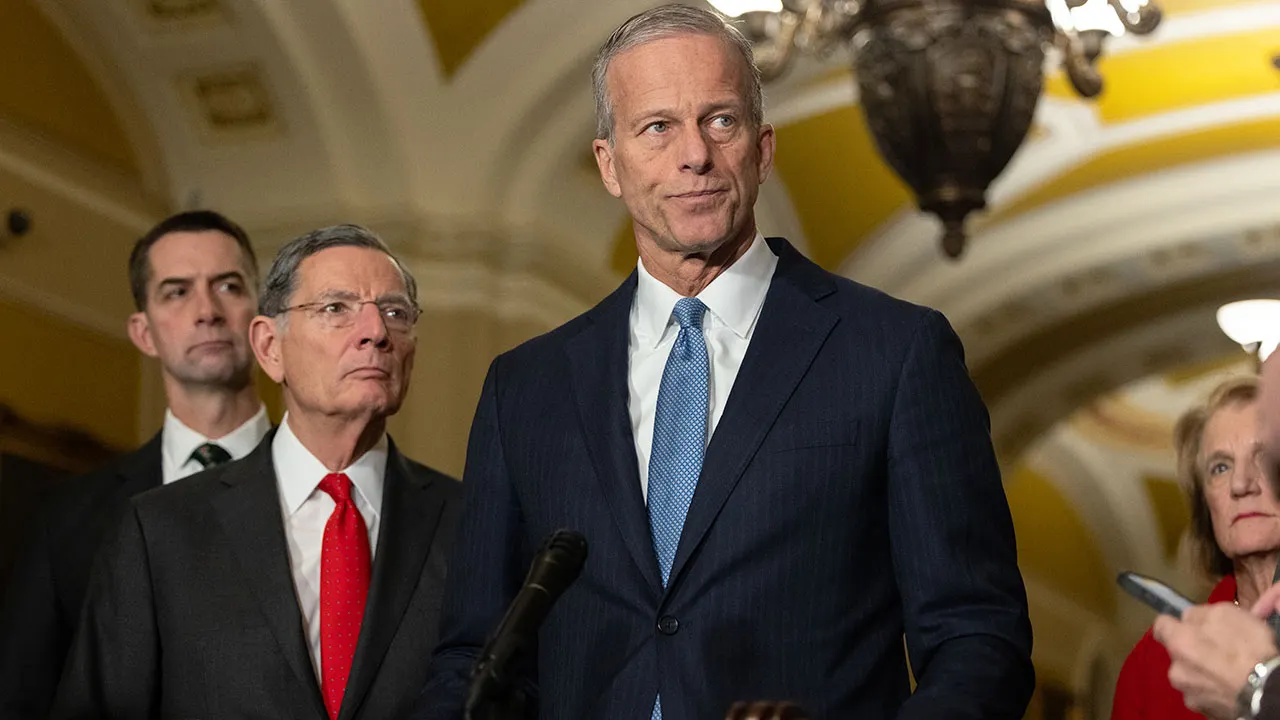
Senate Majority Leader John Thune expressed optimism despite the setback. “The Democrats are indicating that they want to do them, they just didn’t want to do them today,” Thune said. “So hopefully, when we get back, we’ll test that proposition, and hope that we’ll take them to face value.”
As the session extended into the night, Republican leadership worked frantically to negotiate a path forward. Senate Appropriations Committee Chair Susan Collins told reporters that Republicans had resolved several internal issues after weeks of holds from fiscal hawks who had demanded amendment votes on earmarks and other contentious matters.
The final roadblock appeared to come from Colorado Democratic Senators John Hickenlooper and Michael Bennet, who were protesting the Trump administration’s plan to dismantle the National Center for Atmospheric Research (NCAR) in Boulder. Office of Management and Budget Director Russ Vought had described the facility on social media as “one of the largest sources of climate alarmism in the country,” announcing that a comprehensive review was underway and that “vital activities such as weather research will be moved to another entity or location.”
Hickenlooper indicated they would lift their hold only with a guaranteed outcome on an amendment vote. “All we’re trying to do is just protect the budget that was already there,” Hickenlooper explained. “Whatever disagreement there is between the state, the governor of Colorado, and the President of the United States, that shouldn’t affect a scientific institution. Science should be free of that kind of politics.”
Senate Minority Leader Chuck Schumer was more direct in his criticism. “What the president did to Colorado is disgusting, and Republicans ought to get him to change,” he said.
Republicans had extended the Senate session following a White House signing ceremony for the annual defense package, hoping to complete confirmations for a slate of President Donald Trump’s nominees while continuing negotiations on the funding package. Despite adding several votes to keep the session active, Senate Democrats remained unmoved.
Senator Katie Britt of Alabama, who chairs the Senate Homeland Security Appropriations subcommittee, had expressed determination earlier in the evening, saying “If we want the Senate to matter, we should figure it out.”
The failure to advance the package doesn’t guarantee another government shutdown in January, but it does set up what will likely be a contentious first month of the new year in the Senate. Lawmakers already face the challenge of addressing expiring Obamacare subsidies, which terminate on December 31, in addition to the January 30 government funding deadline.
Any funding agreement that passes in the Senate must still navigate approval in the House and ultimately secure President Trump’s signature. Despite current partisan disagreements, leaders from both parties have expressed reluctance to force another shutdown.
“I don’t think either side wants to see that happen,” Thune noted. “I think that’s toxic for both parties. So I’m hoping that there will be goodwill, and we’ll figure out how to fund the government.”
The impasse leaves federal agencies facing uncertainty as the new year begins, with budget negotiations likely to dominate the congressional agenda when lawmakers return to Washington in January.
Fact Checker
Verify the accuracy of this article using The Disinformation Commission analysis and real-time sources.

10 Comments
The budget impasse is concerning, especially with the potential impact on departments overseeing areas like mining, energy, and commodities. I’m curious to hear more about the specific sticking points in the negotiations.
That’s a good point. The effects of a government shutdown could reverberate through the industries that rely on stable federal policies and funding. Finding a resolution should be a top priority.
The political gridlock over federal funding is concerning, especially with the potential impact on key departments like Defense and Transportation. I hope the two sides can put aside partisan differences and find a bipartisan solution.
Agreed. Maintaining stable government funding is crucial for economic and national security. Compromise will be essential to avoid further disruptions.
It’s disappointing to see partisan politics getting in the way of responsible governance. Funding critical government functions should be a bipartisan priority. I hope cooler heads will prevail and they can reach a compromise.
I agree, political posturing shouldn’t come at the expense of effective government. Hopefully the leaders on both sides will recognize the need for pragmatism over partisanship.
This is a worrying development given the importance of maintaining government operations. I’m curious to see if there are any concessions or compromises that could be made to break the deadlock before the January deadline.
That’s a good question. The stakes are high, so hopefully both parties will be willing to negotiate in good faith and find a mutually agreeable solution.
This is an interesting development in the ongoing budget negotiations. It will be important to see if the two parties can come to a compromise before the next funding deadline. Hopefully they can find a way to keep the government functioning without resorting to a shutdown.
Yes, a government shutdown would be very disruptive. Hopefully the Democrats and Republicans can find a way to work together on this critical issue.