


Listen to the article
Democratic lawmakers and ICE officials clashed in a contentious House Homeland Security Committee hearing Tuesday, where representatives compared immigration agents to Nazis while questioning the agency’s enforcement tactics and accountability measures.
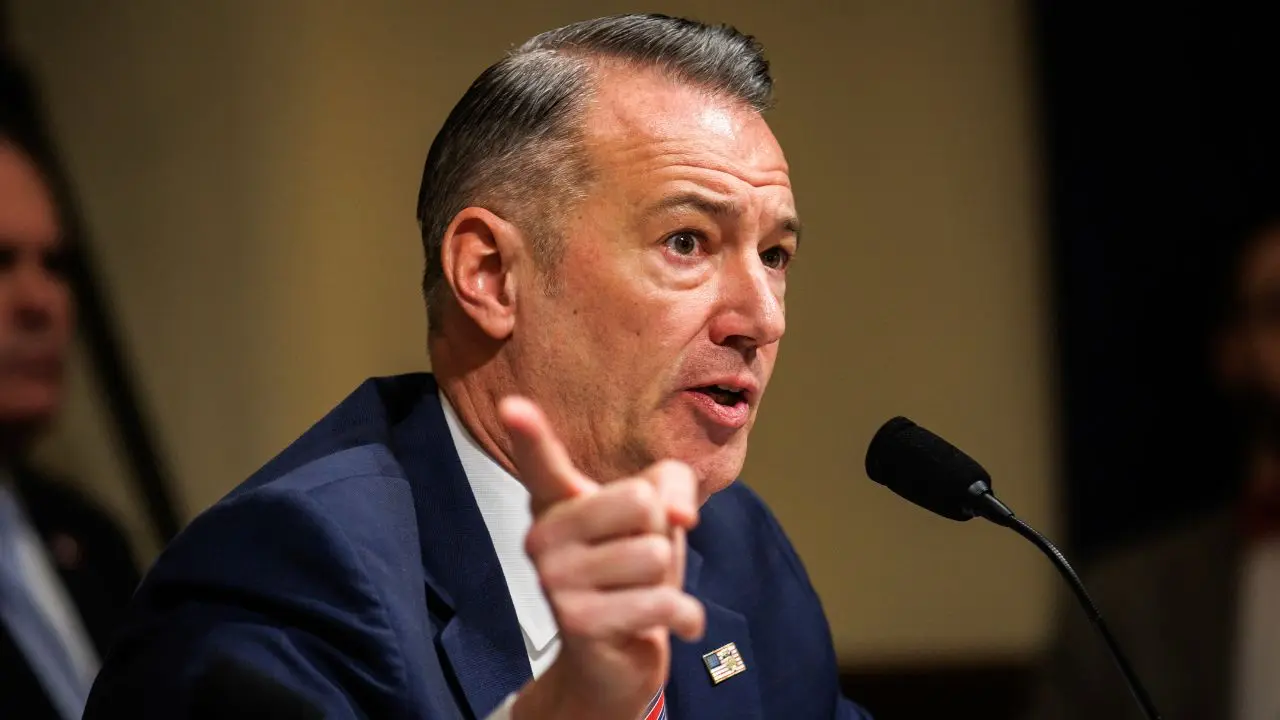
The hearing turned particularly heated during an exchange between Rep. Dan Goldman (D-N.Y.) and ICE Acting Director Todd Lyons. Goldman pressed Lyons on whether agents have been asking people on streets to show proof of U.S. citizenship, citing reports that American citizens have been questioned during immigration enforcement operations.
When Lyons acknowledged that “very nefarious regimes” had required proof of citizenship, Goldman directly asked, “Is Nazi Germany one?” He continued pressing, inquiring whether the Soviet Union employed similar practices.
Lyons pushed back forcefully against the comparison, calling it inappropriate and “the wrong type of questioning.” In a sharp response, he told Goldman, “The Holocaust Museum is on 14th Street and Independence. If you want to go see Nazis, that’s where it is.”
Goldman reclaimed his time and accused ICE leadership of having the situation “backwards,” arguing that public criticism stems from the agency’s own tactics. “People are simply making valid observations about your tactics, which are un-American and outright fascist,” Goldman said. “So I have a simple suggestion. If you don’t want to be called a fascist regime or secret police, then stop acting like one.”
Earlier in the hearing, Lyons had testified that ICE agents have been labeled “Gestapo or secret police” by elected officials and activists. He linked this rhetoric to what he described as a significant increase in threats and assaults against ICE personnel, claiming such language has endangered agents and their families.
The Nazi comparisons weren’t limited to Goldman’s questioning. Rep. Bennie Thompson (D-Miss.) also made references to alleged Nazi sympathies, citing “Greg Bovino, who styled himself in Nazi attire,” while criticizing federal immigration operations in Minnesota and the use of masked agents during recent enforcement actions.
The oversight hearing focused broadly on Department of Homeland Security immigration enforcement practices amid growing scrutiny of ICE operations. Of particular concern was the limited deployment of body cameras, especially following the fatal shootings of Renee Good and Alex Pretti in Minneapolis last month.
Lawmakers expressed significant concerns about agents operating in masks or unmarked gear, whether encounters involving U.S. citizens are being adequately documented, and whether the lack of body camera footage has hindered transparency and accountability in recent use-of-force incidents.
Under questioning, Lyons acknowledged that only a fraction of ICE agents are currently equipped with body cameras. Lawmakers from both parties pressed the agency to expand their use and release footage to the public when incidents occur.
The hearing reflects broader tensions surrounding immigration enforcement that have intensified in recent years. ICE has faced mounting criticism from immigrant rights advocates and some lawmakers over its tactics, while the agency and its supporters maintain that enforcement actions are necessary for national security and public safety.
The use of historical comparisons to the Gestapo or Nazi Germany represents a significant escalation in rhetoric, highlighting the deeply polarized nature of the immigration debate in America. Such comparisons have been condemned by many historians and Jewish organizations as inappropriate and potentially diminishing the unique horror of the Holocaust.
The confrontational hearing comes amid heightened scrutiny of immigration enforcement operations nationwide, particularly in urban areas where local officials have sometimes resisted cooperation with federal immigration authorities. The tensions between federal immigration priorities and local community concerns continue to create flashpoints across the country, with this congressional hearing representing the latest high-profile example of the ongoing political conflict.
Fact Checker
Verify the accuracy of this article using The Disinformation Commission analysis and real-time sources.

12 Comments
This exchange highlights the polarized nature of the immigration debate. I hope lawmakers on both sides can move past political grandstanding and work towards pragmatic solutions that balance security and compassion.
Invoking Nazis in political debates often comes across as hyperbolic. A more fact-based, nuanced discussion would be more productive in addressing the complexities of immigration enforcement.
Immigration enforcement is a thorny issue with valid concerns on multiple sides. While the Nazi analogy was extreme, it speaks to the strong feelings this topic evokes. Hopefully lawmakers can move past partisan rhetoric and work towards pragmatic solutions.
Comparing ICE to Nazis seems like an inflammatory tactic that detracts from the real substance of the immigration debate. A more nuanced, evidence-based discussion would be more constructive for addressing this complex challenge.
While the comparison to Nazis was harsh, I can understand the frustration some have with perceived overzealous immigration enforcement tactics. This is a complex issue that requires balanced dialogue, not partisan bickering.
The Holocaust is an especially sensitive historical event that should not be invoked lightly. Both sides would do well to find more constructive ways to express their concerns.
Immigration is a sensitive and complex issue without easy answers. While the Nazi comparison was extreme, I understand the desire to hold enforcement agencies accountable. Respectful dialogue is needed to find workable compromises.
Comparing ICE to Nazis seems like an unhelpful rhetorical tactic that shuts down meaningful discussion. Both sides should focus on the specifics of policies and practices, not inflammatory historical analogies.
This heated exchange highlights the sensitive and divisive nature of immigration enforcement. Both sides need to approach this issue with more nuance and civility to find common ground solutions.
Comparing ICE officers to Nazis seems like an inappropriate and inflammatory rhetorical tactic. Even heated political debates should avoid such charged historical analogies.
This debate highlights the passionate feelings on both sides of the immigration issue. While the Nazi comparison was heavy-handed, it reflects the deep concerns some have about enforcement tactics. Nuanced discussions are needed to address these complex challenges.
Invoking the Holocaust in a political debate often comes across as an emotional ploy rather than a substantive critique. Both sides should strive for a more measured, fact-based dialogue on immigration enforcement.