


Listen to the article
Democrats Revive 25th Amendment Discussions Amid Iran Tensions
Talk of invoking the 25th Amendment has resurfaced among House Democrats following President Donald Trump’s recent rhetoric toward Iran, marking the third time they’ve considered removing him from power.
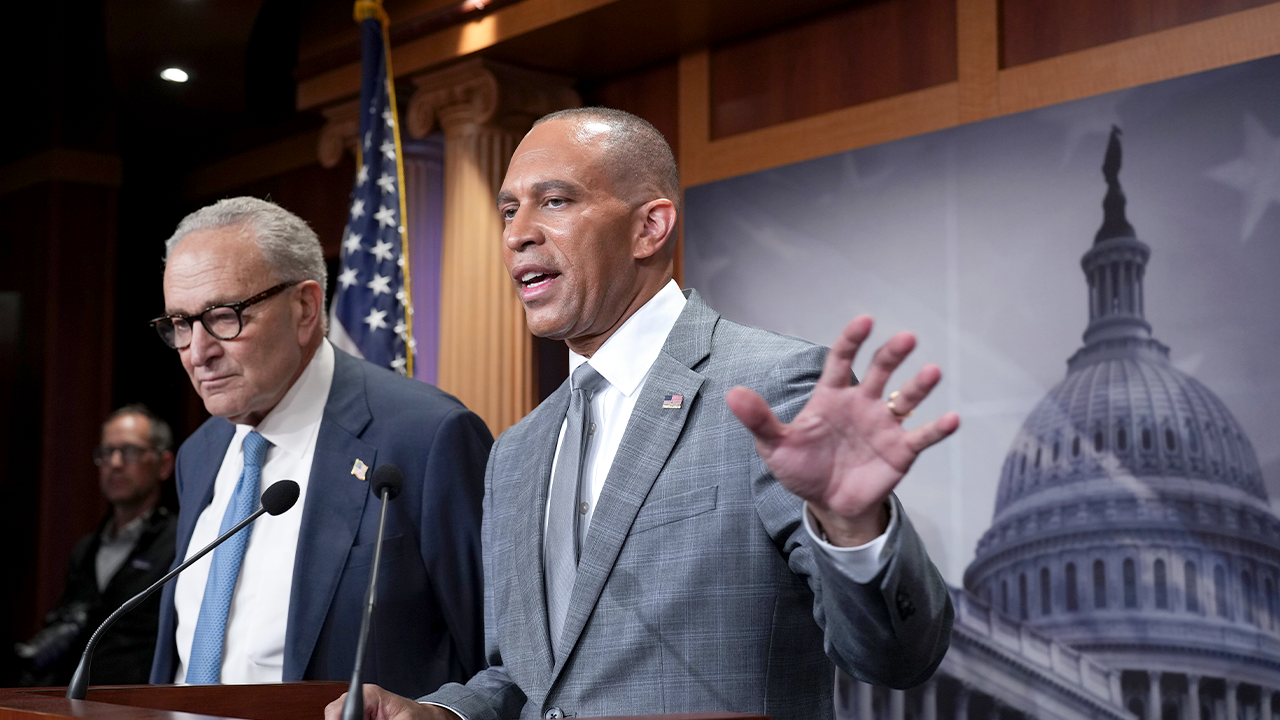
House Minority Leader Hakeem Jeffries has scheduled a Friday briefing on the 25th Amendment for the Democratic caucus, to be hosted by Rep. Jamie Raskin of Maryland and House Judiciary Committee Democrats. Rather than dismissing such discussions, Democratic leadership appears to be encouraging them.
The timing is significant, coming directly after Trump announced a two-week ceasefire with Iran, with administration officials praising the success of Operation Epic Fury. Jeffries sharply criticized Trump’s earlier threats to “wipe out Iran’s civilization” and unleash “hell” on Tehran.
“Shockingly, Donald Trump threatened to escalate his war of choice in a profane Easter Sunday rant and to eradicate an entire civilization,” Jeffries wrote in a “Dear Colleague” letter on Wednesday. He pledged that Democrats would “continue to unleash maximum pressure on Republicans to put patriotic duty over party loyalty and join Democrats in stopping the madness.”
While Jeffries has not explicitly called for Trump’s removal, he has advanced a resolution seeking to block the president’s war powers regarding Iran, which House Republicans blocked on Thursday. His willingness to entertain 25th Amendment discussions follows calls from dozens of Democratic representatives for Trump’s impeachment or removal following the president’s escalating warnings against Iran over the closure of the Strait of Hormuz.
Rep. Rashida Tlaib of Michigan was direct in her assessment: “It’s time to invoke the 25th Amendment. This maniac should be removed from office.” Similarly, Rep. Robert Garcia of California stated, “He’s out of control and his cabinet and those around him must be loyal to the constitution and invoke the 25th amendment. He must be removed.”
The 25th Amendment route presents a significantly higher bar than impeachment and has never been successfully used to involuntarily remove a sitting president. For such an action to succeed, the vice president and a majority of the cabinet would need to agree that Trump is unfit for office. Should Trump contest their assessment, two-thirds of both the House and Senate would have to vote in support of the judgment—a nearly impossible threshold in the current political climate.
Some Democrats have publicly acknowledged the likely futility of this approach. Senator Sheldon Whitehouse of Rhode Island noted on social media: “I’m getting a lot of traffic about the 25th Amendment after Trump’s mad rants. The president is facing serious mental decline; I’m with you on that.” However, he added, “Unfortunately, invoking the 25th is not realistic right now, given his oddball Cabinet of sycophants and eccentrics, and Republican ‘spines of foam.’ We’re going to have to buckle down and win this the old-fashioned way.”
This marks the second time Democrats have seriously pursued the 25th Amendment to remove Trump. Following the January 6, 2021 attack on the Capitol, then-Speaker Nancy Pelosi steered a resolution through the House calling for congressional action, but Trump’s cabinet declined to participate.
The current discussions occur against the backdrop of growing tensions with Iran and concerns about America’s global positioning. The Strait of Hormuz, a critical chokepoint for global oil supplies, has become a flashpoint in the escalating conflict, with significant implications for international energy markets and regional stability.
The White House has not yet responded to requests for comment on these developments.
Fact Checker
Verify the accuracy of this article using The Disinformation Commission analysis and real-time sources.

13 Comments
Interesting development. The 25th Amendment is a serious tool for removing a president, so this warrants close scrutiny. I hope Congress examines the situation objectively and prioritizes the country’s best interests over partisan politics.
You raise a fair point. Any discussions around the 25th Amendment need to be handled with utmost care and impartiality.
The 25th Amendment is a high bar to clear, so I’m skeptical that this will lead to anything substantive. However, it’s important for Congress to fulfill its oversight role, especially on foreign policy issues that could escalate tensions.
I agree that the 25th Amendment threshold is very high. This seems more like political posturing than a realistic plan of action.
The timing of these 25th Amendment discussions, coming right after the president’s announced ceasefire with Iran, is curious. I wonder if this is more about political optics than a genuine effort to remove him from power.
That’s an astute observation. The political dynamics at play here seem more important than any actual plan of action. Congress should tread carefully to avoid appearing overly partisan.
While I understand the desire to check presidential power, the 25th Amendment is a high bar that shouldn’t be invoked lightly. Congress should focus on providing rigorous oversight and working to de-escalate tensions, not engage in partisan power struggles.
As an investor, I’m closely watching how these political developments could impact the markets, particularly commodities and energy equities. Uncertainty around presidential leadership is never good for stability.
That’s a fair concern. Investors will be closely monitoring the situation and looking for any signs of increased volatility or policy shifts that could affect commodity and energy sectors.
As an investor in mining and energy companies, I’m closely watching how these political developments could impact commodity prices and market sentiment. Stability and predictability are important for the sectors I follow.
While I’m no fan of the president, using the 25th Amendment to remove him seems like an overreach. Congress should focus on providing oversight and working to de-escalate tensions with Iran rather than engaging in partisan power struggles.
I share your view that Congress should prioritize constructive oversight and diplomacy over partisan gamesmanship. Invoking the 25th Amendment is a high bar that doesn’t seem warranted here.
As an expert on energy and mining, I’m curious to see how these political dynamics could affect commodity prices and investment in the sectors I follow. Stability and clear policy direction are crucial for these industries.