


Listen to the article
Cuban Crisis Intensifies as Blackouts and Economic Collapse Spark Unrest
MIAMI, Florida – There’s growing unrest in Cuba as the communist government struggles to deal with island-wide blackouts and a collapsing economy, leaving the Cuban community in Miami watching closely and wondering what comes next.
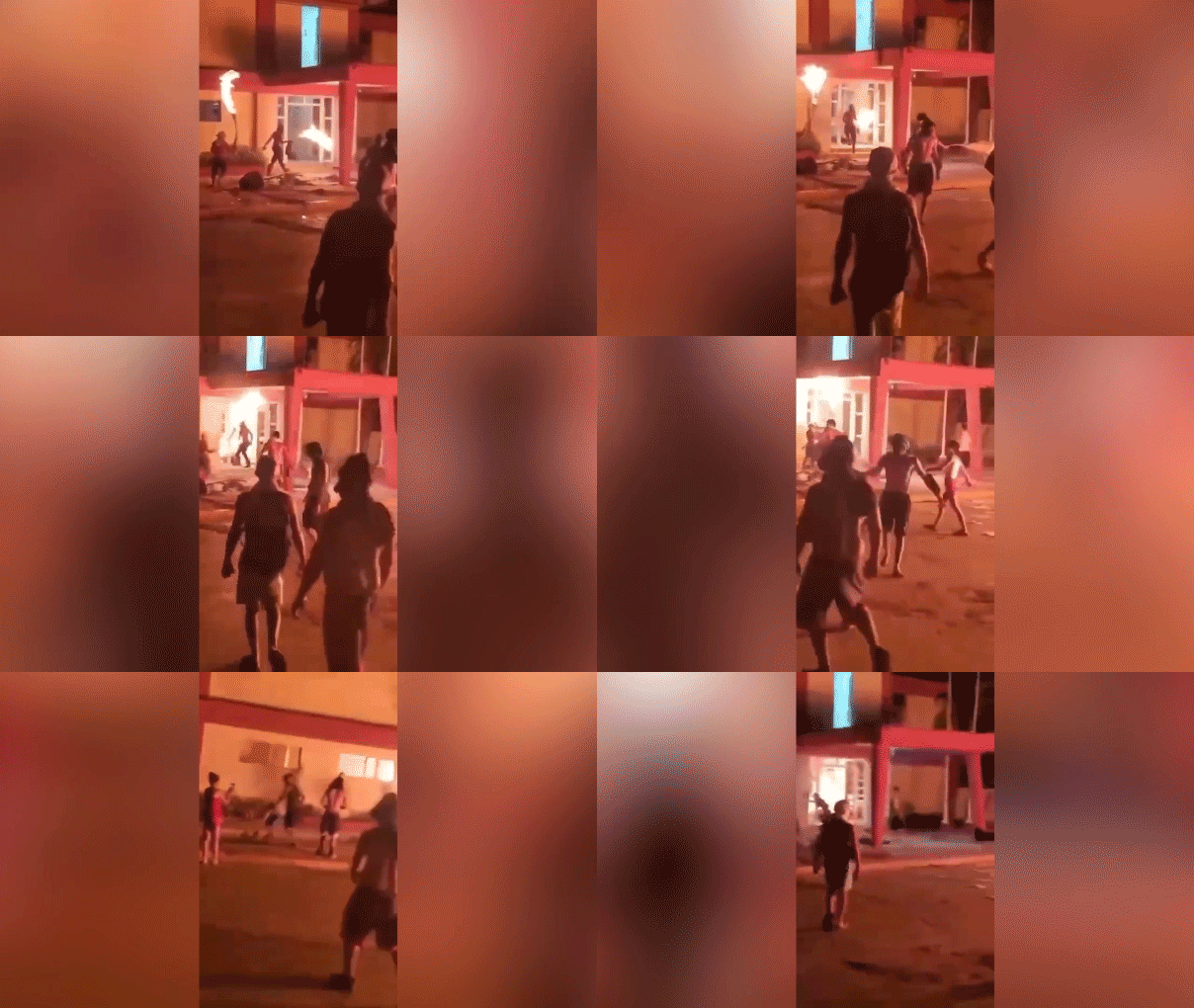
The island has experienced 67 years of authoritarian rule where the Communist Party of Cuba stands as the only legal political entity. Last week, tensions escalated when protesters attacked a Communist Party headquarters, ransacking the building and attempting to set it on fire, according to local reports.
“The protesters are more brave today than before,” said Jose Collazo, a Cuban migrant who left the island in the 1960s. “But if you remember four years ago when they came out, they were brutally repressed.”
Collazo frequently spends time at Domino Park in the heart of Little Havana, a neighborhood in Miami with a significant Cuban immigrant population. Here, Cuban Americans gather for friendly—but highly competitive—games of dominoes while discussing current affairs, with recent conversations dominated by the deteriorating situation in their homeland.
The crisis reached a new level on Monday when a nationwide power grid collapse left approximately 10 million Cubans without electricity. Cuban officials have attributed the outages to fuel shortages and failures at aging power plants, issues that have been exacerbated by years of inadequate infrastructure investment.
Cuba’s economic woes have deepened in recent months after former President Donald Trump threatened tariffs on any country sending oil to Cuba, further tightening the screws on an already struggling economy. The combined effect has created unbearable conditions for many Cubans.
“They’re living like in the Stone Age. Cave people. That’s how they live. It’s sad to see the people [living with] malnutrition, living in ragged clothes,” Collazo remarked.
The escalating tension comes amid provocative remarks by Trump, who recently told reporters he expects to have the “honor” of “taking Cuba in some form” and that “I can do anything I want” with the neighboring country.
“Cuba right now is in very bad shape. They’re talking to Marco,” Trump said, referring to Senator Marco Rubio, the son of Cuban immigrants. “We’ll be doing something with Cuba very soon…. We’re dealing with Cuba.”
Rubio himself commented on the situation Tuesday, saying “they have to get new people in charge” in Havana. However, Pentagon officials have told lawmakers there are no plans to invade Cuba, even as they described the island nation as a long-standing security concern for the United States.
These developments have given hope to members of Miami’s Cuban exile community, many of whom fled the communist regime decades ago and have long awaited change in their homeland.
“In all the years I’ve been here—I’m going on 47 years—I think this is the first time I’ve seen really good things happening for Cuba,” said Francisco Botella, a Cuban migrant living in Miami. “You can tell it’s a very precarious situation this time around. Now the system is going down, way down.”
The current crisis represents one of the most significant challenges to the Cuban regime in years. While previous waves of protest have been quickly suppressed by authorities, the combination of economic collapse, energy shortages, and growing public frustration has created unprecedented pressure on the government.
“I think this is the end for Cuba. I really think it’s over. Either the communist leaders leave, or what happened to Maduro will happen to them,” Botella added, referring to the contested leadership of Venezuelan President Nicolás Maduro.
Cuban officials have consistently blamed U.S. sanctions for the country’s economic hardships, a narrative they’ve maintained for decades. However, analysts point to systemic failures in the state-controlled economy, corruption, and inefficient centralized planning as major contributors to the crisis.
As blackouts continue and basic necessities become increasingly scarce, many in Miami’s Cuban community are watching closely, hoping this might finally be the breaking point for a regime that has withstood numerous challenges over its six-plus decades in power.
Fact Checker
Verify the accuracy of this article using The Disinformation Commission analysis and real-time sources.

11 Comments
It’s encouraging to see the Cuban people standing up to their oppressors, despite the risks. The Communist regime’s grip on power seems to be weakening, and I hope this is the beginning of a new era of freedom and prosperity for the island.
Interesting to see how the crisis in Cuba is unfolding. The Communist regime has long been oppressive, but the economic collapse may finally be the tipping point for the people. I hope the protesters can maintain their momentum and bring about real change.
It’s heartbreaking to see the hardships the Cuban people are facing, but their resilience and determination to fight for freedom is inspiring. I’m curious to see how the exile community in Miami responds to these developments.
This situation in Cuba is a cautionary tale about the dangers of authoritarian rule. Decades of economic mismanagement and political repression have pushed the country to the brink. I wonder if international pressure can help hasten the end of the Communist dictatorship.
You’re right, the international community needs to apply more pressure on the Cuban regime. Continued support for the protesters and their demands for democratic change could be a game-changer.
This crisis in Cuba is a stark reminder of the dangers of authoritarian rule. The people deserve so much better than the repression and deprivation they’ve endured for decades. I hope the international community can find ways to support their fight for freedom.
The images of protesters attacking Communist Party headquarters in Cuba are a powerful symbol of the people’s rejection of the regime. I’m curious to see if the groundswell of unrest can lead to a genuine transition to democracy on the island.
The situation in Cuba is a complex and rapidly evolving one. While the economic collapse and unrest are deeply concerning, the resilience and determination of the Cuban people to demand change is inspiring. I’ll be watching closely to see how this plays out.
The Cuban people have endured so much under the Communist regime. This latest unrest is a sign that their patience is wearing thin. I’m curious to see if the exile community in Miami can play a constructive role in supporting democratic reforms on the island.
The Cuban people deserve so much better than the failed socialist experiment that has impoverished their nation. I hope this latest unrest marks the beginning of a transition to a more open and prosperous future for the island.
The blackouts and economic collapse in Cuba are a devastating indictment of the Communist regime’s mismanagement. I’m hopeful that the protesters can sustain the momentum and finally bring about meaningful democratic reforms.