


Listen to the article
Federal Appeals Court Reverses Release of Palestinian Activist in Immigration Case
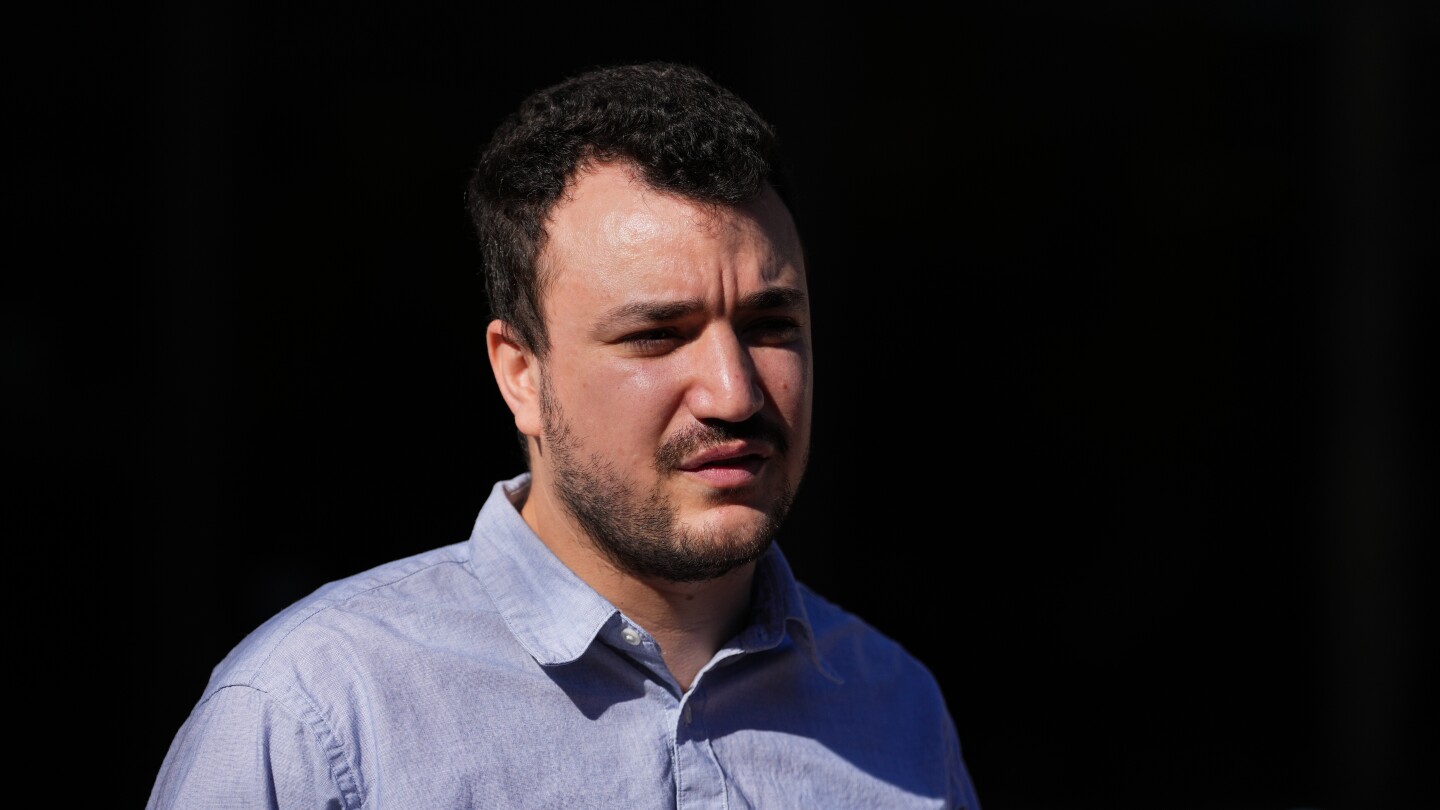
A federal appeals panel on Thursday reversed a lower court decision that had released former Columbia University graduate student Mahmoud Khalil from immigration detention, potentially paving the way for his deportation in a case that has become emblematic of broader tensions around pro-Palestinian activism.
The three-judge panel of the 3rd U.S. Circuit Court of Appeals ruled 2-1 that a federal judge in New Jersey lacked jurisdiction to decide whether the government’s efforts to deport Khalil over his campus activism and criticism of Israel violated his constitutional rights. According to the majority opinion, federal law requires such cases to fully proceed through the immigration courts before they can be challenged at the federal level.
“That scheme ensures that petitioners get just one bite at the apple — not zero or two,” the panel wrote. “But it also means that some petitioners, like Khalil, will have to wait to seek relief for allegedly unlawful government conduct.”
The decision represents a significant victory for the Trump administration’s campaign targeting noncitizens who have participated in protests against Israel. Department of Homeland Security spokesperson Tricia McLaughlin called the ruling “a vindication of the rule of law” and encouraged Khalil to “self-deport now before he is arrested, deported, and never given a chance to return.”
Despite the ruling, Khalil’s immediate detention remains uncertain. According to the American Civil Liberties Union, which is supporting his case, the government cannot lawfully re-detain him while immediate appeals are still possible. His legal team may request the full 3rd Circuit to reconsider the decision or appeal to the U.S. Supreme Court.
Khalil expressed his disappointment with the ruling but remained defiant. “The door may have been opened for potential re-detainment down the line, but it has not closed our commitment to Palestine and to justice and accountability,” he said in a statement. “I will continue to fight, through every legal avenue and with every ounce of determination, until my rights, and the rights of others like me, are fully protected.”
Baher Azmy of the Center for Constitutional Rights, one of Khalil’s attorneys, noted that the ruling contradicts decisions from other federal courts and vowed to “fight with every available avenue.”
Khalil, an outspoken leader of pro-Palestinian movements at Columbia University, was arrested last March and spent three months in a Louisiana immigration detention facility, missing the birth of his first child. Federal officials have accused him of leading activities “aligned to Hamas,” though they have not presented evidence supporting this claim nor charged him with any criminal conduct. They have also alleged he failed to disclose information on his green card application.
The government cited a rarely used statute allowing for the expulsion of noncitizens whose beliefs allegedly threaten U.S. foreign policy interests. In June, a federal judge ruled this justification would likely be found unconstitutional and ordered Khalil’s release, a decision the Trump administration then appealed.
Khalil, 31, has consistently dismissed the allegations against him as “baseless and ridiculous,” characterizing his detention as retaliation for exercising his free speech rights in advocating for Palestinians.
New York City Mayor Zohran Mamdani voiced support for Khalil on social media, writing that “Mahmoud is free — and must remain free.”
The dissenting opinion in Thursday’s ruling came from Judge Arianna Freeman, a Biden appointee, who argued her colleagues applied the wrong legal standard to Khalil’s case. She maintained that Khalil is raising “now-or-never claims” that can be addressed at the district court level despite his ongoing immigration case.
The majority opinion was written by Judges Thomas Hardiman, a George W. Bush appointee, and Stephanos Bibas, appointed by Trump. They rejected Freeman’s concerns that their decision would leave Khalil without remedy for potentially unconstitutional detention.
Meanwhile, an immigration appeals board is considering a previous order that would deport Khalil to either Algeria, where he has citizenship through a distant relative, or Syria, where he was born in a refugee camp. His attorneys have warned he faces severe danger if sent to either country.
The case continues to highlight tensions between immigration enforcement priorities and constitutional protections for political speech, particularly regarding the Israeli-Palestinian conflict.
Fact Checker
Verify the accuracy of this article using The Disinformation Commission analysis and real-time sources.

7 Comments
The nuances of immigration law and national security issues can make these cases complex. However, the right to criticize the government is a core democratic freedom that should be zealously guarded.
You raise a good point. Striking the right balance between security concerns and civil liberties is always a challenge, but erring too far on the side of suppressing dissent is dangerous.
This is a concerning development for pro-Palestinian activism and free speech. I hope the courts will carefully consider the implications for civil liberties.
Agreed, the potential deportation over political speech is very troubling. We need to ensure due process and protect the fundamental rights of all.
I’m curious to learn more about the specifics of this case and Mahmoud Khalil’s activism. What exactly were the grounds cited for potential deportation, and how well-founded do they seem?
This is a troubling precedent for limiting free expression, especially around sensitive political issues like the Israeli-Palestinian conflict. I hope the courts will uphold the principles of free speech and due process.
As an observer of mining and commodities news, I don’t have a direct stake in this case. But I believe strongly in the importance of protecting dissent and political speech, even for non-citizens. This merits close scrutiny.