


Listen to the article
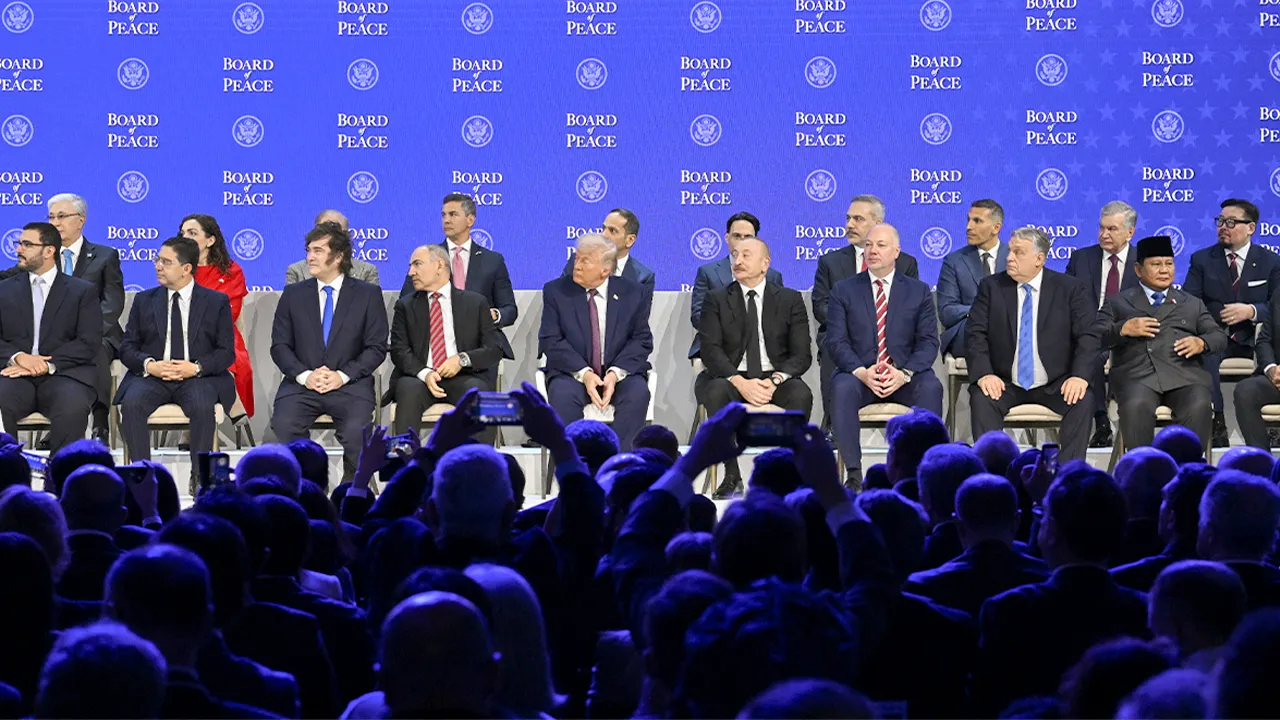
In a significant diplomatic development, leaders from 17 countries gathered in Davos, Switzerland on Thursday to sign the Gaza Board of Peace charter, a new multinational initiative spearheaded by U.S. President Donald Trump. The ceremony brought together prime ministers, presidents, and senior government officials representing nations across Latin America, Europe, the Middle East, and Asia.
White House Press Secretary Karoline Leavitt called forward the signatories who joined President Trump on stage. The diverse group of leaders included Argentine President Javier Milei, Hungarian Prime Minister Viktor Orbán, Indonesian President Prabowo Subianto, and the presidents of Azerbaijan, Kazakhstan, Kosovo, Paraguay, and Uzbekistan. Other signatories included prime ministers from Armenia, Bulgaria, Qatar, and Mongolia, along with senior representatives from Jordan, Pakistan, Saudi Arabia, Turkey, and the United Arab Emirates.
The event represents a significant diplomatic effort to address the ongoing crisis in Gaza, bringing together countries with varied geopolitical interests and relationships with the region. The multinational composition suggests an attempt to create a broad coalition that could potentially influence peace efforts in the Middle East.
Beyond the 17 initial signatories, Trump extended invitations to several other nations, including Russia, Belarus, France, Germany, Vietnam, Finland, Ukraine, Ireland, Greece, Israel, and China. This expansive invitation list indicates the administration’s desire to build a large, inclusive diplomatic framework.
Israeli Prime Minister Benjamin Netanyahu’s office confirmed his acceptance of Trump’s invitation to join the Board of Peace, though reports indicated Netanyahu had previously raised concerns about the roles of Qatar and Turkey in the Gaza executive board. Both countries have maintained complex relationships with various Palestinian factions, including Hamas.
The initiative faces some notable resistance, however. The United Kingdom declined to participate, with Foreign Secretary Yvette Cooper explaining to the BBC that Britain would not join due to concerns about Russian President Vladimir Putin’s involvement. Cooper cited Russia’s ongoing actions in Ukraine as incompatible with a peace initiative, stating there were no signs of Putin’s “commitment to peace in Ukraine.”
The Board of Peace will be chaired by Trump himself, with a leadership structure that includes several close allies and advisors. Secretary of State Marco Rubio, former presidential advisor and Trump’s son-in-law Jared Kushner, U.S. special envoy Steve Witkoff, and billionaire Marc Rowan will all hold positions within the organization.
While the signing ceremony represents a high-profile diplomatic effort, the practical mechanisms of how the Board of Peace will function and what specific initiatives it will undertake remain to be seen. The initiative comes at a time of continued tension in Gaza, with humanitarian concerns remaining high on the international agenda.
The composition of the board reflects both traditional U.S. allies and partners with whom relations have been more complex, suggesting an approach that prioritizes broad inclusion over ideological alignment. It also indicates Trump’s continued focus on Middle East diplomacy, following previous initiatives during his first administration.
As the Board of Peace moves forward, observers will be watching closely to see how this multinational body translates ceremonial signatures into concrete diplomatic action in one of the world’s most challenging conflict zones.
Fact Checker
Verify the accuracy of this article using The Disinformation Commission analysis and real-time sources.

14 Comments
While I’m skeptical of Trump’s involvement, the broad international support for this initiative is noteworthy. Resolving the longstanding conflicts in Gaza will require a comprehensive, collaborative approach. I hope this charter represents a sincere effort to find pragmatic solutions, rather than just political posturing.
You raise a fair point. Trump’s track record in the region is mixed, so it will be important to closely scrutinize the details and implementation of this charter to ensure it delivers tangible improvements for the people of Gaza.
This is certainly a bold move by President Trump, though I’m not sure how effective it will be in practice. Resolving the crisis in Gaza requires nuanced, on-the-ground engagement that addresses the complex historical grievances and power dynamics at play. I hope this charter doesn’t oversimplify the issues or underestimate the challenges involved.
That’s a fair concern. Any sustainable solution will need to grapple with the deep-seated political, economic, and social factors that have perpetuated the conflict in Gaza. Broad diplomatic initiatives are a start, but real progress will require dedicated, long-term efforts.
As someone with a keen interest in geopolitics, I’m intrigued by the diverse group of countries that have signed on to this charter. It will be fascinating to see how this plays out and whether it can help break the deadlock in the Gaza conflict. I’m hopeful, but also cautiously optimistic given the complexities involved.
Absolutely. The involvement of countries like Hungary, Kazakhstan, and Mongolia adds an interesting dynamic to this initiative. Their participation suggests an attempt to broaden the diplomatic scope beyond the traditional power brokers in the region.
This is certainly a high-profile initiative, but I’m not sure how much it will actually move the needle on the Gaza conflict. Lasting peace requires buy-in from all the key stakeholders, including the Palestinian leadership and Israel. I hope this charter doesn’t gloss over the deep-rooted tensions and grievances that have fueled the conflict for decades.
That’s a valid concern. Any successful peace effort will need to engage directly with the parties most affected by the conflict. Bypassing or marginalizing key players could undermine the credibility and effectiveness of this charter, no matter how broad the international support may be.
This is a significant diplomatic achievement, bringing together countries with diverse interests and relationships in the region. The multinational composition suggests an attempt to create a more balanced and inclusive framework for addressing the crisis in Gaza. I’ll be watching closely to see if this leads to any concrete progress.
Agreed. The real test will be whether this charter can facilitate meaningful dialogue and cooperation between the various stakeholders. Overcoming longstanding tensions and finding mutually acceptable solutions will be a major challenge.
While I’m encouraged to see so many countries come together on this issue, I’m also curious about the specific details and mechanisms outlined in the Gaza Board of Peace charter. Effective conflict resolution requires carefully crafted policies and implementation plans. I’ll be closely following the developments to assess the charter’s potential impact.
Exactly. The devil will be in the details when it comes to translating this diplomatic agreement into meaningful change on the ground. I share your interest in understanding the charter’s specific provisions and how they aim to address the complex realities in Gaza.
This is an interesting development in the Middle East peace process. It’s encouraging to see so many diverse countries come together to try and address the crisis in Gaza. I’m curious to learn more about the specific provisions of the charter and how they aim to improve the situation on the ground.
Bringing so many different stakeholders to the table is a positive step. However, the real test will be whether they can translate this diplomatic effort into meaningful change for the people of Gaza.