


Listen to the article
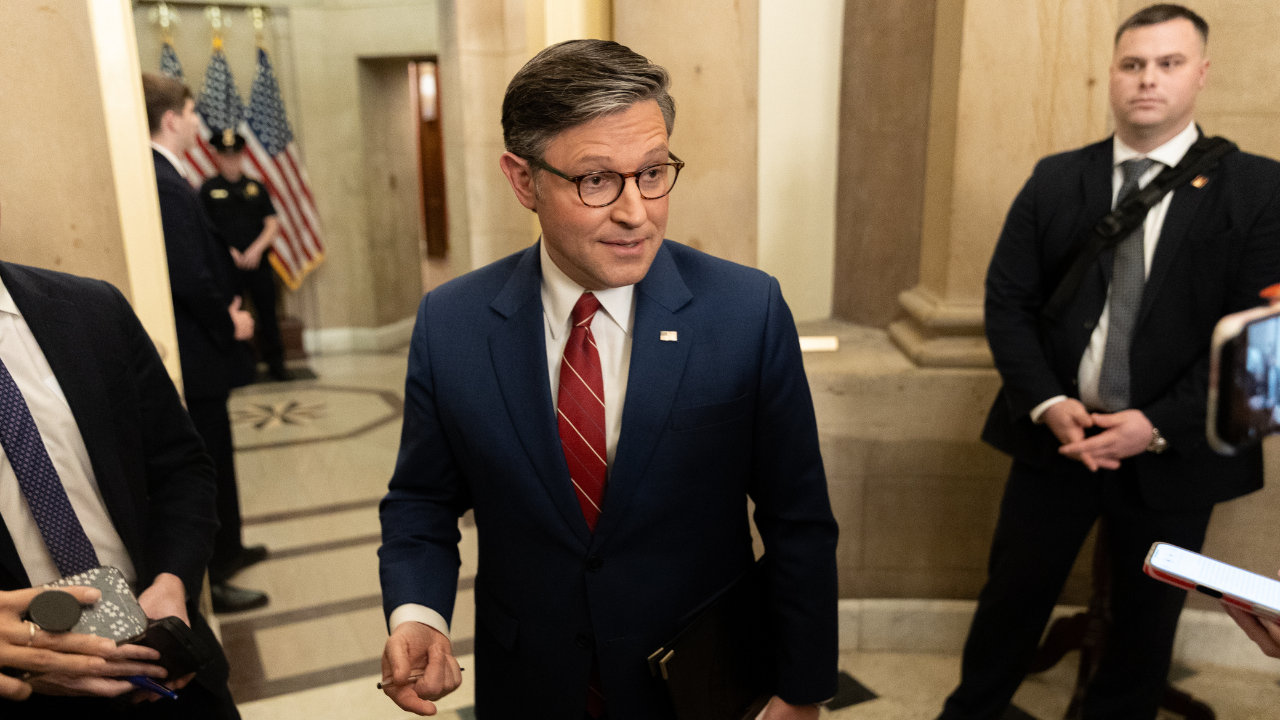
A brewing confrontation over privacy rights and national security is set to unfold in the House of Representatives as the April 20 expiration date for Section 702 of the Foreign Intelligence Surveillance Act (FISA) approaches. The contentious debate poses a significant test for House Speaker Mike Johnson and his narrow Republican majority.
A planned vote on a “clean” extension of the surveillance provision has been delayed amid growing opposition from a diverse coalition of lawmakers concerned about its implications for civil liberties. While intelligence officials and many in Congress argue the measure is essential for preventing terrorist attacks, a cross-partisan group of privacy advocates contends it grants excessive surveillance powers over American citizens.
“This is a privacy issue,” Rep. Keith Self, a Texas Republican, told Fox News Digital. “It’s a very important tool, don’t get me wrong, against terrorists. But you cannot, in my mind, continue to warrantlessly surveil U.S. citizens that don’t have an immediate nexus or tie to some terrorists.”
Section 702 allows federal agencies to conduct surveillance without a warrant on foreign nationals outside the U.S. suspected of terrorism connections—even when these communications involve American citizens. The provision was created in response to the September 11 attacks as part of the government’s enhanced counterterrorism efforts.
House Majority Leader Steve Scalise emphasized the program’s importance after a classified briefing last week, noting, “There have been countless terrorist attempts that have been stopped because of the FISA process.” He warned against returning to “a pre-Sept. 11 attitude, where we just hope that nothing bad happens.”
The Trump administration is advocating for a straightforward extension of the provision, arguing that significant reforms were implemented in 2024. However, many conservatives believe these changes don’t provide adequate protections for Americans’ privacy rights.
Rep. Harriet Hageman of Wyoming, who is campaigning for an open Senate seat, acknowledged the previous improvements but suggested that “there may be some additional ones that I think that we ought to make.”
House Republican leadership plans to advance an 18-month FISA extension without modifications. While the bill itself likely has majority support in the chamber, Johnson faces a potential roadblock during the procedural “rule vote” that must precede the final vote. With Republicans holding only a slim majority, Johnson can afford to lose just one GOP vote without Democratic support.
At least two House Republicans—Representatives Lauren Boebert of Colorado and Anna Paulina Luna of Florida—have already announced their opposition to the rule vote. Both lawmakers are leveraging their positions to demand Senate passage of the unrelated SAVE America Act, an election integrity measure backed by former President Trump.
“I’m a NO on FISA as it stands. I’m a NO on the rule for FISA to boot. Swamp isn’t happy but that’s where I’m at,” Boebert declared on social media last week.
Some conservatives have noted the ironic shift in Republican positions on surveillance, particularly Speaker Johnson’s evolving stance. Rep. Michael Cloud of Texas pointed out that Johnson previously supported warrant requirements before assuming the speakership.
During the last reauthorization debate in April 2024, then-President Trump urged Republicans to “KILL FISA,” claiming he had been victimized by its surveillance powers. Johnson, however, opposed efforts to implement new warrant requirements sought by privacy advocates.
The debate highlights the ongoing tension between national security imperatives and civil liberties concerns in American politics. It also demonstrates the challenging legislative landscape facing Johnson, who must navigate competing factions within his own party while addressing critical national security priorities.
As the deadline approaches, the outcome remains uncertain, with implications for both America’s counterterrorism capabilities and the privacy protections afforded to its citizens.
Fact Checker
Verify the accuracy of this article using The Disinformation Commission analysis and real-time sources.

12 Comments
The growing opposition to the FISA surveillance law extension highlights the difficulty in striking the right balance between protecting citizens’ privacy and enabling effective counterterrorism efforts. It will be interesting to see how Speaker Johnson navigates this political minefield.
The opposition to the FISA law extension highlights the challenge of maintaining effective surveillance capabilities while also upholding individual privacy rights. It will be crucial for lawmakers to approach this issue with nuance and pragmatism.
While I understand the importance of surveillance tools for national security, I share the concerns of privacy advocates about the potential for overreach and abuse. Careful oversight and robust safeguards are crucial in this area.
I agree. Finding the right equilibrium between security and civil liberties is an ongoing challenge, but one that must be addressed with diligence and transparency.
The upcoming FISA vote will be a crucial test for Speaker Johnson and the new Republican majority. They’ll need to carefully weigh the competing interests and find a solution that satisfies both security needs and constitutional protections.
The confrontation over the FISA law reflects the ongoing tensions between security and privacy in the digital age. I’m interested to see how this plays out and whether lawmakers can find a solution that satisfies all stakeholders.
The FISA law debate is a prime example of the delicate balance that must be struck between security and liberty in a democratic society. I’m curious to see how Speaker Johnson and his colleagues navigate this sensitive issue.
Absolutely. This is a critical juncture, and the outcome will have far-reaching implications for the future of civil liberties and national security in the United States.
This is a complex issue with valid concerns on both sides. I hope the debate is conducted in a thoughtful and bipartisan manner, with a focus on protecting both national security and civil liberties.
This debate underscores the complexities involved in modern surveillance and intelligence gathering. I hope the lawmakers can put partisan politics aside and work towards a bipartisan compromise that upholds the rule of law.
Agreed. Maintaining a delicate balance between national security and individual rights requires nuanced policymaking and a willingness to compromise. The stakes are high, and the outcome will have far-reaching implications.
This is a complex and sensitive issue, with valid concerns on both sides regarding national security and civil liberties. I’m curious to see how the debate unfolds and whether a balanced compromise can be reached.