


Listen to the article
Renowned Economist Thomas Sowell Criticizes US Education System as “Propaganda Arm”
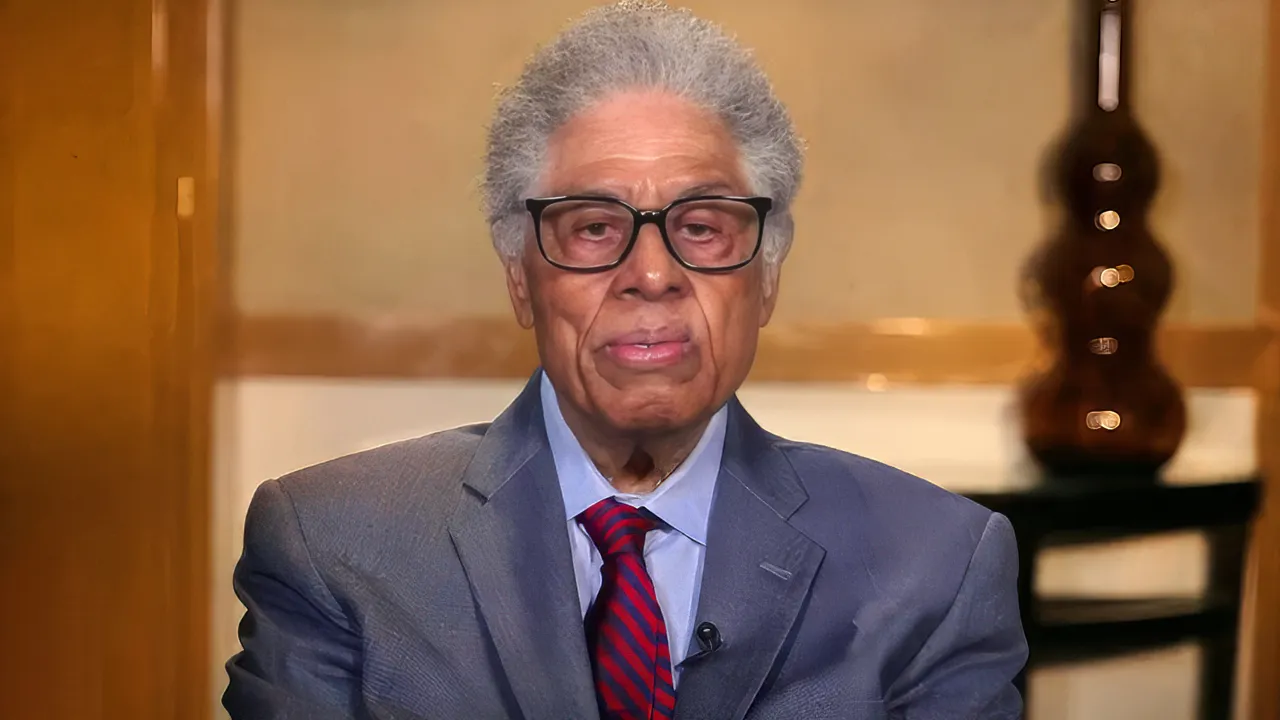
Conservative economist and historian Thomas Sowell delivered a scathing critique of America’s education system, characterizing it as a “propaganda arm” that fails to teach critical thinking skills or provide students with adequate historical knowledge.
In a wide-ranging interview released Tuesday on the Hoover Institution’s podcast “Uncommon Knowledge with Peter Robinson,” the 95-year-old intellectual argued that schools have abandoned their educational mission in favor of ideological indoctrination.
“It’s failing to teach students how to think,” Sowell stated. “It’s failing to give them a background of knowledge of history. And it’s failing to allow them to express views that are different from what is being propagandized.”
The hour-long conversation notably steered away from Sowell’s economic expertise to focus on educational failures, with the economist drawing partly from his own experiences navigating the New York City school system before becoming one of America’s most respected conservative thinkers.
At the core of Sowell’s argument is that education lacks the accountability mechanisms present in other sectors. While businesses face immediate consequences for poor performance through financial losses, schools continue receiving taxpayer funding regardless of outcomes.
“Public school education, you have the almost inexhaustible amount of money from the taxpayers,” Sowell explained. He added that even private schools increasingly rely on public funds with minimal oversight, allowing them to “keep on doing things that are wrong for generation after generation.”
This lack of accountability comes amid alarming academic performance trends. According to the Nation’s Report Card data published in 2025, nearly half of American high school seniors scored below basic proficiency levels in both reading and mathematics. The COVID-19 pandemic and subsequent remote learning periods have further accelerated this downward trajectory.
Public sentiment reflects these concerns, with an EdChoice 2025 survey finding that 68% of Americans and 60% of parents believe K-12 education is heading in the wrong direction.
Sowell pointed to teachers’ unions as a significant obstacle to meaningful reform, describing a system that operates like a “straightforward racket.”
“Teachers’ unions collect billions of dollars in dues and then invest millions of dollars around the country to politicians who will protect the teachers’ unions from competition,” he explained. This political influence helps maintain the status quo despite mounting evidence of systemic failure.
In 2020, Sowell published “Charter Schools and Their Enemies,” which presented research showing charter schools could achieve dramatically better results with the same students from the same neighborhoods, often in the same buildings, compared to traditional public schools. Charter schools operate as publicly funded institutions with performance contracts that grant them greater independence over curriculum and operations.
However, Sowell contends that some Democratic politicians have impeded charter school expansion to protect teachers’ unions. He cited California legislation restricting charter schools’ ability to suspend disruptive students as an example of policies designed not to improve education but to limit competition with traditional public schools.
Critics of charter expansion often argue these schools divert funding from district schools, weaken teacher protections, and operate with inconsistent oversight.
The interview’s timing coincides with National School Choice Week and comes as the Trump administration urges states to participate in a new federal K-12 scholarship tax credit established under the Working Families Tax Cut Act. Set to begin in 2027, the program will allow taxpayers to receive up to $1,700 back by donating to approved Scholarship Granting Organizations rather than paying that amount in income tax.
The Department of Education reported Monday that 23 states have already opted into the initiative, which it describes as the “largest national expansion of education freedom in history.”
Fact Checker
Verify the accuracy of this article using The Disinformation Commission analysis and real-time sources.

9 Comments
While I respect Sowell’s economic expertise, I’m not sure he’s the best authority on the state of the education system. As an outsider, he may be overlooking important nuances and complexities. I’d be more interested in hearing from teachers, parents, and education researchers on this topic.
Sowell’s critique of the education system raises some valid points, but I’m hesitant to accept his claims at face value without seeing more evidence. Education is a complex, multifaceted issue, and we should be wary of overly simplistic or partisan narratives.
As someone with a background in the mining and resources sector, I’m curious to hear Sowell’s views on how the education system may be impacting the pipeline of future workers for industries like ours. Are schools failing to prepare students with the right technical skills and knowledge?
As someone with a keen interest in the mining and resources sector, I’m curious to hear Sowell’s thoughts on how the education system could better prepare students for careers in these industries. Are there specific gaps or deficiencies he sees that need to be addressed?
This is a provocative critique of the US education system. While Sowell raises some valid concerns about ideological bias, I’d want to see empirical evidence to back up his claims before jumping to conclusions. Education is a complex issue with many stakeholders involved.
Sowell’s comments raise valid concerns about the need for greater accountability and critical thinking in education. However, labeling schools as ‘propaganda agencies’ seems like an oversimplification. We should strive for balanced, fact-based discussions on how to improve the education system.
Sowell’s views on education are certainly controversial. As someone with a strong conservative background, I imagine his perspective is colored by his own political leanings. It would be interesting to hear counter-arguments from educators and experts across the political spectrum.
That’s a fair point. Education is a highly politicized issue, so it’s important to consider diverse viewpoints and avoid knee-jerk reactions. A more nuanced, data-driven discussion could shed light on the real challenges facing schools.
Sowell’s criticism of schools as ‘propaganda agencies’ seems rather hyperbolic. While concerns about ideological bias in education are understandable, I suspect the reality is more complex. Schools have a duty to teach critical thinking, not just parrot a particular political agenda.