


Listen to the article
Connecticut’s ID Paradox: Lawmakers Require Documentation for Recycling but Not for Voting
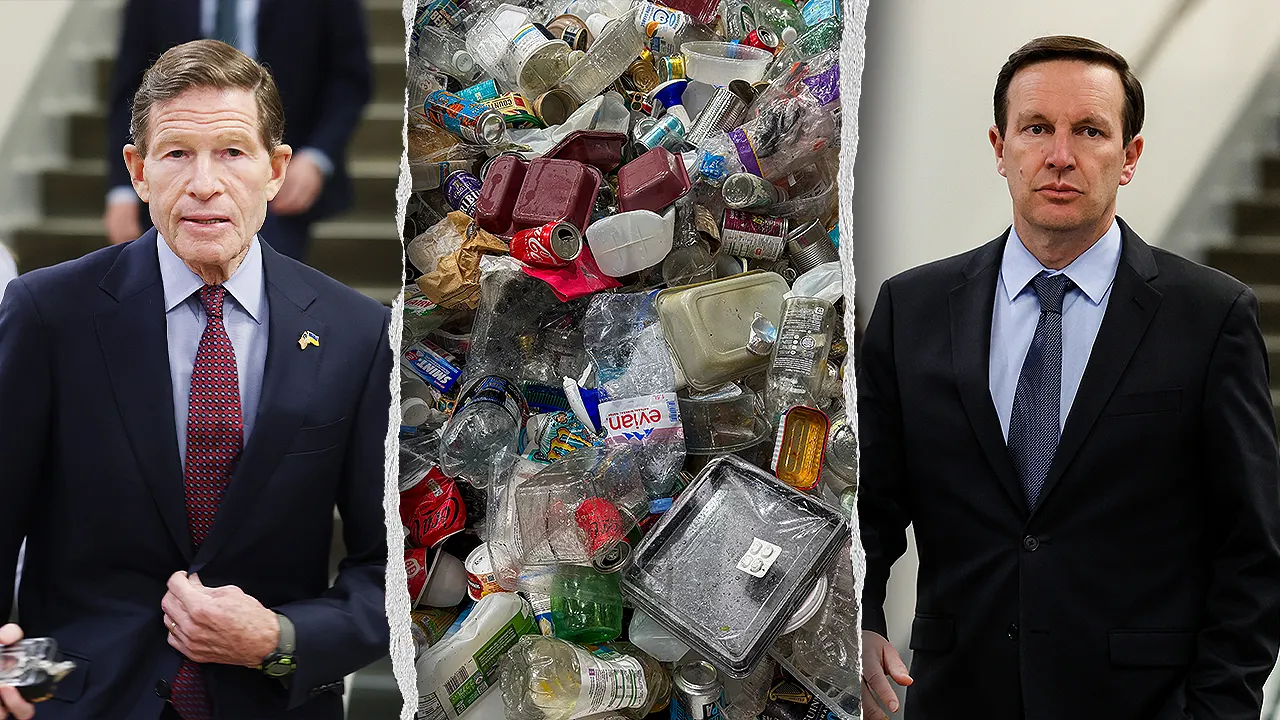
Connecticut has found itself at the center of a political controversy after Democratic lawmakers pushed through emergency legislation requiring identification for can redemption while continuing to oppose similar requirements for voting.
The emergency certification bill, SB 299, was rapidly introduced by top Democratic leaders in the state legislature, passed in both chambers in late February, and signed into law by Governor Ned Lamont on March 3. The legislation requires individuals to present a copy of their driver’s license when recycling more than 1,000 cans or bottles for redemption in a single day.
State officials implemented the measure to combat fraud from out-of-state residents crossing into Connecticut to take advantage of its higher return rate of 10 cents per container, compared to neighboring states’ 5-cent rates. The practice has reportedly caused significant revenue losses for Connecticut’s bottle deposit program.
The timing and nature of the legislation have drawn criticism from Republicans, who point to what they see as a contradiction in the Democratic position on identification requirements. Connecticut currently does not require residents to present a driver’s license or other formal identification when voting. Instead, voters simply attest under penalty of law that they are U.S. citizens.
“In Connecticut, it seems that they are committed to securing recycling, but not to securing elections,” said Anna Pingel, Campaign Director for Secure Elections at the America First Policy Institute. “Requiring photo ID to collect cash from recycling but opposing photo ID to cast a vote tells you everything you need to know about the hypocrisy of politicians fighting against commonsense legislation like the SAVE Act.”
The controversy extends beyond state borders to Connecticut’s representatives in Washington. Both of the state’s U.S. senators, Richard Blumenthal and Chris Murphy, recently voted against advancing the SAVE Act, a Republican-led federal bill that would implement stricter photo-ID requirements for voting in federal elections and establish a national proof-of-citizenship requirement for voter registration.
When contacted for comment, Senator Blumenthal defended his position, telling Fox News Digital: “Let’s be very clear: the SAVE America Act requires a birth certificate or passport to register to vote, which Republicans know 21 million Americans do not have. This is not a voter identification bill. It is a voter purge bill.”
The debate reflects broader national tensions over voter ID laws. Democrats have consistently opposed such measures, arguing they create unnecessary barriers that disproportionately affect minority voters, the elderly, and low-income communities. Republicans counter that such requirements are essential safeguards against potential fraud.
The Senate recently voted 51-48 to begin debate on the House-passed SAVE Act vehicle, with both Blumenthal and Murphy voting against it. Although the House passed the bill 218-213 on February 11, the measure still faces the Senate’s 60-vote threshold to advance toward passage—a hurdle Democrats have vowed to block.
During floor debates, Senate Majority Leader Chuck Schumer and Senator Raphael Warnock acknowledged the existence of non-citizen voting but downplayed its significance. “The evidence is that almost no illegal aliens vote,” Schumer stated, while Warnock cited statistics from his home state: “8.2 million people are registered to vote in Georgia. The Republican Secretary of State found 20 instances of non-citizens who were registered, and only nine had ever attempted to vote.”
As the standoff continues in Washington, with the Senate holding weekend sessions to address the deadlock, Connecticut’s contrasting approaches to identification requirements for recycling and voting highlight the ongoing national debate over the balance between election security and accessibility.
Fact Checker
Verify the accuracy of this article using The Disinformation Commission analysis and real-time sources.

20 Comments
Production mix shifting toward Politics might help margins if metals stay firm.
The cost guidance is better than expected. If they deliver, the stock could rerate.
Silver leverage is strong here; beta cuts both ways though.
Good point. Watching costs and grades closely.
I like the balance sheet here—less leverage than peers.
Uranium names keep pushing higher—supply still tight into 2026.
Nice to see insider buying—usually a good signal in this space.
Nice to see insider buying—usually a good signal in this space.
The cost guidance is better than expected. If they deliver, the stock could rerate.
The cost guidance is better than expected. If they deliver, the stock could rerate.
Good point. Watching costs and grades closely.
Good point. Watching costs and grades closely.
Nice to see insider buying—usually a good signal in this space.
Good point. Watching costs and grades closely.
The cost guidance is better than expected. If they deliver, the stock could rerate.
Uranium names keep pushing higher—supply still tight into 2026.
Good point. Watching costs and grades closely.
Silver leverage is strong here; beta cuts both ways though.
Good point. Watching costs and grades closely.
Good point. Watching costs and grades closely.