


Listen to the article
Congressional leaders expressed cautious optimism Tuesday that a deal on Homeland Security Department funding could be reached before the looming weekend deadline, though significant disagreements remain between Democrats and the White House over immigration enforcement restrictions.
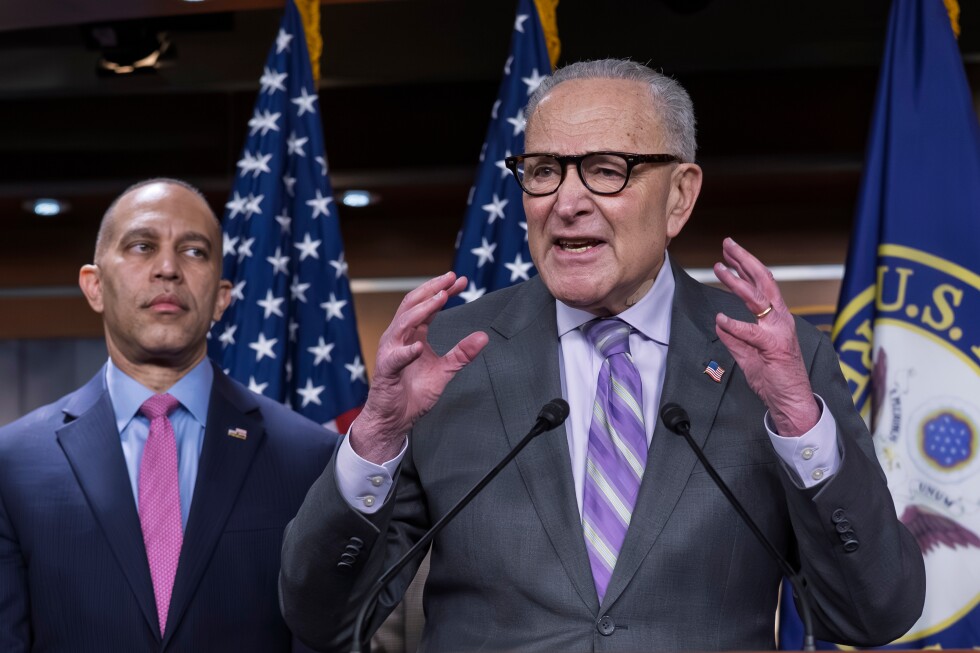
Following the fatal shootings of two protesters by federal agents in Minneapolis last month, Democrats are demanding substantial reforms to U.S. Immigration and Customs Enforcement (ICE) operations. Senate Democratic Leader Chuck Schumer and House Democratic Leader Hakeem Jeffries announced they had rejected a White House counterproposal that they claimed failed to address Americans’ concerns about “ICE’s lawless conduct.”
“We simply want ICE to follow the same standards that most law enforcement agencies across America already follow,” Schumer stated on Tuesday. “Democrats await the next answer from our Republican counterparts.”
Time is running short, with a partial government shutdown set to begin Saturday if no agreement is reached. Democrats are seeking several specific policy changes, including requirements for judicial warrants, proper identification of DHS officers, improved use-of-force standards, and an end to racial profiling practices.
Despite the partisan divide on immigration enforcement, both Senate leaders suggested progress might be possible. “There’s no reason we can’t do this by the end of the week,” Schumer remarked after meeting with his caucus. Senate Majority Leader John Thune echoed this sentiment, noting “some really productive conversations” were underway.
A White House official, speaking on condition of anonymity, emphasized that the Trump administration desires to keep the government open and Homeland Security services funded, claiming constructive discussions were occurring with lawmakers from both parties.
Democrats intensified their demands for ICE reforms after ICU nurse Alex Pretti was shot and killed by a U.S. Border Patrol officer in Minneapolis on January 24, following the January 7 shooting of Renee Good by ICE agents. These incidents galvanized Democratic lawmakers, with many vowing to oppose any additional Homeland Security funding until enforcement practices are “dramatically” reformed.
“Dramatic changes are needed at the Department of Homeland Security before a DHS funding bill moves forward,” Jeffries declared. “Period. Full stop.”
Democratic leaders claim the White House’s counteroffer abandoned key proposals regarding better identification of ICE agents, increased judicial warrant requirements, and prohibitions on excessive force. They also noted Republicans rejected their demand to end racial and ethnic profiling.
Republicans, meanwhile, have pushed back on several Democratic demands. Senator Markwayne Mullin of Oklahoma, a Trump ally, indicated willingness to discuss body cameras and improved training—both already included in the spending bill—but rejected core Democratic requests regarding judicial warrants and agent identification.
“They start talking about judicial warrants? No. They start talking about demasking them? No, not doing that. They want them to have a photo ID with their name on it? Absolutely not,” Mullin stated.
House Speaker Mike Johnson defended the practice of allowing ICE agents to wear masks, citing safety concerns. “People are doxing them and targeting them. We’ve got to talk about things that are reasonable and achievable.”
Some Republicans have countered with their own demands, including legislation requiring proof of citizenship for voter registration and restrictions on so-called “sanctuary cities.” At a House hearing Tuesday, ICE Acting Director Todd Lyons maintained that his agency is “only getting started” and would not be deterred in implementing Trump’s deportation agenda.
The current situation stems from Trump agreeing to a Democratic request to separate DHS funding from the larger spending package passed last week. That arrangement extended Homeland Security funding at current levels only through February 13, creating a narrow window for negotiation on restrictions for ICE and other federal agencies.
If no agreement is reached, the shutdown would affect several critical agencies beyond ICE, including U.S. Customs and Border Protection, the Federal Emergency Management Agency, and the Transportation Security Administration. Senator Thune warned of potential “travel problems” similar to those experienced during last year’s 43-day government closure.
Republicans have suggested passing a two- to four-week extension of current funding while negotiations continue, though many Democrats are unlikely to support such a measure without substantive concessions on enforcement reforms.
“The ball is in the Republicans’ court,” Jeffries concluded Monday, underscoring the pressure on the GOP and White House to respond to Democratic concerns as the deadline approaches.
Fact Checker
Verify the accuracy of this article using The Disinformation Commission analysis and real-time sources.

8 Comments
It’s concerning to see the partisan rancor over this issue, with both sides digging in rather than seeking collaborative solutions. Hopefully cooler heads will prevail, and they can negotiate a sensible compromise on ICE reform.
The calls for judicial warrants and improved use-of-force standards for ICE seem reasonable, though the White House counterproposal appears to fall short on these fronts. It’s a complex issue with valid arguments on both sides.
I agree, the debate over ICE reform highlights the challenge of balancing immigration enforcement and civil liberties. Hopefully the lawmakers can find a pragmatic solution that satisfies all stakeholders.
Given the fatal shootings of protesters by federal agents, the Democrats’ demands for greater accountability and oversight of ICE seem justified. But the White House will likely resist any dramatic changes to the agency’s operations.
You’re right, this is a delicate balance. Both sides will need to show flexibility and a willingness to find middle ground if they hope to reach an agreement before the deadline.
This dispute over ICE demonstrates the continued partisan gridlock in Washington. While it’s encouraging that the leaders see a potential deal as still possible, the divisions run deep. Compromises will be needed on both sides.
Interesting to see the debate over ICE reforms continuing in Congress. There seem to be significant differences between Democrats and the White House on this issue. I wonder if they can reach a compromise before the deadline to avoid a partial shutdown.
You raise a good point. With the deadline looming, it will be critical for both sides to find common ground and strike a deal that addresses the key concerns around ICE operations.