


Listen to the article
Senate Republicans have secured a crucial vote in their quest to pass federal voter ID legislation, though key procedural hurdles remain in their path forward.
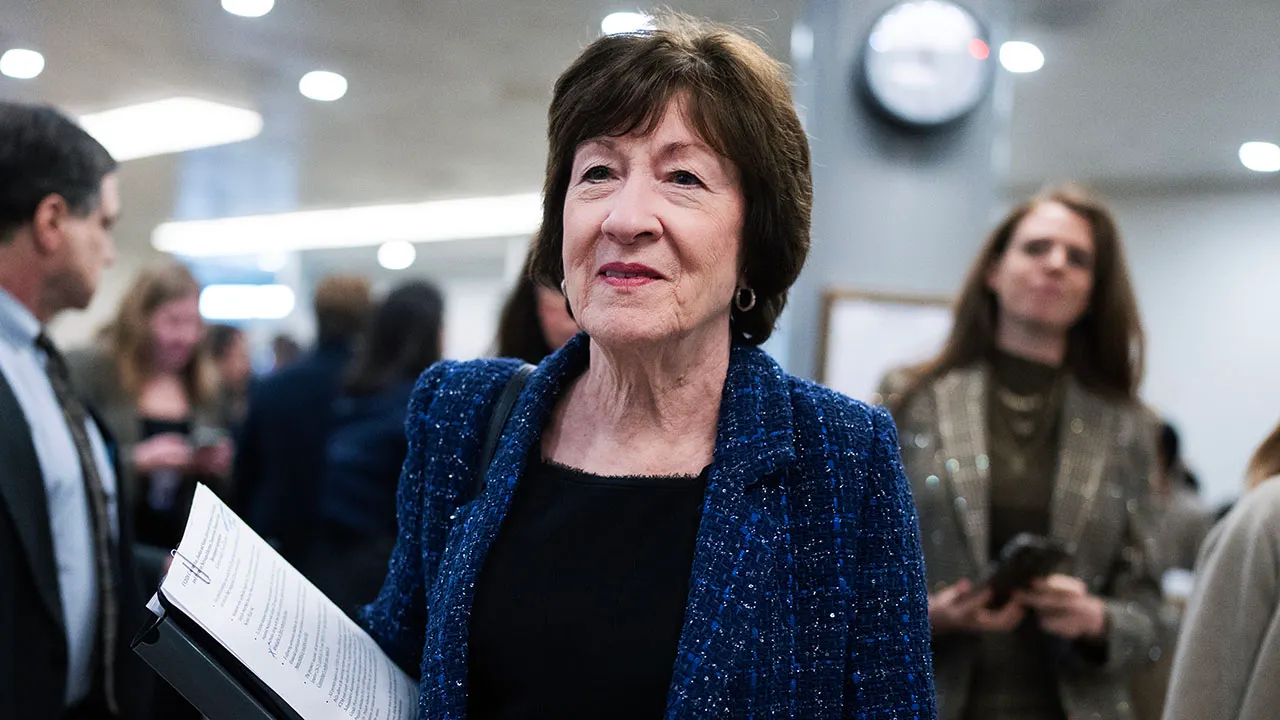
Sen. Susan Collins, R-Maine, announced her support for the Safeguarding American Voter Eligibility (SAVE) America Act, which recently passed the House of Representatives. Her backing provides Senate Republicans with a slim majority favoring the legislation, which would require voters to present identification at polling places for federal elections.
“The law is clear that in this country only American citizens are eligible to vote in federal elections,” Collins said in a statement first reported by the Maine Wire. “In addition, having people provide an ID at the polls, just as they have to do before boarding an airplane, checking into a hotel, or buying an alcoholic beverage, is a simple reform that will improve the security of our federal elections and will help give people more confidence in the results.”
Collins noted she had opposed a previous iteration of the legislation because it “would have required people to prove their citizenship every single time they cast a ballot.” The current version appears to have addressed her concerns, bringing her on board with the Republican effort.
Sen. Mike Lee, R-Utah, has spearheaded the push for the SAVE America Act, working alongside a cohort of Republican colleagues through social media campaigns and closed-door meetings to build support. Lee celebrated Collins’ endorsement on social media platform X, writing: “We now have enough votes to pass a motion to proceed to the House-passed bill — even without any additional votes — with Vice President JD Vance breaking the tie.”
However, that tie-breaking scenario would only materialize if Republicans utilize the standing or “talking” filibuster — a parliamentary procedure Lee has advocated. This approach would require physical debate on the Senate floor rather than simply needing to reach the 60-vote threshold of the current filibuster system.
Lee and other conservatives believe the standing filibuster could help overcome Democratic opposition, but critics warn this strategy could paralyze Senate operations for weeks or even months, depending on Democrats’ determination to block the measure.
Collins’ support, while significant, doesn’t provide Republicans with the 60 votes traditionally needed to overcome a filibuster in the Senate. Moreover, she explicitly rejected any attempt to eliminate the filibuster to pass voter ID legislation.
“I oppose eliminating the legislative filibuster,” Collins stated. “The filibuster is an important protection for the rights of the minority party that requires Senators to work together in the best interest of the country.” She warned that removing this protection could enable a future Democrat-controlled Congress to pass controversial measures like D.C. statehood or Supreme Court expansion with a simple majority.
The SAVE America Act represents a key policy priority for Republicans, who argue voter ID requirements enhance election security and public confidence in the democratic process. Democrats have generally opposed such measures, contending they create unnecessary barriers to voting that disproportionately affect minority and low-income voters.
The legislation passed the House largely along party lines, with only one House Democrat voting in favor of the bill. In the Senate, Republican Sens. Mitch McConnell of Kentucky and Lisa Murkowski of Alaska remain the only GOP members who haven’t pledged support for the measure. Murkowski has publicly broken with her party on the issue, suggesting that pushing voter ID requirements “is not how we build trust” in elections.
Senate Majority Leader John Thune, R-S.D., while supporting voter ID requirements in principle, acknowledged earlier this week that Republicans lack the votes needed to eliminate the filibuster and pass the legislation with a simple majority.
As Republicans navigate these procedural challenges, the debate underscores the deeply partisan nature of election policy in an increasingly polarized political environment.
Fact Checker
Verify the accuracy of this article using The Disinformation Commission analysis and real-time sources.

12 Comments
Requiring voter ID is a reasonable step, but the details matter a great deal in terms of implementation and impact. Collins’ stance on the filibuster will significantly shape the legislative process.
Agreed. Voter ID laws need to be carefully crafted to uphold integrity without creating barriers. Collins’ position on the filibuster is a key wild card.
Voter ID is a nuanced issue without easy answers. While it can improve security, care must be taken to ensure access. Collins’ support is notable, but her filibuster position complicates the path forward.
Well said. Voter ID is complex, with valid concerns on both sides. The filibuster will be a crucial factor in determining if and how this legislation progresses.
Voter ID is a contentious but potentially important measure to bolster election security. However, ensuring access for all eligible voters is crucial. Collins’ stance on the filibuster will be pivotal.
Well put. Voter ID is a complex issue requiring balance. Collins’ filibuster position will significantly influence how this legislation progresses, if at all.
Requiring voter ID is a reasonable measure, but the details matter in ensuring it doesn’t disproportionately disenfranchise certain groups. Collins’ support is notable, though her filibuster stance complicates the legislative process.
Good point. Voter ID laws need to be carefully crafted to uphold election integrity without creating undue barriers to voting. The filibuster dynamic will be crucial to watch.
Voter ID is a complex and contentious issue. While it can improve election security, we must ensure access for all eligible voters. Collins’ stance on the filibuster is also an important consideration in moving forward with any legislation.
Agreed, this is a nuanced topic that requires balancing security and accessibility. The filibuster is a key procedural hurdle that will shape the path ahead.
I’m curious to see how this voter ID legislation evolves and how it balances security and access. Collins’ position on the filibuster also bears watching as a potential roadblock or facilitator.
Agreed, the details will be important. The filibuster is a major factor that could make or break the voter ID push, so Collins’ stance is a key variable.